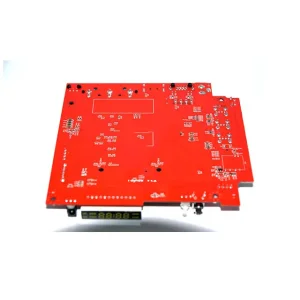
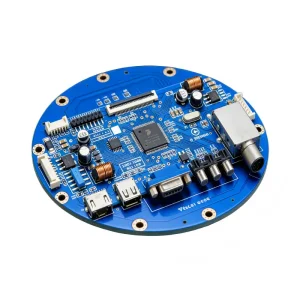
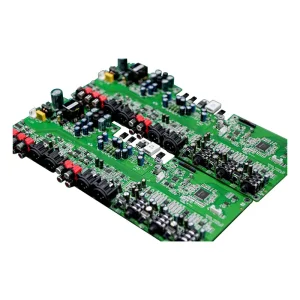
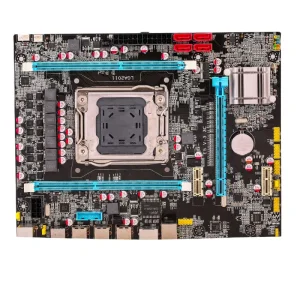
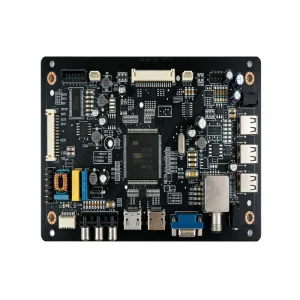
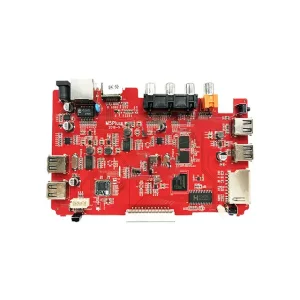
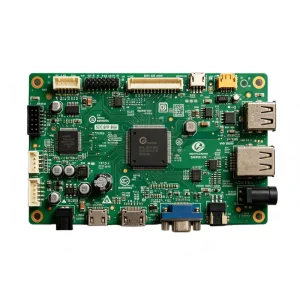
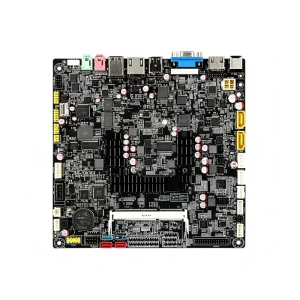
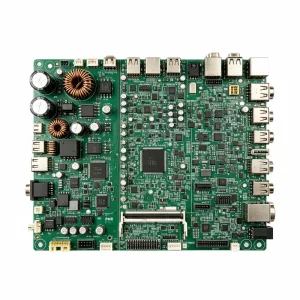
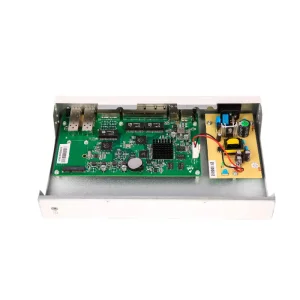
Precision-engineered PCB assemblies built with strict lot-traceability, automated optical inspection, and zero-defect automotive quality standards.
The automotive electronics industry is experiencing its most radical disruption since the inception of the internal combustion engine. Software-Defined Vehicles (SDVs), centralized zonal computing, and 800V high-voltage Silicon Carbide (SiC) traction architectures are driving PCBA complexity beyond aerospace benchmarks.
Historical vehicles deployed up to 150 individual, isolated Electronic Control Units (ECUs) interconnected by miles of copper wiring harnesses. Today's modern vehicle architectures compress this sprawling sprawl into high-performance compute clusters and localized Zonal Controllers. For an Automotive PCB Assembly service and factory partner like STHL Electronics, this architectural migration mandates ultra-high density interconnects (HDI 3+N+3, Any-Layer microvia processes), high thermal glass transition laminates (Tg > 180°C), and stringent electromagnetic compatibility (EMC) containment protocols capable of supporting multi-gigabit Ethernet deserializers alongside 100A+ power distribution rails.
Next-generation Electric Vehicles (EVs) require fast-switching Wide Bandgap (WBG) semiconductors. We engineer custom insulated metal substrates (IMS), heavy copper printed circuits (3oz to 10oz), and Direct Bonded Copper (DBC) assemblies capable of sustaining continuous 150°C junction temperatures and high-voltage breakdown thresholds exceeding 4kV.
Autonomous driving platforms require microstrip patch antennas and radar sensor front-ends operating at millimeter-wave frequencies (24GHz to 79GHz). STHL utilizes high-frequency Rogers, Taconic, and Panasonic Megtron laminates hybridized with FR-4 to optimize signal attenuation and phase jitter down to picosecond tolerances.
Battery Management Systems (BMS) operate directly in the high-vibration, chemically volatile envelope of the lithium-ion traction battery pack. We produce precision flex and rigid-flex circuit assemblies populated with automotive-qualified AEC-Q components, sealed with automated silicone or urethane conformal coatings against moisture and dendritic growth.
Automotive procurement executives and lead hardware engineers face unique friction points: multi-year lifecycle guarantees, unexpected semiconductor obsolescence, harsh-environment failure rates, and grueling auditing standards.
Automotive vehicle platforms require decade-long support. STHL's engineering team provides early End-of-Life (EOL) horizon mapping, dual-sourcing validation for active silicon, and pin-compatible redesign architectures before raw materials exit wafer production lines.
We deliver exhaustive Production Part Approval Process (PPAP) documentation including DFMEA, PFMEA, Control Plans, Process Capability Studies (Cpk > 1.67), Measurement System Analysis (Gage R&R < 10%), and full Material Declarations via the IMDS system.
Under-the-hood and gearbox-mounted controllers endure severe thermal cycling from -40°C to +150°C and random mechanical vibrations exceeding 20G. Our nitrogen reflow ovens, solder alloy optimization (SAC305, SN100C, or high-reliability doped alloys), and underfill applications eliminate thermal fatigue cracking.
Automotive functional safety cannot accommodate typical consumer electronics failure margins. Through closed-loop Solder Paste Inspection (SPI), high-speed 3D Automated Optical Inspection (AOI), 3D Computed Tomography X-ray (AXI), and real-time MES interlocks, STHL achieves near-zero DPPM assembly outputs.
Precise manufacturing limits, laminate chemistry capabilities, surface-mount placement tolerances, and non-destructive inspection systems audited against IPC-A-610 Class 3 specifications.
| Engineering Parameter | Production Baseline Capability | Advanced / Mission-Critical Capability | Validation / Verification Standard |
|---|---|---|---|
| PCB Substrate Families | Standard High-Tg FR-4 (Tg 170-180°C, Td > 340°C) | Polyimide, Heavy Copper (10oz), Rogers 4350B, Ceramic (Al2O3/AlN) | IPC-4101E / UL 94V-0 Certified |
| Layer Count & Stackup | 2 to 24 Layers Rigid Multilayer | Up to 48 Layers, 1-4 Step HDI, Any-Layer Microvia (ELIC), Rigid-Flex | IPC-6012 Class 3 / IPC-6013 |
| SMT Placement Accuracy | ±0.035mm @ 3 Sigma (Standard SMT Passives) | ±0.015mm @ 3 Sigma (Ultra-Fine Pitch BGA, 01005 passives) | Cpk ≥ 1.67 Statistical Process Control |
| Component Envelope Range | 0201 passives to 45mm x 45mm ICs | 01005 (0402 metric), PoP (Package on Package), 0.3mm BGA pitch | JEDEC Standard / IPC-7351B |
| Soldering Environments | Air Atmosphere 10-Zone Forced Air Reflow | Pure Nitrogen (N2 < 50ppm O2) Inert Reflow & Vacuum Solder Chamber | IPC J-STD-001 Class 3 Solderability |
| Automated Non-Destructive Test | Online 3D SPI (Volume/Height) + In-line 3D AOI | Offline 3D CT High-Resolution X-ray (AXI) with Void Analysis (< 10%) | IPC-A-610 Class 3 / AEC-Q100 |
| Conformal Coating & Potting | Selective Acrylic / Polyurethane Automated Dispensing | Automated Dual-Component Silicone, Parylene Vapor Deposition, Epoxy Potting | IPC-CC-830B / UL 746E Approved |
| Environmental Stress Screening (ESS) | Standard Functional Circuit Testing (FCT) | Thermal Shock (-40°C to +150°C), HAST, High-Load Power Burn-in | ISO 16750 Road Vehicle Environmental Profiles |
Automotive PCB manufacturing is fundamentally an exercise in risk mitigation. At STHL Electronics, our quality management system is certified across IATF 16949, ISO 9001, ISO 13485, and ISO 14001, embedding systematic defect prevention across every production shift.
Our Bao'an, Shenzhen manufacturing plant operates under stringent IATF 16949 continuous improvement frameworks. Solder paste rheology, feeder tension calibrations, conveyor vibration harmonics, and reflow peak temperatures are tracked digitally via automated MES monitoring.
For critical applications including drive-by-wire steering, braking controllers, and airbag modules, we guarantee complete unit-level trace verification. Barcode laser-etching on bare copper allows instantaneous retrieval of component reel lot numbers, feeder slots, reflow thermal curves, and test operator IDs.
While consumer products adhere to IPC Class 2 tolerances, automotive systems demand zero downtime. STHL enforces 100% IPC Class 3 criteria for barrel fill, wetting angles, fillet heights, solder void thresholds (< 10% under QFN/BGA ground pads), and clean ionic contamination levels (< 0.75 μg/cm² NaCl equivalent).
Serving Tier-1 and OEM clients across North America, Germany, the UK, Italy, Brazil, and 90+ countries requires responsive multi-lingual technical account management, airtight NDA IP protection, and full environmental ESG stewardship.
Our senior application engineers interface directly with your hardware design teams in the USA, Europe, and Asia-Pacific. Before initiating SMT tooling, we supply detailed Design for Manufacturability (DFM), Design for Assembly (DFA), and Design for Testing (DFT) reports within 24 hours of RFQ submission.
Automotive firmware, microcontroller bootloaders, and proprietary board topologies constitute core commercial trade secrets. STHL executes binding bilateral NDAs, provides isolated programming cells with encrypted hash verification, and guarantees complete network segregation for customer schematic assets.
Operating under an audited ISO 14001 environmental framework, we enforce strict compliance with EU RoHS 3 (Directive 2015/863) and REACH SVHC regulations. All tantalum, gold, tin, and tungsten are sourced solely through verified CFSI/CMRT-audited conflict-free smelters.
Strategic investments in advanced packaging, embedded component technology, and AI-powered in-line defect recognition position STHL at the forefront of automotive electronic innovation.
Scaling mass assembly of integrated Gallium Nitride (GaN) high-frequency on-board chargers (OBC) and DC-DC converters. Implementation of mechanical coin-press copper inlay integration in inner layers to eliminate bulky external thermal interface materials.
Migration toward PCB substrate-embedded capacitors and resistors to maximize surface real estate for autonomous driving superchips. Integration of electro-optical circuit boards (EOCB) for near-zero latency optical communication between sensor clusters and neural compute modules.
Complete autonomous closed-loop manufacturing: solder paste printers dynamically adjusting squeegee pressure and aperture offset in micro-fractions based on neural feedback from downstream post-reflow 3D CT scan data, achieving theoretical zero-DPPM production rates.
Comprehensive answers to the most rigorous technical, quality, and supply-chain inquiries submitted by automotive Tier-1 engineering teams and global sourcing directors.
High-performance electronics hardware built for mission-critical sensing, medical telemetry, intelligent security, and automotive battery monitoring.
Partner with Shenzhen STHL Electronics for certified IATF 16949 automotive turnkey PCBA manufacturing. From rapid prototype DFM reviews to global multi-million volume production, we engineer absolute zero-defect reliability into every solder joint.