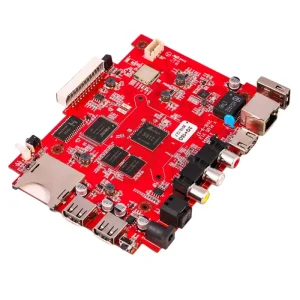
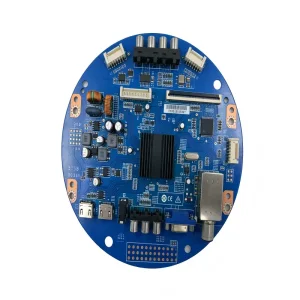
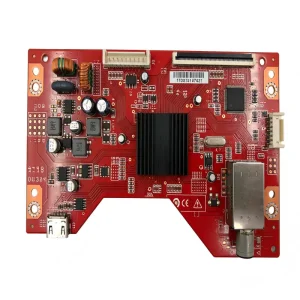
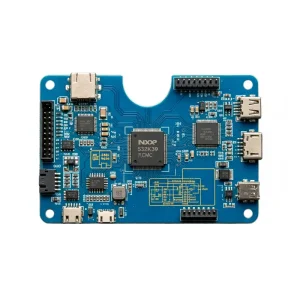
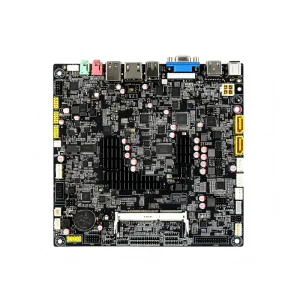
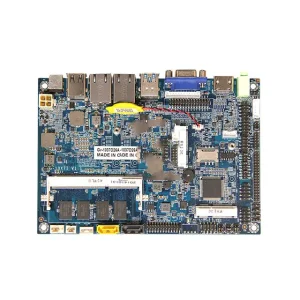
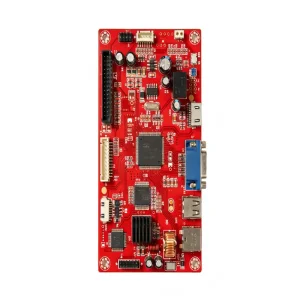
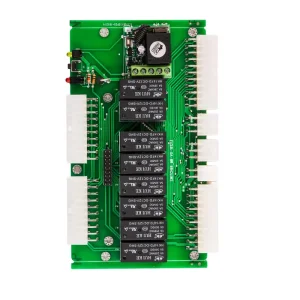
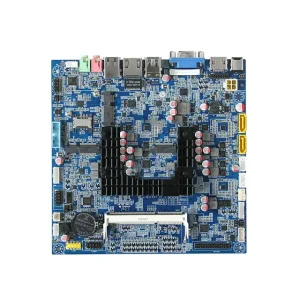
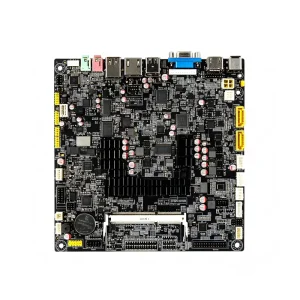
Direct engineering access to our Shenzhen automated SMT/THT facilities. Fully traceable components, automated 3D optical inspection, and IPC-A-610 Class 3 compliant hardware integration.
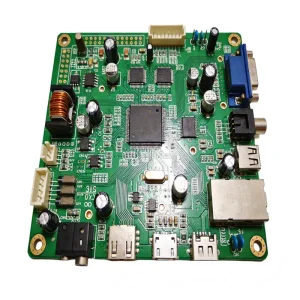
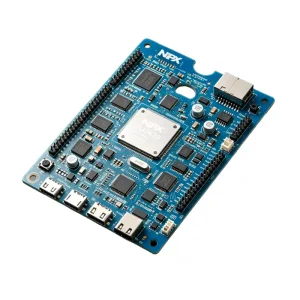
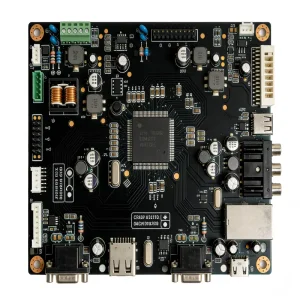
Deploying sensitive transducer electronics into corrosive industrial atmospheres, coastal marine environments, and unconditioned field telemetry enclosures demands manufacturing tolerances far exceeding standard consumer electronics.
Electrochemical gas cells, particulate laser scattering diodes, and pH/ORP glass electrodes yield signals measured in nanoamperes or microvolts. Contaminant residues, ionic flux residues, or improper surface insulation resistance (SIR) create parasitic shunts that destroy calibration accuracy. STHL applies specialized ultrasonic deionized wash regimes achieving cleanliness below 0.5 µg/cm² NaCl equivalent.
Environmental stations operate in proximity to hydrogen sulfide (H2S), sulfur dioxide (SO2), ammonia (NH3), and high relative humidity (100% condensing RH). Standard solder mask and FR4 substrates degrade through electrochemical migration (ECM). We engineer selective automated conformal coatings (silicones, polyurethanes, acrylics, and ultra-thin vapor-deposited Parylene-C) certified to IPC-CC-830C and UL 746E.
Remote meteorological, wildfire detection, and groundwater probes rely on primary lithium-thionyl chloride (Li-SOCl2) batteries or micro-solar harvesting designed for 5 to 10-year autonomous lifespans. We execute strict component-level quiescent current validation (IQ < 2 µA in deep sleep) and power rail impedance matching to suppress high-current pulses during NB-IoT, LoRaWAN, and Satellite transmissions.
From metropolitan ambient air networks to deep-sea oceanic hydro-telemetry, environmental instrumentation serves highly differentiated sensing modalities. STHL customizes SMT assembly, substrates, and test fixtures across these core industry vertical requirements.
Multi-parameter air stations capture PM1.0, PM2.5, PM10 particulates alongside greenhouse and toxic gases (CO, CO2, NO2, O3, SO2). Our PCBA designs accommodate photo-ionization detectors (PID) and non-dispersive infrared (NDIR) optical benches. We utilize low-noise multi-layer stack-ups (6 to 12 layers) with dedicated analog ground splits to eliminate crosstalk between high-gain transimpedance amplifiers and switching digital power converters.
Installed inside smokestacks and power plant flues, CEMS equipment faces high temperatures, intense vibrations, and aggressive acidic flues. We utilize high-Tg FR4 (Tg > 170°C), halogen-free Shengyi or Rogers high-frequency laminates, paired with Sn96.5Ag3.0Cu0.5 (SAC308) lead-free alloy to eliminate Kirkendall voiding under chronic thermal exposure. Through-hole components are anchored using secondary structural staking.
Instrumentation for river runoff, aquaculture, wastewater treatment, and offshore salinity/turbidity operates under constant hydrostatic pressure. STHL specializes in rigid-flex PCB assemblies enabling seamless insertion into cylindrical 316L stainless steel or titanium submersible probe housings. Boards undergo vacuum pressure-assisted resin potting with dielectric polyurethane to prevent water ingress up to 10 MPa (1,000m depth equivalent).
Monitoring fugitive VOCs and CH4 in petrochemical facilities requires compliance with explosive atmosphere standards (ATEX Zone 0/1/2 and IECEx). STHL enforces precise creepage and clearance distances per EN 60079-11, component derating matrices, integrated galvanic isolation barriers, and zener clamp diode assemblies to ensure fail-safe intrinsic safety (Ex-i).
Agricultural monitoring stations monitor Time-Domain Reflectometry (TDR) moisture probes, nitrogen-phosphorus-potassium (NPK) ion-selective sensors, and solar irradiance. STHL designs cost-effective 4-layer FR4 PCBA platforms integrated with maximum power point tracking (MPPT) micro-controllers, ultra-low leakage bypass capacitors, and onboard whip/chip antenna matching circuitry tuned for rural long-range telemetry.
A rigorous engineering evaluation of the substrate physical properties, assembly metallurgy, and protective finishing required to build non-drifting environmental measurement electronics.
| Engineering Parameter | Standard Commercial PCBA | STHL Harsh-Environment Spec | Instrumentation Benefit |
|---|---|---|---|
| Base Substrate | Standard FR-4 (Tg 130-140°C) | High-Tg Isola / Shengyi (Tg 170-180°C, Td 340°C) | Zero delamination; exceptional z-axis CTE stability across thermal cycling. |
| Surface Cleanliness | IPC Class 2 (< 1.56 µg/cm² NaCl) | IPC Class 3 (< 0.35 µg/cm² NaCl equivalent) | Suppresses dendritic electro-migration and leakage between high-Z sensor traces. |
| Surface Finish | Standard Lead-Free HASL | ENIG (Electroless Nickel Immersion Gold) / ENEPIG | Planar coplanarity for 0.4mm pitch QFN/BGA; superior oxidation resistance in SO2/H2S. |
| Conformal Coating | Manual Spray Acrylic (30 µm) | Automated Selective Film Coating (Parylene/Silicone 50-75 µm) | Uniform edge coverage on fine-pitch ICs without bridging connectors or sensors. |
| Solder Joint Inspection | 2D AOI Sampling | 100% 3D SPI + 100% 3D AOI + Inline 3D AXI (X-Ray) | Zero solder bridge risk; ensures BGA/QFN voiding under critical thermal pads < 15%. |
| RF Matching (Wireless) | Generic Layout | Controlled Impedance (±7% tolerance) with VNA calibration | Optimized return loss (< -15 dB) for Sub-1GHz, 2.4GHz, and LTE-M / NB-IoT modules. |
For picoammeter and electrometer operational amplifiers (e.g., ADA4530-1), our layout team implements continuous circular guard rings driven at the same potential as the inverting input. This diverts surface leakage currents directly into low-impedance ground planes before reaching sensitive measurement nodes, ensuring that sub-ppb gas or particulate concentration calculations remain true.
Standard 3-electrode and 4-electrode (working, counter, reference, auxiliary) gas sensor channels require stable potentiostatic bias networks. STHL constructs ultra-low-noise low-dropout regulator (LDO) topologies paired with high-dielectric C0G/NP0 ceramic capacitors, preventing dielectric absorption distortion and phase margin erosion across deep sub-zero winter deployments.
High-power wireless radios, internal heating elements for optical dew prevention, and pump drivers generate local thermal hotspots that destabilize adjacent temperature-sensitive gas cells. We utilize blind/buried thermal microvias, copper coin inserts, and isolated heat dissipation planes to steer thermal energy away from the sensor ingress chamber.
Shenzhen represents the world’s densest electronics supply network. STHL harnesses advanced automation, smart warehousing, and end-to-end MES digital tracking to turn complex environmental hardware designs into scalable, cost-competitive hardware realities.
Direct integration with certified domestic tier-1 silicon foundries, passives manufacturers, precision stamping tooling facilities, and global distributors (Arrow, Avnet, DigiKey, Mouser). We resolve supply shortages through pre-qualified alternative part number (AVL) cross-matching, safeguarding project schedules from global semiconductor allocations.
Every work order is assigned a laser-etched 2D DataMatrix code at the bare PCB stage. Our Manufacturing Execution System records exact SMT feeder positions, reel lot IDs, operator IDs, reflow thermal profiles, 3D AOI images, and functional test logs, delivering full auditability required by environmental regulatory bodies (US EPA, EU EEA).
Equipped with high-accuracy Panasonic and Yamaha modular pick-and-place lines (01005 passives, 0.3mm pitch BGA placement accuracy ±15µm). 10-zone nitrogen-purged reflow ovens lower oxygen content below 500 ppm, maximizing solder wetting on ground lugs and avoiding oxidation on sensitive electrochemical pins.
Environmental sensor stations are expected to function flawlessly in unattended locations without periodic maintenance. Our factory implements testing protocols that validate both electrical performance and physical robustness against harsh field realities.
For applications in oil refineries, wastewater tanks, and chemical silos, our engineering team audits Gerber layouts against strict intrinsic safety clearance and creepage rules (IEC 60079-11). We construct protective encapsulation barriers, assemble redundant surface-mount current-limiting resistor strings, and execute breakdown voltage insulation testing up to 1.5 kV AC.
WeSubjecting PCBA samples to environmental stress screening (ESS), including rapid thermal cycling (-40°C to +85°C with a 15°C/min ramp rate), combined with multi-axis random vibration profiles. This forces latent component micro-fractures, delamination, and weak solder joints to reveal themselves during manufacturing rather than in field deployment.
Coastal and marine deployments are vulnerable to salt fog corrosion (IEC 60068-2-52) and sulfur flower formation on silver-containing SMD resistor terminals. STHL mandates the use of anti-sulfuration chip resistors (ASTM-B809 standard compliance) and performs ASTM B117 salt fog validation on all coated assemblies to guarantee zero trace degradation.
As the industry moves from periodic sampling to ubiquitous real-time sensor networks, hardware platforms must adopt artificial intelligence, multi-modal energy harvesting, and ultra-dense miniaturization.
Integration of ultra-low-power Arm Cortex-M55 / Ethos-U55 microcontrollers directly onto the PCBA. These processors run on-device machine learning models that execute real-time cross-gas compensation (e.g., neutralizing humidity spikes on electrochemical NO2 readings) and detect sensor drift patterns in situ, cutting cellular data payloads by 85%.
Transition from primary cell reliance to hybrid energy harvesting power management ICs (PMICs). PCB layouts incorporate multi-source inputs—ambient thermal gradient (thermoelectric generators), indoor/outdoor ambient light (perovskite micro-solar cells), and RF energy harvesting—coupled with solid-state supercapacitors to enable true "install-and-forget" 20-year operational lifespans.
Embedding 3GPP Rel-17 NTN (Non-Terrestrial Networks) satellite modules directly on environmental node mainboards. When terrestrial NB-IoT/LTE-M signals fade in deep wilderness, deserts, or open oceans, the hardware dynamically switches to Low Earth Orbit (LEO) satellite constellations, maintaining unbroken environmental telemetry streams worldwide.
Adoption of water-soluble transient substrates and bio-based resin systems for disposable environmental survey tags. STHL is already testing recyclable printed circuit board (Soluboard) substrates and low-temperature bismuth-tin alloys (Sn42Bi58) to eliminate electronic waste across short-term disaster monitoring scenarios.
A practical reference framework for hardware engineering leaders, technical sourcing directors, and OEM procurement teams transitioning environmental instrumentation designs into mass manufacturing.
Before launching fabrication, our engineers perform deep multi-point checks: acid trap removal, copper-to-edge clearance verification, shadow effect minimization on selective wave soldering, and solder mask expansion validation around micro-BGA packages (0.4mm pitch) to prevent bridging.
We bridge the transition gap via dedicated pilot production lines. Initial 20 to 100-unit builds yield statistical process capability reports (Cpk > 1.67 on critical dimensions), solder paste height volume distributions, and automated test coverage analysis before transitioning into 50k+ unit automated monthly runs.
Beyond bare PCBA, STHL provides complete final device integration: CNC metal and injection-molded enclosure assembly, ultrasonic welding, custom silicone gasket sealing, waterproof IP67/IP68 air leak decay testing, custom firmware programming, and custom tamper-evident packaging.
Clear, technical answers to the most demanding questions asked by hardware engineers and international procurement managers qualifying STHL as their manufacturing partner.
Expanding our manufacturing capabilities across smart energy, connected edge gateways, automotive display hardware, and precision battery management systems.
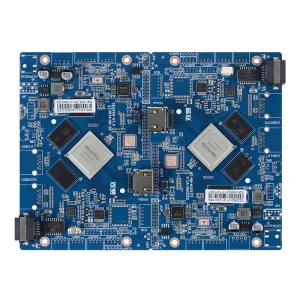
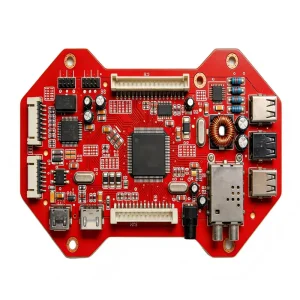
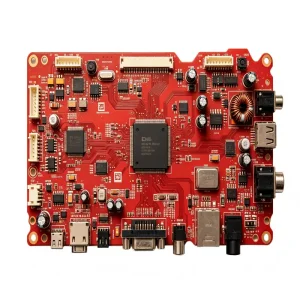
Our Shenzhen engineering team conducts comprehensive DFM, electrical stress, and component lifecycle reviews before you place an order. Non-Disclosure Agreements (NDA) signed promptly prior to file inspection.