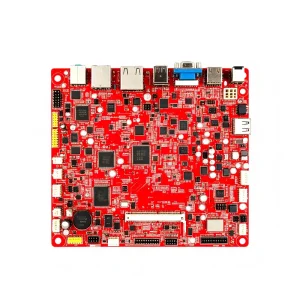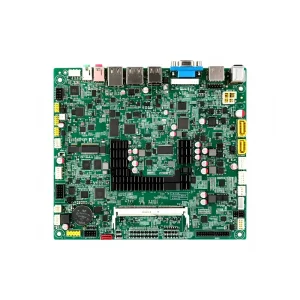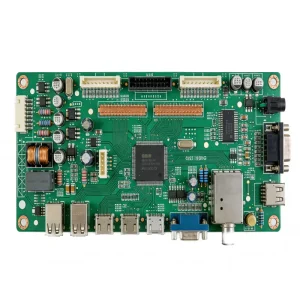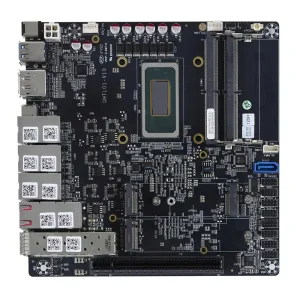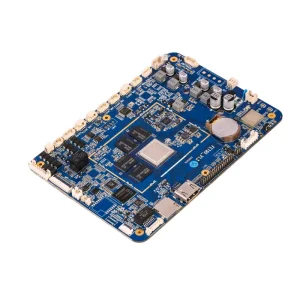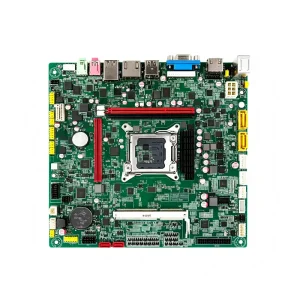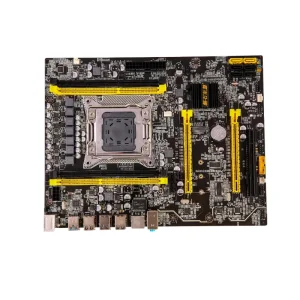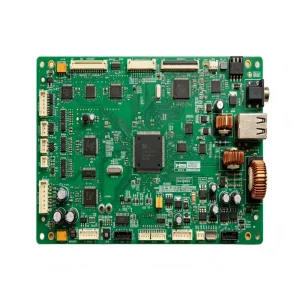
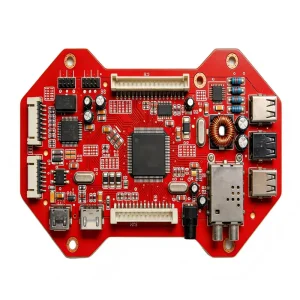
Engineered for harsh industrial environments, ultra-low power wireless architectures, and mission-critical reliability.
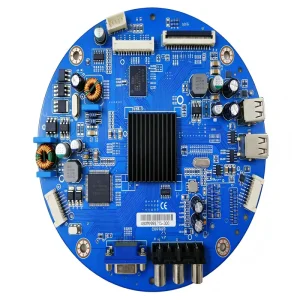
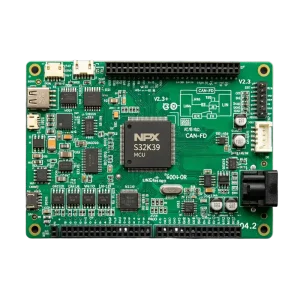
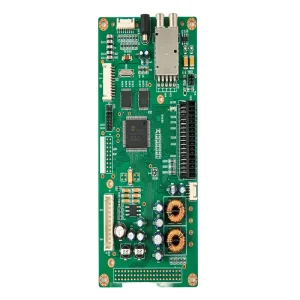
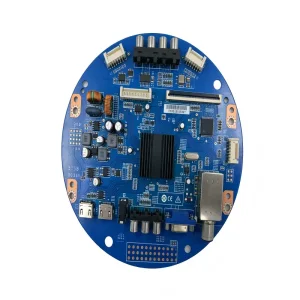
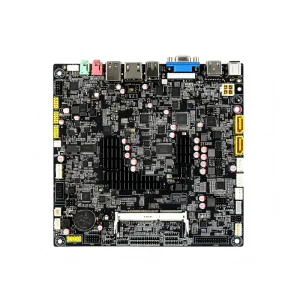
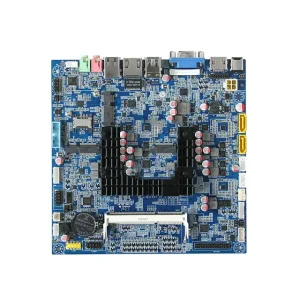
Modern electronics manufacturing has migrated beyond fragmented board fabrication. Global tier-1 OEMs require integrated product delivery ecosystems capable of managing thermal, signal integrity, and supply chain volatility simultaneously.
With the exponential growth of Edge AI computing and 5G/6G RF nodes, bare PCB boards require ultra-dense Microvia Any-Layer HDI, controlled dielectric constants (Dk ≤ 3.0), and tight impedance tolerances (±5%). STHL provides advanced Rogers, PTFE, and high-Tg FR-4 hybrid pressings engineered to mitigate high-speed signal attenuation and skin effect losses.
The global shift toward high-efficiency power electronics in automotive OBCs and renewable solar inverters demands specialized thermal dissipation solutions. We integrate heavy-copper layers (up to 6oz), direct-bonded aluminum/copper cores, and embedded ceramic heat bridges capable of continuous operation in thermal domains exceeding 175°C.
As form factors compress across medical implants, AR hardware, and compact automotive sensors, our factory runs dual-track Yamaha and Panasonic SMT lines. We reliably place ultra-fine 01005 passives and 0.3mm ultra-fine ball grid arrays (BGA) with complete 3D SPI solder paste tracking and nitrogen-purged reflow chambers.
Overseas purchasing directors face systemic headwinds: fragmented suppliers causing finger-pointing, unexpected component obsolescence (EOL), counterfeit electronic parts entering grey-market channels, and sudden design revisions incurring catastrophic production halts.
STHL Electronics neutralizes these liabilities by acting as your single accountable turnkey manufacturing partner. Headquartered in Bao'an, Shenzhen—the epicenter of global electronics hardware—we operate an automated component procurement hub connected directly to tier-1 authorized distributors (Digi-Key, Mouser, Arrow, Avnet) and verified original component fabricators.
Our procurement engineers conduct algorithmic BOM scrubbing, proactively recommending drop-in pin-compatible alternatives and life-cycle risk scoring before bare silicon fabrication initiates.
Why Shenzhen remains unmatched: A 1-hour localized sourcing radius combined with automated Industry 4.0 manufacturing algorithms creates irreversible competitive advantages in time-to-market and total landed cost.
| Evaluation Parameter | Fragmented Multi-Vendor Sourcing | Traditional Regional EMS | STHL Turnkey China Factory 4.0 |
|---|---|---|---|
| Accountability Chain | Multiple points of failure (PCB shop vs. SMT plant vs. Parts broker) | Single point, but heavily reliant on overseas subcontracting | Single Accountable EMS Hub Full internal ownership from CAD to Carton |
| BOM Procurement Lead Time | 6 to 14 weeks due to multi-tier middleman communications | 4 to 8 weeks with limited component channel leverage | 3 to 7 Days (Fast-Track) Direct real-time API link to 500k+ qualified components |
| DFM / DFA Engineering Feedback | Slow or nonexistent; defects detected after board fabrication | Manual review taking 5+ business days | Within 24 Hours Automated Valor DFM / DFA algorithmic design audit |
| Quality Traceability (MES) | Paper records, fragmented or zero lot-level data | Batch-level serial tracking only | 100% MES Digital Twin Reel-level component traceability & reflow temperature curves |
| IP Protection Standard | High vulnerability across untracked sub-contractors | Moderate contractual coverage | Rigid NDA & Encrypted Servers ISO 27001-aligned server firewalls & strict staff NDA |
Comprehensive analysis of solder mask clearances, pad aspect ratios, annular rings, via-in-pad thermal dissipation, and copper balance to prevent warping.
Laser direct imaging (LDI), controlled impedance verification via Polar CITS880s, automated optical inspection (AOI), and precise ENIG/OSP surface finishing.
Closed-loop DEK solder paste printing, Koh Young 3D SPI, multi-head chip placement, 10-zone reflow with nitrogen, and selective wave soldering for THT pins.
Non-destructive 3D X-Ray void inspection for BGAs/QFNs (void rate < 10%), automated flying probe, ICT in-circuit testing, and custom firmware flashing.
Different industries enforce non-negotiable compliance frameworks. STHL maintains dedicated production corridors tailored to specific environmental, thermal, and lifecycle rigors.
Assemblies for Battery Management Systems (BMS), ADAS radar sensor modules, telematics gateways, and DC-DC power electronics. Built under zero-defect methodologies, PPAP Level 3 documentation, and AEC-Q200 passive component validation.
Ventilator controllers, MRI pulse processing modules, patient telemetry sensors, and automated IV infusion pumps. Features class-10,000 cleanroom conformal coating, rigorous bio-burden controls, and full Device History Record (DHR) generation.
PLC controllers, edge IoT modems, solar micro-inverter PCBA, and high-voltage motor drivers. Engineered to withstand sustained vibration, thermal cycling (-40°C to +125°C), and galvanic isolation up to 5kV RMS with robotic potting and silicone coating.
Direct from our Bao'an facility engineering ledger: Real-world operational tolerances verified daily across active production lines.
| Technical Capability Parameter | Standard Production Tier | Advanced / High-Precision Tier |
|---|---|---|
| Layer Count (Rigid, Flex, Rigid-Flex) | 1 – 16 Layers | Up to 64 Layers (Any-Layer HDI 3+N+3) |
| Min. Trace Width / Clearance | 3.5 mil / 3.5 mil (0.09mm) | 2.0 mil / 2.0 mil (0.05mm) |
| Min. Mechanical Drill / Laser Hole | 0.20 mm (Mechanical) | 0.075 mm (Laser Microvia) |
| SMT Component Placement Size | 0402, 0201 Passives | 01005 (0402 metric) & 0.3mm Pitch Micro-BGA |
| Max. PCB Panel Dimensions | 510 mm × 460 mm | 1200 mm × 600 mm (Long LED Boards) |
| Board Thickness & Aspect Ratio | 0.4 mm – 3.2 mm (Aspect Ratio 8:1) | 0.2 mm – 6.0 mm (Aspect Ratio 16:1) |
| Surface Finishes Available | HASL Lead-Free, OSP, Standard ENIG | Hard Gold (50u"), Immersion Tin/Silver, ENEPIG |
| Special Substrates & Hybrid Builds | Standard FR-4 (Tg 150°C–170°C) | Rogers, Taconic, Teflon, Megtron 6, Ceramic, Al-Core |
| Quality Standards & Inspection | IPC-A-610 Class 2, 2D AOI | IPC-A-610 Class 3, 3D SPI, 3D AXI (X-Ray), ICT, FCT |
Direct answers to the most stringent technical, logistic, and security inquiries raised by international engineering audits.
Manufactured in accordance with IPC Class 3 standards for automotive cockpit telemetry, wireless edge computing, and medical imaging diagnostics.