Enterprise EMS & Advanced Prototyping

China Flex PCB Prototyping Manufacturers & Factory

Precision-engineered flexible printed circuits, ultra-dense microvia HDI, and high-reliability turnkey PCBA manufacturing deployed from Shenzhen's premier electronics ecosystem.

Product Architecture

Mission-Critical Assemblies & Specialized Flex Applications

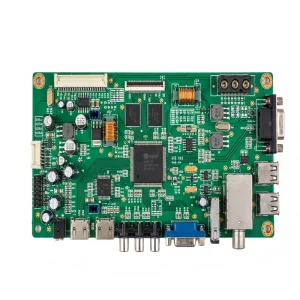
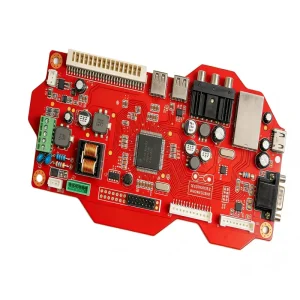
Explore our validated product solutions ranging from ultra-miniature medical sensors to high-speed automotive and industrial control assemblies engineered without minimum order restrictions.

Industry Whitepaper

Macro-Industry Dynamics & Global Flex PCB Paradigm Shift

Analyzing the technological transition from traditional rigid substrates to dynamic multi-layer polyimide flexible circuits in high-frequency, space-constrained edge computing environments.

Volumetric Miniaturization

Modern edge electronics require sub-millimeter profiles. Flexible Printed Circuits (FPCs) reduce interconnect volume by up to 75% compared to wire harnesses and standard rigid configurations, enabling true 3D spatial routing inside hermetic enclosures.


Dynamic Flex Durability

Engineered for high-vibration automotive chassis and robotic articulators, dynamic flex circuits withstand over 10,000,000 bending cycles without copper grain micro-fractures, maintaining uninterrupted high-speed differential signal propagation.

High-Frequency Integrity

With adhesive-less polyimide and modified polyimide (MPI) or Liquid Crystal Polymer (LCP) dielectrics, flex prototyping delivers ultra-low dielectric constant (Dk < 3.2) and loss tangent (Df < 0.002) optimized for 5G mmWave and 112G PAM4 protocols.

Factory Metrics

Precision Flex Prototyping Technical Specifications

STHL Electronics bridges the gap between rapid R&D turnaround and Tier-1 automotive and medical production compliance.

2006
Shenzhen Established
10,000+
Square Meters Cleanroom
99.5%
On-Time Dispatch Rate
0 MOQ
Prototype to Mass Scale
Process Parameter Quick-Turn Prototype Tier Advanced HDI Flex Production Inspection & Verification Protocol
Layer Count Range 1 to 6 Layers Flexible / Rigid-Flex Up to 16 Layers (Rigid-Flex HDI) Automated Optical Inspection (AOI)
Base Copper & Core Thickness 1/3 oz (12µm) to 2 oz (70µm) ED/RA Copper Ultra-thin 9µm rolled annealed copper X-Ray Fluorescence (XRF) Coating Gauge
Min. Line Width / Spacing 2.5 mil / 2.5 mil (63.5µm / 63.5µm) 1.8 mil / 1.8 mil (45µm / 45µm via SAP) Micro-section metallurgical examination
Surface Finishes ENIG (Electroless Nickel Immersion Gold) ENEPIG, Immersion Tin, Hard Gold Fingers Solderability Testing per IPC-J-STD-003
Stiffener Integration FR-4, Polyimide (PI), Stainless Steel / Aluminum Laser-cut hybrid thermal dissipative backing Precision Height Dial Gauge & Pull-Force Rig
Compliance & Resilience

Localized Engineering Gateways & Global Compliance Framework

Bridging Chinese advanced electronics production with Western regulatory standards and cross-border logistical integrity.

Global Quality Audits

STHL maintains active, fully audited certifications: IATF 16949 for automotive electronics, ISO 13485 for medical devices, alongside ISO 9001 and ISO 14001. Every production lot links to our MES database for transparent traceability down to the component reel ID.

Turnkey Component Procurement

Leveraging deep relationships with over 100 verified franchised distributors—including Digi-Key, Mouser, Arrow, Avnet, and original silicon fabricators (STMicroelectronics, Microchip, TDK)—guaranteeing 100% genuine silicon and mitigating counterfeit penetration risks.

Strict NDA & IP Protection

Engineering assets, schematic Gerber hierarchies, firmware binaries, and proprietary stack-up files are segregated behind strict multi-factor corporate firewalls. Bilateral NDAs executed prior to RFQ review safeguard critical intellectual property across your product’s entire lifecycle.

IATF 16949 Certification ISO 9001 Certification ISO Certification ISO 14001 Certification
Application Domains

High-Reliability Flex Applications Across Key Verticals

From dynamic robotic joints to Class III implantable diagnostics, discover how STHL flex prototyping powers next-generation electronic ecosystems.

Medical Diagnostics

Biocompatible flex substrates engineered for non-invasive patient monitors, surgical endoscopy arrays, and ultrasound transceivers adhering to stringent ISO 13485 bio-burden cleanroom fabrication guidelines.

Automotive & EV

Battery Management System (BMS) flexible busbars, Electric Power Steering (EPS) sensors, and HUD assemblies surviving continuous -40°C to +125°C thermal cycling per IATF 16949 reliability profiles.

Industrial Robotics

Continuous dynamic-flex interconnections integrated into multi-axis robotic articulators and industrial PLCs, eliminating wire pinch failures and providing integrated EMI shielding.

IoT & Wearables

Ultra-dense, lightweight form factors for smart watches, AR/VR displays, and distributed environmental telemetry nodes utilizing 01005 surface-mount passives and sub-0.35mm pitch micro-BGAs.

Future Roadmap

Next-Generation Technology Evolution: 2026–2030

Pioneering advancements in structural materials, additive electronic printing, and automated testing protocols for flexible circuits.

Ultra-Fine Line Sub-SAP Processing

Transitioning from subtractive chemical etching to Semi-Additive Process (SAP) enables line widths and spaces under 15µm, allowing system designers to integrate heterogeneous chiplets directly on ultra-thin flexible substrates.

Embedded Passives & Thin-Film Dies

Embedding resistors, capacitors, and bare silicon dies directly within intermediate polyimide layers eliminates up to 40% of external SMT components, liberating critical external surface area for thermal dissipation and RF shielding.

AI-Driven In-Line Defect Synthesis

Integrating real-time machine vision directly into SMT pick-and-place lines and 3D AOI inspection units to preemptively identify solder bridge formation, head-in-pillow anomalies, and micro-voids prior to thermal reflow profiling.

Technical Guidance

Frequently Asked Questions: Flex PCB Sourcing & Engineering

In-depth technical answers addressing common design, manufacturing, and procurement inquiries from global procurement teams and lead hardware architects.

What are the key differences between rolled annealed (RA) and electro-deposited (ED) copper in flex prototypes?
Rolled Annealed (RA) copper undergoes a continuous mechanical rolling process that aligns its crystalline structure horizontally. This delivers exceptional ductility and makes RA copper mandatory for dynamic flexing applications (such as hinges, sliders, and automotive steering sensors). Electro-Deposited (ED) copper is formed via electrochemical deposition, resulting in a vertical columnar grain structure. ED copper is stiffer and more economical, making it ideal for "flex-to-fit" static installations where the board is bent once during enclosure assembly and remains static thereafter.
How does STHL Electronics optimize DFM reviews to eliminate flex prototyping assembly defects?
Our 50+ professional engineers execute comprehensive Design for Manufacturability (DFM) and Design for Assembly (DFA) audits prior to raw material exposure. We verify bend radius-to-thickness ratios (typically >10:1 for multi-layer flex), enforce teardrop fillets on all via-to-trace junctions, ensure that traces passing through bend zones cross perpendicularly, and verify that coverlay openings do not encroach on fine-pitch SMD pads. In addition, we design specialized SMT carriers and custom vacuum fixtures to prevent substrate warpage during SMT reflow.
What stiffener options are supported, and how do they impact assembly fixtures?
STHL supports three primary stiffener types: Polyimide (PI) for increasing insertion thickness (e.g., ZIF connectors), Glass-Epoxy (FR-4) for localized component stabilization beneath heavy SMT parts or connectors, and Stainless Steel/Aluminum for maximum rigidity and heatsinking. Stiffeners are thermally bonded using pressure-sensitive adhesives (PSA like 3M 467MP) or thermosetting epoxy bonding film for high-temperature reflow resistance.
Does STHL support turnkey component procurement and supply chain verification?
Yes. We provide complete turnkey sourcing across more than 500,000 part numbers via franchised distributors and direct semiconductor factories. All incoming parts undergo strict incoming inspection (IQC), including component packaging verification, date-code checks, moisture barrier verification, and X-ray authenticity inspection to protect against counterfeit or gray-market components.
What are the lead times for quick-turn flex PCB prototypes versus production scaling?
Bare-board flex prototypes can be delivered in as fast as 3 to 5 working days depending on layer count and stiffener complexity. Quick-turn turnkey PCBA prototypes typically require 7 to 10 working days, provided all BOM components are readily available in domestic stock. High-volume scaling transitions seamlessly across the exact same MES-controlled SMT lines in 3 to 4 weeks.
Integrated Hardware

Precision Assemblies & Multi-Sector Production Capabilities

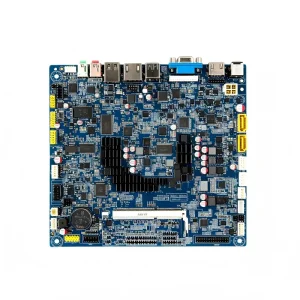
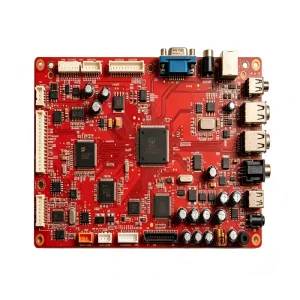
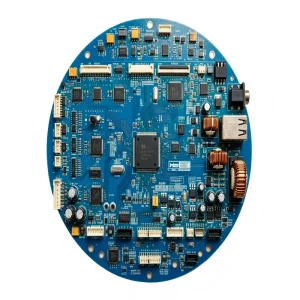
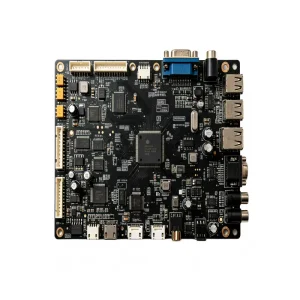
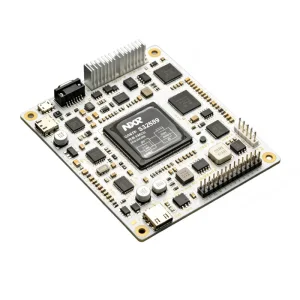
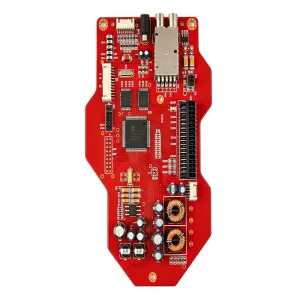
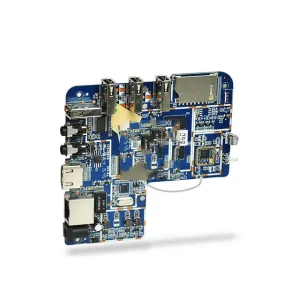
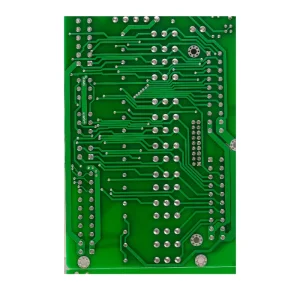
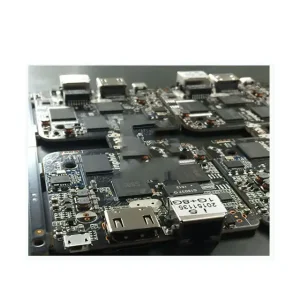
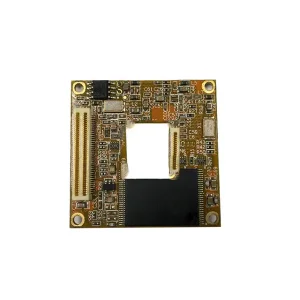
Explore our extensive portfolio of high-density SMT and THT assemblies deployed across consumer, medical, and telecommunication hardware sectors.