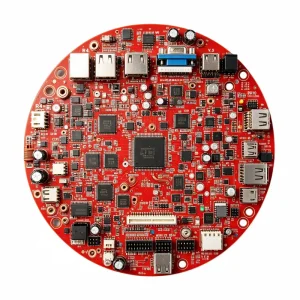
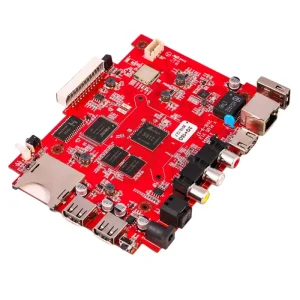
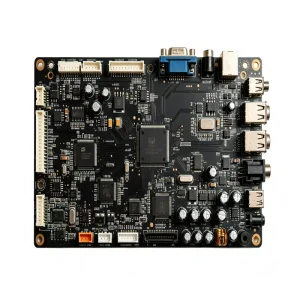
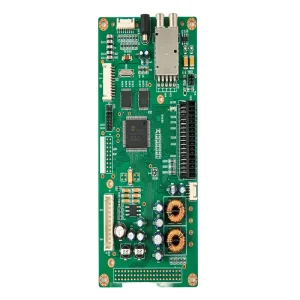
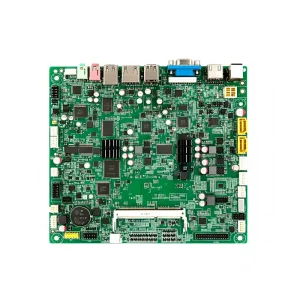
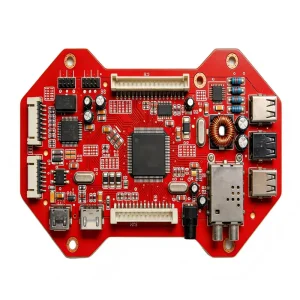
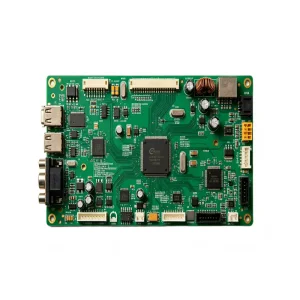
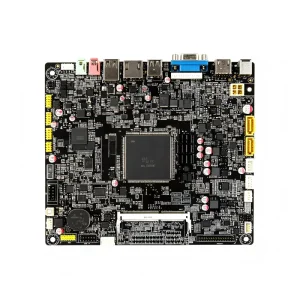
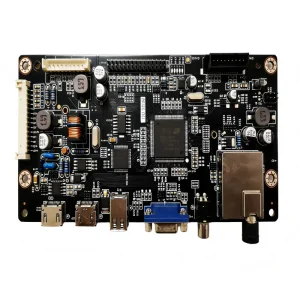
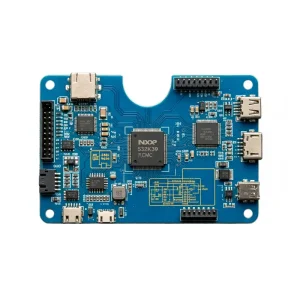
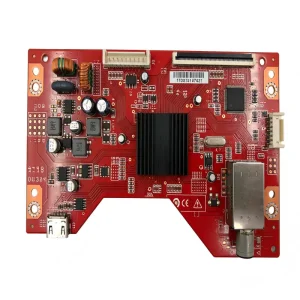
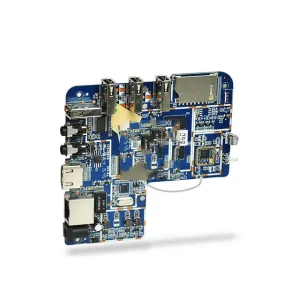
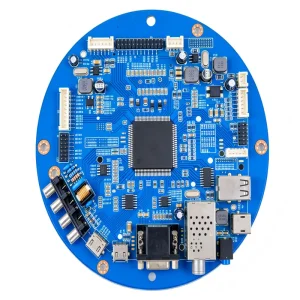
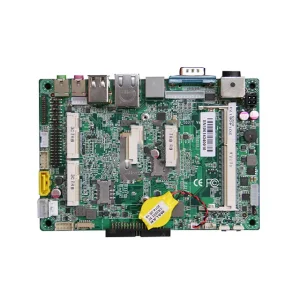
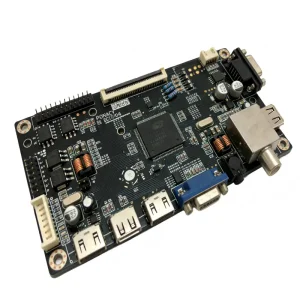
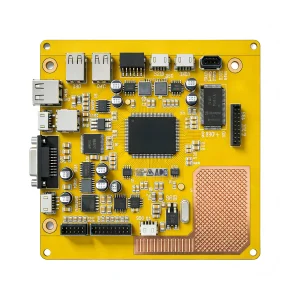
Explore our core turnkey solutions across industrial automation, medical healthcare terminals, IoT communication infrastructure, and energy control assemblies.
Strategic transformations in geopolitical supply chains, electronic miniaturization, high-frequency signal processing, and the unmatched clustering advantages of China’s hardware capital.
The global electronics manufacturing services (EMS) industry is traversing a pivotal epoch driven by pervasive electrification, artificial intelligence workloads at edge nodes, smart automotive architectures, and ultra-miniaturized medical devices. Navigating the intersection between rigid fabrication constraints and rapid product life cycles requires not just a contract manufacturer, but a deeply integrated engineering partner. As original equipment manufacturers (OEMs) worldwide confront supply chain disruptions, component obsolescence, and hyper-competitive time-to-market windows, understanding the operational architecture of China's PCBA manufacturing hubs provides decisive competitive advantages.
Within a 30-kilometer radius in Bao'an and the Greater Bay Area, our factory interfaces directly with bare-board substrate fabs, verified passive agents, specialized CNC metal shops, injection tooling centers, and international logistics conduits, truncating procurement cycles from weeks to hours.
Design for Manufacturability (DFM) and Design for Assembly (DFA) are embedded upstream. Our 50+ engineers scrutinize trace width, copper spacing, BGA thermal dissipation pad layouts, solder bridge risks, and pick-and-place nozzle clearances before a single line setup is executed.
Equipped with ultra-fast modular placement platforms capable of handling components down to 01005 passives, 0.3mm pitch Micro-BGAs, PoP (Package-on-Package), Quad Flat No-leads (QFN), and high-frequency RF shields with rigorous 10-zone reflow profiling.
Strict standard compliance across industrial telemetry, Class II/III medical devices, in-vehicle telematics, and renewable energy conversion platforms.
Automotive electronics mandate zero-defect quality levels. Under our audited IATF 16949 procedures, PCBA modules for battery management systems (BMS), in-vehicle ADAS controllers, infotainment consoles, and CAN-bus telemetry pass comprehensive thermal-shock cycling, vibration analysis, automated conformal coating to mitigate ionic contamination, and AOI/AXI screening.
From portable digital blood pressure monitors to micro-fluidic infusion pump controllers and ICU diagnostic terminals, human-life-critical boards require rigorous lot tracking. STHL guarantees 100% component trace verification via ERP-MES linkage, ESD-controlled cleanroom assembly, strict biocompatible cleaning, and thorough in-circuit/functional testing.
Industrial environments demand continuous operation under extreme thermal variations, corrosive airborne contaminants, and electrical noise. Our DC-DC power conversion modules, online water quality monitoring instruments, and programmable logic controller (PLC) boards feature heavy-copper inner layers, selective wave soldering, potting encapsulation, and comprehensive burn-in screening.
For high-frequency multi-band 4G/5G industrial modems, Wi-Fi 6 routers, Bluetooth low-energy hardware, and smart-grid security access locks, impedance control and signal integrity are vital. We maintain strict controlled impedance calculations (polar-field solvers), micro-via laser drilling validation, and RF shielding assembly.
A closed-loop manufacturing sequence where every step is governed by quality check gates, IPC-A-610 Class II/III standards, and unified digital recordkeeping.
Gerber, centroid, and BOM analysis. Identification of pad mismatch, thermal relief gaps, and component supply risks.
Direct sourcing via authorized channels (Digi-Key, Mouser, verified Tier-1 agents) followed by incoming XRF & de-reeling inspection.
High-Tg FR-4, flex, rigid-flex, or aluminum production with ENIG, OSP, or Immersion Silver surface metallization.
High-precision laser stencil solder printing, automated component placement, nitrogen-purged reflow soldering.
Through-hole insertion, selective robotic soldering, lead trimming, and dedicated secondary wave operations.
3D Automated Optical Inspection, X-Ray inspection for BGA voids, In-Circuit Testing (ICT), and functional verification.
Conformal coating, injection housing mechanical assembly, custom calibration packaging, and door-to-door air freight.
Bridging buyer criteria with verifiable plant capabilities. We eliminate engineering ambiguities before line loading.
| Manufacturing Attribute | Global Sourcing Requirement | STHL Factory Capability Matrix | Compliance / Verification |
|---|---|---|---|
| Min Component Pitch | 0201 / 01005 passives & 0.35mm BGA pitch | 01005 chips, 0.3mm pitch fine BGA, CSP, QFN | Passed / IPC Class III |
| PCB Layer Count & Substrates | 1 to 32+ Multilayer, High Frequency, Flex | FR-4, Halogen-Free, Flex, Rigid-Flex, Rogers, Aluminum | UL 94V-0 Certified |
| Solder Joint Reliability | Lead-Free RoHS, minimal BGA voiding (< 15%) | BGA voiding engineered < 10% under 3D X-Ray analysis | RoHS & REACH Compliant |
| Quality Traceability | Lot-level tracking from reel to shipment | Full MES barcoding, component reel UID scanning | ISO 9001 / IATF 16949 |
| Testing Coverage | Functional (FCT), In-Circuit (ICT), Burn-in | Custom pneumatic test fixtures, ICT bed-of-nails, FCT rigs | 100% Pre-Shipment Tested |
| IP Confidentiality | Legally enforceable NDA, segregated data storage | Pre-RFQ NDA execution, encrypted server protocols | Comprehensive Legal NDA |
How automation, advanced AI optical analytics, and sustainable manufacturing are driving the factory of the future.
Traditional optical inspection algorithms often flag false positives due to harmless solder reflections. Our latest lines integrate deep-learning computer vision models trained on millions of solder fillet images, isolating micro-bridging, insufficient wetting, and tombstones with sub-micron precision.
Under ISO 14001 guidelines, progressive manufacturers must minimize environmental footprints. We lead with water-soluble, low-VOC flux formulations, halogen-free board substrates, low-temperature soldering (LTS) alloys that reduce thermal power draw, and full electronic recycling scrap recovery.
Using algorithmic API scrapers connected with worldwide distributor networks, our ERP continuously monitors real-time inventory levels, factory allocations, and lead-time anomalies. This proactively flags end-of-life (EOL) components, allowing prompt redesign or alternate part qualification.
Straightforward answers addressing design confidentiality, assembly tolerances, material verification, and production scalability.
Counterfeit mitigation is our core procurement priority. STHL procures exclusively through factory-authorized franchised distributors (such as Arrow, Avnet, Digi-Key, Mouser) and original component manufacturers (OCM). All incoming components undergo rigorous Incoming Quality Control (IQC) including microscope packaging inspections, batch date-code verification, pin de-soldering testing, and decapsulation or XRF spectrometry whenever necessary.
For engineering prototypes and pilot runs, once Gerber data and components are locked, our rapid SMT turnaround is 24 to 72 hours. For standard full turnkey manufacturing (encompassing PCB fabrication, complete BOM sourcing, and final assembly), pilot builds take approximately 2.5 to 3.5 weeks, while volume production typically runs within 4 to 6 weeks depending on custom parts or IC lead times.
We implement a strict multi-tier IP protection policy. Before receiving any technical Gerber or schematic files, we sign legally binding bilateral Non-Disclosure Agreements (NDAs). Firmware programming occurs within an isolated network partition where operators only flash verified binary binaries without direct access to human-readable source code. Access logs are archived inside our secure ERP framework.
To provide a detailed DFM report and line-item quotation within 24 hours, our engineering team requires: (1) Gerber RS-274X or ODB++ format data files, (2) a complete Bill of Materials (BOM) in Excel with clear Manufacturer Part Numbers (MPN) and footprint designations, (3) XY Centroid (Pick-and-Place) coordinate files, and (4) specific assembly drawings or custom testing guidelines.
Yes. Our in-house test engineers construct custom test benches, pneumatic clamping fixtures, and automated test sequences tailored to your operational conditions. We execute power-on self-tests, RF signal spectrum analysis, firmware flashing, and prolonged high-temperature load burn-in to ensure 100% functional reliability before shipment.
STHL strictly operates under a No-MOQ policy. We recognize that high-reliability engineering involves rigorous validation stages. We support clients from a single prototype board to small-batch pilot validation (50–500 pcs) all the way through to scalable high-volume mass production (100,000+ units), utilizing the same quality controls and SMT lines across all runs.
Scalable box build, smart environmental telemetry devices, optoelectronic power solutions, and complex consumer controller assemblies.