Engineered to IPC/WHMA-A-620 Class 3 specifications for mission-critical deployments across IoT, automotive, and power distribution infrastructures.
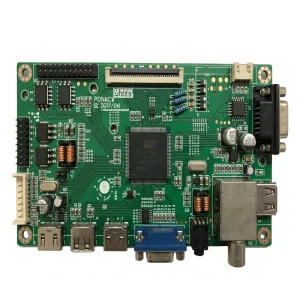
A deep-dive technical blueprint for systems architects requiring unyielding signal integrity, controlled impedance, and thermal resilience under extreme mechanical stress.
Modern cable wire assemblies require rigorous high-speed differential signaling protocols (e.g., PCIe 5.0/6.0, USB4, Industrial Ethernet). We implement automated skin-effect mitigation strategies, low-loss foamed dielectric insulations (PTFE/FEP), and tight twist-pitch variance control to keep skew below 2.5 ps/ft and cross-talk attenuation below -45 dB at multi-gigahertz frequencies.
To eliminate electromagnetic interference in high-power inverters and medical sensors, our manufacturing lines deploy dual-layer shielding methodologies comprising spiraled aluminum-mylar foil coupled with a minimum 92% coverage tinned copper braided shield. Overmolded 360-degree copper foil conductive clamping guarantees zero shielding leakages at the critical connector termination point.
Custom low-pressure polyamide molding (Macromelt) and high-pressure TPU/PVC injection overmolding provide true IP67, IP68, and IP69K ingress protection. Finite Element Analysis (FEA) is utilized during mold tool design to model cyclic strain relief, achieving over 150,000 continuous flex cycles at bend radiuses down to 3x the outer diameter without conductor work-hardening or dielectric breakdown.
| Interconnect Domain | Manufacturing Standards | Testing & Qualification Parameters | Typical Industrial Applications |
|---|---|---|---|
| Micro-Coaxial & High-Density FAKRA | USCAR-17, USCAR-18, IPC/WHMA-A-620 Class 3 | TDR Impedance (50Ω ±2Ω), Insertion Loss < 0.3 dB @ 6 GHz | Automotive ADAS Cameras, Radar, Telematics Units |
| Heavy-Duty Industrial Power Harnesses | UL 508A, ISO 6722, IEC 60228 Class 5/6 | Hipot Dielectric Withstand (up to 5kV DC), Pull-force verification to 500N | Servo Motor Drives, ESS Batteries, Solar Inverters |
| Bio-Compatible Medical Assemblies | ISO 13485, USP Class VI, ISO 10993 | EtO / Autoclave sterilization compatibility, 0.1μA leakage test | Surgical Robotics, Patient Monitoring, Endoscopy Probes |
| Complex Mixed-Signal Multi-Leg Looms | IPC/WHMA-A-620 Class 2 & 3, RoHS 3, REACH | 100% Net-List Continuity, Cirris High-Pot Insulation >1000MΩ | Factory Automation, CNC Machinery, Aerospace Avionics |
Custom cable assemblies require tailored cross-functional metallurgy, specialized contact plating, and dynamic flex characteristics depending on end-user operational physics.
From high-voltage orange interlocks for Battery Management Systems (BMS) to shielded twisted pairs for CAN-FD, FlexRay, and automotive Ethernet. Built with heat-resistant irradiated cross-linked polyolefin (XLPE) jacket materials capable of continuous operation from -40°C to +150°C under intense engine vibration profiles.
Micro-wire assemblies engineered for patient-contact safety. Silicone jacketed arrays and custom coil cords optimized for repeated chemical wipe-downs, autoclave cycles, and low triboelectric noise. Cleanroom Class 10,000 sub-assembly lines assure zero bio-burden and particle contamination for surgical consoles.
Dynamic track-rated cable assemblies designed to survive continuous torsional and bending fatigue within robotic drag chains. Combining composite copper conductors, Kevlar strain cords, and halogen-free polyurethane (PUR) jacketing resistant to cutting oils, UV radiation, and welding spatter.
Shenzhen STHL leverages fully digitized production pipelines to eradicate process variability, ensuring Western OEMs benefit from unbeatable economies of scale without quality compromises.
Swiss Schleuniger and Komax automated cutting, stripping, crimping, and tinning centers maintain terminal strip depths to ±0.01mm. In-line crimp force monitoring (CFM) rejects defective crimps on milliseconds notice.
With 7 high-speed SMT lines, 2 DIP/THT lines, and specialized wire-harness cells, we execute cohesive box-build integration where cables and PCBA mate under an unified ERP/MES umbrella.
Direct supply contracts with TE Connectivity, Molex, JST, Amphenol, and Hirose ensure original component authenticity with complete CoC documentation, eliminating gray market counterfeiting risks.
Laser barcode engraving down to every terminal harness. Batch-level genealogy tracking links crimp pull-test force logs, terminal cross-section micro-etch micrographs, and operator IDs for 10+ years.
Global supply chain managers face mounting pressure on tariff mitigation, carbon accountability, and intellectual property safety. Here is how our operational framework answers each demand.
All compounds and resins comply fully with EU RoHS 3 (Directive 2015/863) and SVHC declarations under REACH (EC 1907/2006). Factory-level UL File certifications guarantee flame retardancy compliance according to UL 94 V-0 and cable VW-1 ratings for seamless market entry into North American jurisdictions.
All incoming 3D harness models, BOMs, and wire run lists reside in encrypted on-premise servers with role-based access. STHL executes binding bilingual non-disclosure agreements prior to file reviews, ensuring custom tooling, terminal molds, and proprietary pinouts are safeguarded indefinitely.
Our dedicated DFM (Design for Manufacturability) team identifies cost-reduction alternatives without altering electrical performance. By suggesting localized connector equivalents (e.g., compatible JST/Molex clones with cross-mate validation) and batch wire consolidation, clients routinely realize 15% to 32% BOM savings.
Cable wire assembly failures are the most common source of field intermittent issues. Our six-stage verification protocol ensures 100% continuous reliability under harsh deployment conditions.
Every single harness undergoes dual-stage programmable Cirris wire analyzer testing for pinout continuity, opens, miswires, short circuits, and micro-ohm contact resistance. High-potential dielectric breakdown (Hi-Pot) is systematically pulsed up to 1500V to catch pin-to-shield insulation weaknesses.
Precision metallurgical saws, chemical etching baths, and high-magnification optical microscopes measure terminal crimp heights, widths, and strand compaction ratios. This guarantees zero voiding and gas-tight junctions that defy corrosion over decades of field service.
Thermal cycling chambers (-55°C to +125°C), salt spray mist exposure (ASTM B117), mechanical vibration tables, and motorized tensile pull testers ensure the harness assembly resists contact pull-out, insulation cracking, and plasticizer migration under real-world abuse.
Essential insights for engineering procurement and supply chain managers evaluating turnkey cable and PCBA manufacturing in China.
Engineered for high-volume automated manufacturing, industrial automation platforms, computer peripherals, and advanced medical diagnostics.
Send your wiring schematics, pinout charts, or PCBA Gerber files for a comprehensive DFM audit and transparent factory quotation within 24 hours.