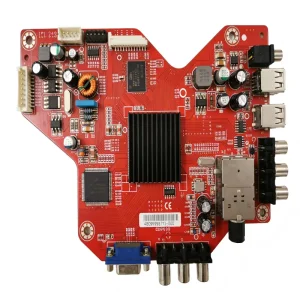
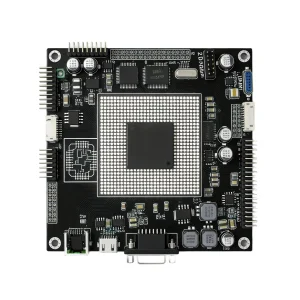
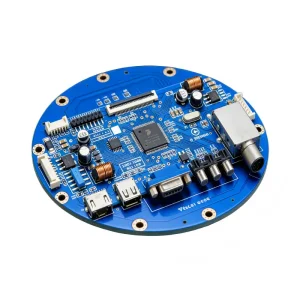
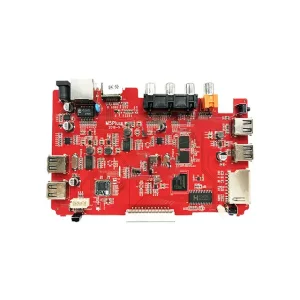
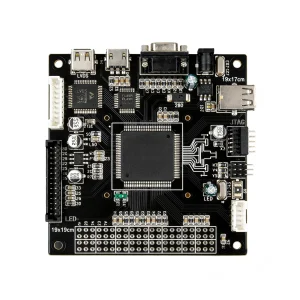
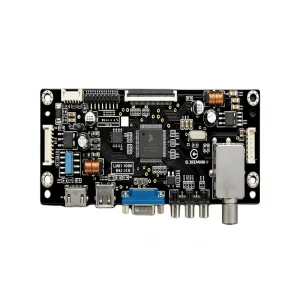
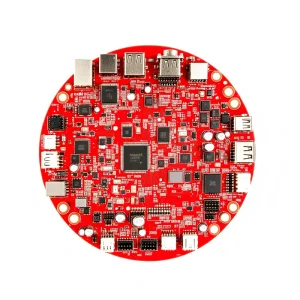
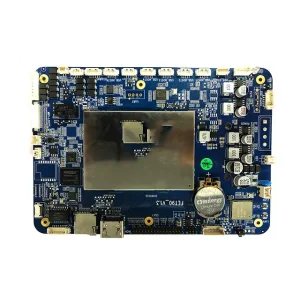
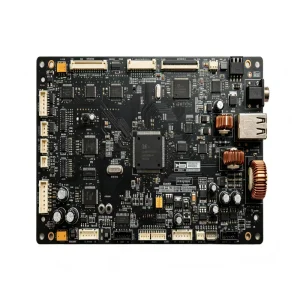
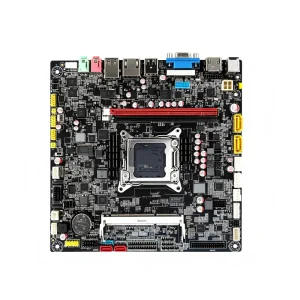
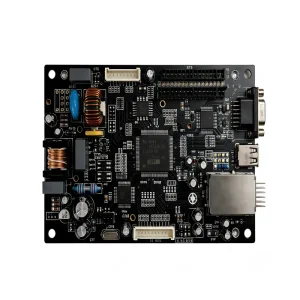
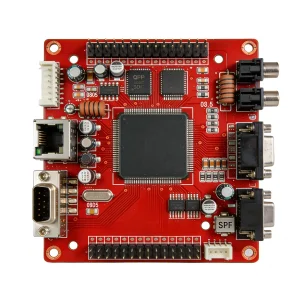
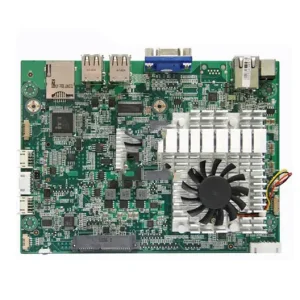
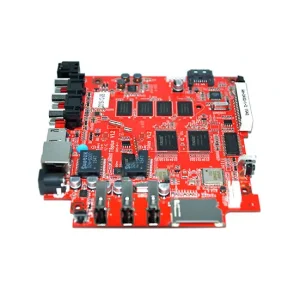
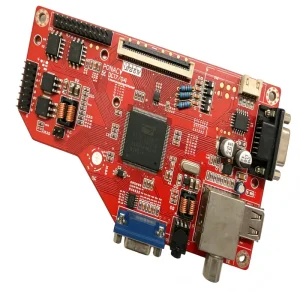
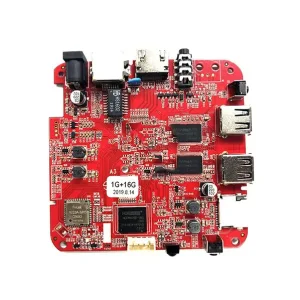
Precision-manufactured electronic assemblies optimized for real-time monitoring, industrial sensing, and critical power conversion.
Shenzhen and the Greater Bay Area provide unmatched vertical integration, transitioning from basic low-cost labor to world-class automated precision engineering.
Within a 50-kilometer radius in Shenzhen, cable assembly factories source specialized copper alloys, custom halogen-free TPU/PUR jackets, and hermetic circular connectors within hours. This ultra-dense ecosystem eliminates multi-week component lead times and cuts logistics overhead significantly.
Modern Chinese industrial cable assembly factories deploy Swiss Komax wire stripping, high-speed terminal crimping, and automated visual pin-insertion systems. This eliminates human error, ensures identical crimp height and pull-force compliance across millions of units, and keeps rework rates below 50 PPM.
Premier manufacturing partners in China adhere to IPC/WHMA-A-620 Class 3, UL certifications, and stringent RoHS/REACH directives. Combined with automotive-grade IATF 16949 and medical ISO 13485 accreditations, Chinese plants guarantee full batch traceability down to the raw conductor heat number.
Industrial Automation (Industry 4.0), autonomous robotics, and renewable grid management demand assemblies that combine extreme power transmission with gigabit-rate deterministic networking. Modern industrial cable assembly factories are leading this transition through advanced materials science and miniaturization.
Key engineering shifts driving cable harness design, material selection, and testing methodologies globally.
Miniaturization demands the consolidation of power and high-speed telemetry. Single Pair Ethernet (IEEE 802.3cg/bu) delivers up to 1Gbps data rates and 50W Power over Data Lines (PoDL) across a single lightweight twisted pair over 1,000 meters, eliminating traditional bulky multi-conductor architectures in robotics.
High-speed pick-and-place robots and 6-axis gantries exert millions of dynamic bending cycles. Advanced assemblies utilize finely stranded oxygen-free electrolytic bare copper (Class 6), low-friction PTFE/ETFE conductor insulations, and abrasion-proof polyurethane (PUR) outers designed for over 10 million flex cycles.
Electromagnetic noise from high-frequency Variable Frequency Drives (VFDs) and servo motors induces signal crosstalk. Factories implement double-layer shielding featuring 100% coverage aluminum-mylar foil paired with >85% coverage tinned copper braided mesh, clamped to metal backshells for continuous 360° earth termination.
From cleanroom medical environments to offshore rigs and heavy automotive drivetrains, cable assembly specifications must strictly reflect deployment constraints.
| Industrial Sector | Operating Stressors | Jacket & Dielectric System | Connector Topology | Quality Standards |
|---|---|---|---|---|
| Industrial Robotics & Automation | Torsional twist (±360°), constant drag-chain drag, lubricating oil splash | PUR / Thermoplastic Polyurethane, ETFE thin-wall core insulation | M12 / M8 D/X-Coded, Heavy-Duty Rectangular (Harting style) | IPC/WHMA-A-620 Class 3, UL 20549 |
| Automotive Electronics & EV | Vibration up to 20G, engine bay temps (-40°C to +125°C), high-voltage surges | Cross-linked Polyethylene (XLPE), silicone rubber shielding | Fakra, USCAR-2 compliant, high-voltage shielded locking plugs | IATF 16949, ISO 6722 Class C/D |
| Medical & Life Sciences | Autoclave sterilization (134°C steam), chemical wipe-down, bio-compatibility | Medical-grade USP Class VI silicone, low-smoke zero-halogen (LSZH) | Push-pull self-latching circular (Lemo/ODU compatible), custom overmolds | ISO 13485, FDA 21 CFR Part 820 |
| Environmental & Renewable Energy | UV exposure, extreme thermal swing (-50°C to +90°C), moisture ingress | Irradiated cross-linked copolymer, sunlight resistant, flame retardant | IP68/IP69K hermetic circular plugs, solar MC4 locking interfaces | IEC 62930, TÜV Rheinland 2PfG |
| Machine Vision & Security | Gigabit data transmission loss, EMI from adjacent high-voltage lines | Foamed PE core insulation, high-coverage tinned copper braid (>90%) | GigE Vision RJ45 with thumbscrews, CoaXPress (BNC/Micro-BNC) | RoHS, REACH, CE EMC Directive |
Decoupling cable assembly sourcing from PCBA fabrication creates integration friction, signal loss, and warranty finger-pointing. Integrated EMS platforms streamline end-to-end execution.
Our engineers analyze wire bend radii, terminal insertion clearances, and stress relief geometries alongside PCB layout files before cutting a single millimeter of wire, avoiding costly chassis interference during final assembly.
By producing both the high-density printed circuit board assembly and the interconnecting wire harnesses under one roof, OEMs eliminate supplier finger-pointing if voltage drops or pin continuity discrepancies occur in field testing.
Eliminate inventory carrying costs and assembly floor bottlenecks. Board population and cable harness overmolding are synchronized through ERP scheduling, enabling complete box-build integration and testing within 24 hours of assembly completion.
We test the final system as a complete operational unit. Custom automated test fixtures (ATE) evaluate end-to-end signal latency, high-pot insulation resistance (500VDC to 1500VAC), and full environmental run-in under real load.
International sourcing executives and hardware engineers face complex qualification hurdles. Here is how modern factories resolve the core criteria evaluated during vendor selection.
Global enterprises demand strict statistical process controls (SPC) with Cpk values exceeding 1.33. Cable assemblies require 100% microsection crimp analysis, pull-off force testing, and comprehensive insulation resistance verification.
Uncertainties in raw polymer resin and copper market volatility can disrupt delivery schedules. World-class factories mitigate risk through localized qualified equivalent components for hard-to-source connectors (TE, Molex, Hirose, Amphenol equivalents).
Industrial applications rarely require millions of identical cables immediately. Buyers need agile partners capable of running NPI (New Product Introduction) batches of 50 units for functional field testing, scaling seamlessly to 50,000 units on semi-automated tooling.
Direct answers to the common technical and supply chain questions raised by global engineering teams.
Class 3 cables (medical, aerospace, critical industrial) undergo 100% Cirris-automated continuity, miswire, and high-pot (dielectric breakdown) testing. Additionally, we conduct crimp microsectioning to inspect strand compression without gas voids, calibrated pull-force retention testing, and insertion/extraction cycle verification.
Our engineering team provides comprehensive cross-reference qualification reports for equivalent components (e.g., high-reliability domestic or Taiwanese alternatives for JST, Molex, TE Connectivity, or Hirose). We furnish complete 2D/3D drawings, flammability data, contact resistance curves, and pre-production samples for physical mating validation before full BOM approval.
Yes. Low-pressure polyamide (Hotmelt) and TPU overmolding encapsulate delicate PCBAs, sensor nodes, and solder joints directly inside the cable strain relief. This ensures IP67/IP68 hermetic sealing against moisture, chemicals, and mechanical vibration while eliminating the need for bulky external enclosures.
We execute legally binding bilateral Non-Disclosure Agreements (NDAs) prior to receiving any CAD, Gerber, or wire list files. Design files are stored on isolated, encrypted internal servers with role-based access controls. Assembly lines operate under strict ESD and confidentiality rules, with watermarked project tracking and zero unauthorized file distribution.
For assemblies utilizing commercially available wire stock and standard connectors, functional samples are completed within 3 to 7 working days. If custom plastic overmolding tools or specialized continuous-flex jackets are required, tooling fabrication and first-article inspection (FAI) samples take 2 to 3 weeks.
We use precision twisted pairs with tightly controlled lay lengths (pitch) to balance common-mode rejection, combined with low-dielectric constant foamed polyethylene insulation to minimize capacitance (<40 pF/m). For high-noise installations, double-shielded constructions (Al-foil + >85% tinned copper braid) preserve clear eye-diagram performance across industrial plant spans.
High-reliability PCBA solutions designed for seamless interconnectivity in automotive, communications, distributed power, and IoT infrastructure.