
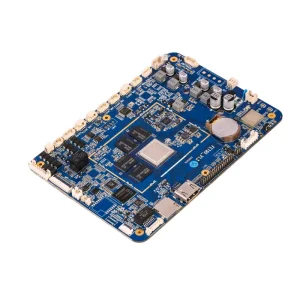
Precision surface mount, through-hole, and mixed-technology assemblies engineered for high-criticality aerospace, healthcare, smart infrastructure, and industrial computing applications.
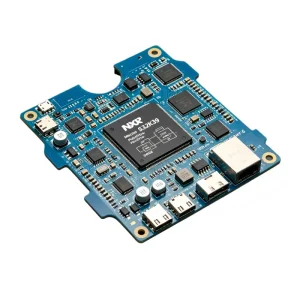
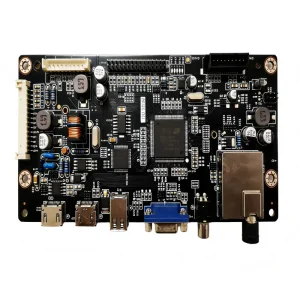
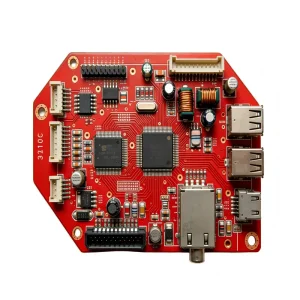
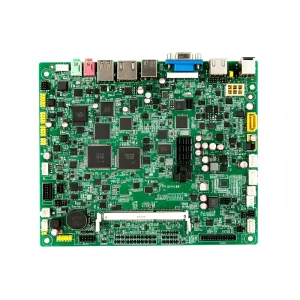
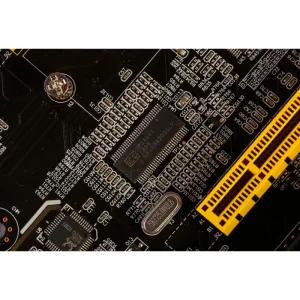
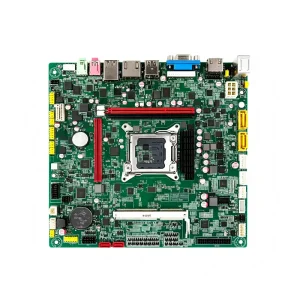
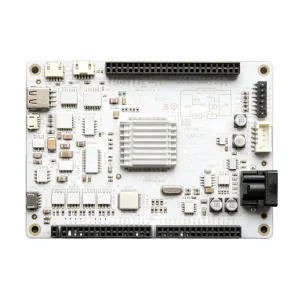
Beyond basic cost reduction, partnering with Tier-1 Chinese PCB contract manufacturers in Shenzhen provides profound technical and logistical supply chain defensibility.
Located in the Bao'an electronics epicenter, STHL orchestrates instant procurement across bare-board copper fabricators, passive component warehouses, and franchised silicon distributors. What takes 4–6 weeks to assemble in Western regional facilities can be initiated in 48–72 hours via Shenzhen's hyper-dense cluster.
Hardware companies often face costly fragmentation when prototypes built at quick-turn domestic labs fail to transition smoothly to mass-scale EMS lines. STHL bridges this gap by operating rapid NPI (New Product Introduction) prototype tracks alongside high-speed automated Yamaha SMT lines under one unified roof.
Over 50 dedicated hardware and manufacturing engineers review every Gerber, drill chart, and BOM prior to line setup. We identify tombstoning risks, thermal relief deficits, and obsolete ICs, suggesting direct footprint-compatible alternatives to shield original equipment manufacturers from volatile market fluctuations.
Modern electronics demands higher density, extreme thermal dissipation, and sub-micron accuracy. Explore the structural developments dominating high-tier PCB fabrication factories.
With ball grid arrays dropping below 0.35mm pitch and micro-passives shifting down to 01005 / 008004 form factors, modern factories deploy semi-additive processes (mSAP) and laser microvias (any-layer HDI). These technologies provide the trace width and space (L/S) below 30µm required for compact edge-computing nodes.
Automotive inverters and high-power energy modules demand thermal dissipation rates far beyond standard FR-4 capabilities. Factories now integrate direct-bonded copper (DBC), ceramic aluminum-nitride substrates, and heavy copper (3oz–10oz) stack-ups to guarantee reliability in demanding operating environments.
Manual visual inspection has been replaced by inline 3D SPI (Solder Paste Inspection), 3D AOI, and high-resolution automated X-ray inspection (AXI). Deep-learning computer vision models assess solder wetting angles, head-in-pillow (HiP) anomalies, and void percentages inside ultra-fine BGA balls down to <10%.
Every industry has distinct regulatory requirements, environmental stressors, and component lifecycles. We match IPC inspection criteria to your targeted sector.
| Vertical Segment | Technical Challenges Addressed | Manufacturing Protocol | Compliance Standards |
|---|---|---|---|
| Medical & Life Sciences | High precision biosignals, low noise floor, defibrillation protection, and zero failure tolerances. | Class 10,000 dust-free cleanrooms, selective soldering, 100% automated optical and in-circuit testing (ICT). | ISO 13485 IPC Class 3 |
| Automotive Electronics | Thermal vibration cycling, cold-crank electrical transients, conformal protection against automotive fuels and moisture. | Underfill dispensing for BGA, thermal potting, robotic silicone conformal coating, PPAP Level 3 documentation. | IATF 16949 AEC-Q100/200 |
| Industrial Edge & Robotics | High current transients, inductive kickback, electromagnetic interference (EMI) in dense electrical cabinets. | Thick copper foil (up to 6oz), controlled differential impedance matching (±5%), customized functional test jigs. | ISO 9001 UL 94V-0 |
| Aerospace & Defense Telemetry | Outgassing under vacuum, thermal shock, long operational lifetimes without service intervention. | Polyimide/PTFE substrate fabrication, robotic dual-wave soldering, nitrogen reflow chambers, complete MES work-order logging. | AS9100 Ready IPC-A-610 Class 3 |
Professional sourcing managers at Fortune 500 corporations utilize systematic criteria to evaluate contract manufacturers, ensuring operational continuity and IP security.
Legally binding bilingual NDAs signed prior to file transfer. Encrypted internal servers restrict CAD, BOM, and embedded firmware files solely to designated project engineers.
Integrated ERP and MES systems serialize bare boards with 2D DataMatrix barcodes. Every component reel lot, solder paste jar, and reflow oven thermal profile is cataloged for at least 5 years.
Direct partnerships with franchised distributors (Arrow, Digi-Key, Mouser, Avnet) and verified original manufacturers ensure zero counterfeit or refurbished components enter the assembly stream.
Integrated export logistics with DDP, DAP, and FOB options via DHL, FedEx, UPS, air freight, and sea shipping, backed by a 99.5% on-time delivery record across more than 90 countries.
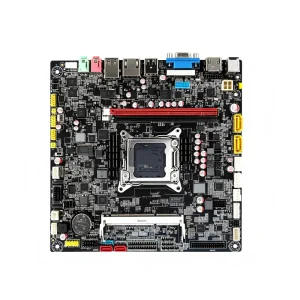
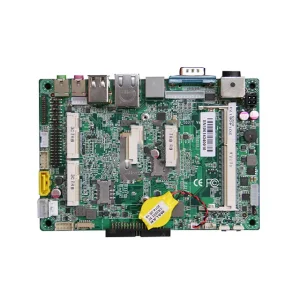
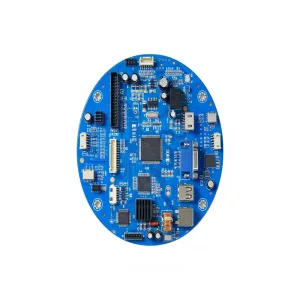
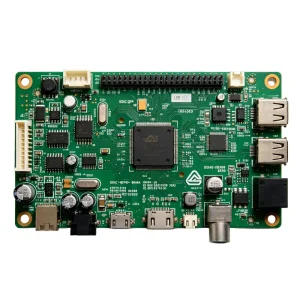
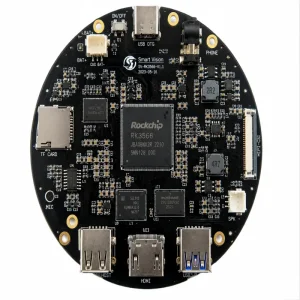
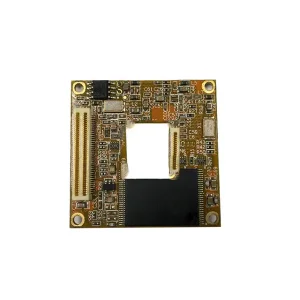
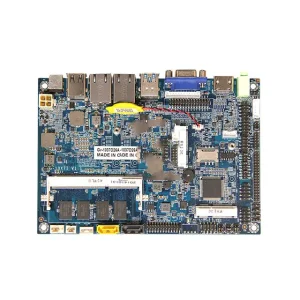
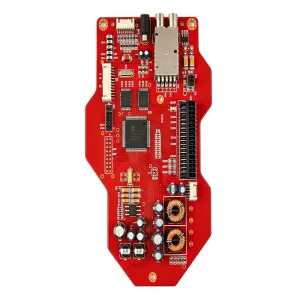
Browse additional precision-manufactured PCBA units engineered across communication, power management, industrial PLC, and commercial lighting environments.
Key answers regarding engineering audits, bare-board stackups, lead-time mitigation, testing capabilities, and intellectual property governance.
STHL covers the complete electronics manufacturing services (EMS) chain: PCB layout optimization, electronic component procurement, bare PCB fabrication (FR-4, HDI, Rigid-Flex, Metal-core), SMT and THT assembly, BGA placement down to 0.35mm pitch, IC flashing/programming, conformal coating, cable assembly, box build integration, and end-of-line functional testing.
No. STHL operates without MOQ restrictions. We handle prototype validation runs (1–10 boards), low-to-mid volume pilot batches, and high-volume mass production. This flexibility enables engineering teams to validate hardware designs on production-grade SMT machinery before committing to large inventory runs.
Our Shenzhen facilities operate under IATF 16949 (automotive), ISO 13485 (medical devices), ISO 9001 (quality management systems), and ISO 14001 (environmental management). Assembly and inspection criteria align with IPC-A-610 Class 2 and Class 3 specifications, supported by end-to-end MES work-order tracking.
All customer engagements begin with mutually binding Non-Disclosure Agreements (NDAs). Design files, BOMs, schematics, and proprietary firmware are stored on encrypted internal servers with role-based access restricted solely to assigned project engineers. Firmware programming is carried out in isolated networks.
To prepare a comprehensive DFM and turnkey proposal, we require: (1) RS-274X Gerber or ODB++ files, (2) a complete Bill of Materials (BOM) including manufacturer part numbers, reference designators, and package details, (3) a Centroid / Pick-and-Place file, and (4) any relevant test instructions or assembly drawings.
Our dedicated procurement team leverages direct relationships with over 100 franchised distributors and component manufacturers worldwide. In cases of extended component lead times or obsolescence, our hardware engineers recommend footprint-compatible, pin-for-pin alternate parts and provide sample documentation for client approval.
Every assembly order undergoes 3D Solder Paste Inspection (SPI), high-resolution automated optical inspection (AOI), and X-ray inspection for BGA and QFN packages. Additionally, we run In-Circuit Testing (ICT), custom functional testing (FCT) jigs, burn-in thermal chambers, and conformal coating UV inspection to ensure stable field operation.
STHL delivers to more than 90 countries across North America, Europe, South America, and the Asia-Pacific region, including the USA, Germany, the UK, Italy, Brazil, and Korea. We support diverse Incoterms such as DDP, DAP, EXW, and FOB, maintaining a 99.5% on-time delivery record through express couriers, air cargo, and sea freight.