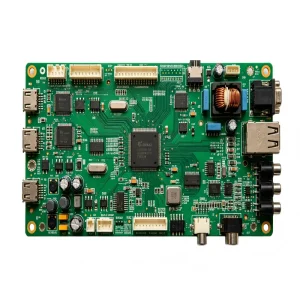
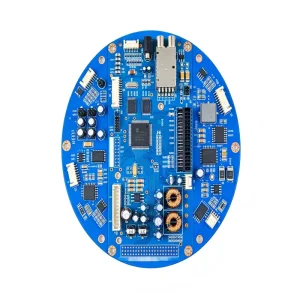
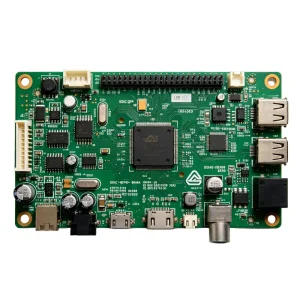
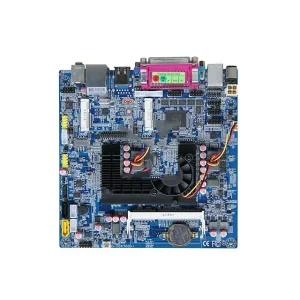
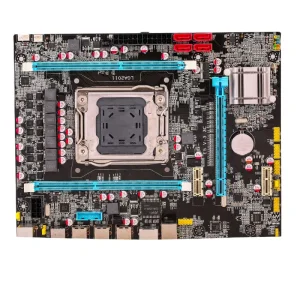
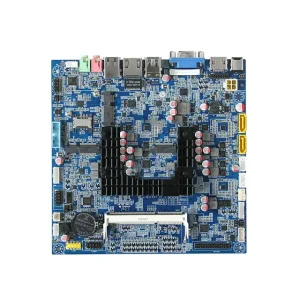
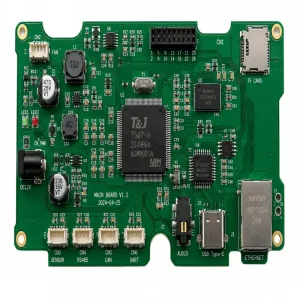
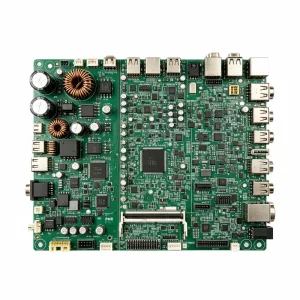
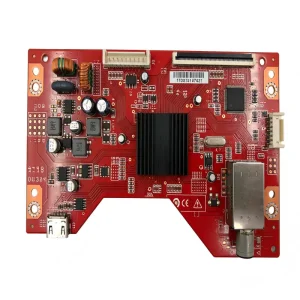
Explore high-complexity assemblies built across our 7 high-speed SMT lines, advanced mechanical integration cells, and dedicated box-build work centers in Shenzhen, China.
Modern Original Equipment Manufacturers (OEMs) and high-growth industrial enterprises are rapidly shifting away from fragmented sub-assembly procurement. Discover how turnkey electromechanical manufacturing compresses time-to-market and enforces deterministic product reliability.
Historically, hardware engineering companies contracted printed circuit board fabrication to one vendor, component procurement to a distributor, cable harnesses to a third party, and CNC/injection tooling to local machine shops. This disaggregated supply chain model frequently collapsed under tolerance stack-up discrepancies, blame-shifting during functional failure, and mounting logistics freight. Turnkey Box Build unites all facets—bare board fabrication, SMT/THT mounting, custom metal/plastic enclosures, wire harnesses, pneumatic valves, optical displays, firmware burning, and end-of-line testing—into a singular, accountable manufacturing envelope.
While surface-level piece-part quoting often masks logistical overhead, holistic TCO calculations demonstrate that certified turnkey box-build partners yield a 22% to 37% net savings across production lifecycles. By consolidating the Bill of Materials (BOM) management, OEMs mitigate tariffs, double-handling customs friction, inbound freight consolidation costs, and administrative burdens. Furthermore, single-point accountability drastically curtails high-cost Field Return Rates (FRR) by enforcing comprehensive end-to-end Functional Testing (FCT) before shipment.
Next-generation edge computing, automotive powertrain controllers, and smart medical diagnostics require sophisticated thermal dissipation, ingress protection (IP67/IP68), and electromagnetic compatibility (EMC/EMI shielding). System-level box build manufacturing integrates finite element thermal analysis, conductive silicone dispensing, precision torque-controlled automated fastening, and potting/conformal coating, ensuring sensitive high-density multi-layer HDI circuits survive extreme industrial duty cycles.
When an electronic controller malfunctions in field trials, identifying whether the root cause stems from PCB solder voiding, cold solder joints, improper wiring pin-outs, wire harness crimping degradation, or mechanical chassis ground loop interference can take weeks. In our turnkey box-build framework, STHL assumes unified engineering responsibility across the schematic, layout, assembly, housing fitment, and environmental stress profiling.
Global procurement executives across North America, Europe, and Asia-Pacific navigate stringent compliance mandates, component shortages, and technological obsolescence. Here is how modern contract manufacturing resolves systemic supply chain bottlenecks.
Procuring custom enclosures and multi-layer PCBA without integrated Design for Manufacturing (DFM) and Design for Assembly (DFA) audits invites disaster. Our 50+ on-staff engineers scrutinize CAD models, centroid data, gerbers, and mechanical blueprints, identifying trace routing traps, thermal shadows, connector clearance shortfalls, and tooling collision risks prior to cutting steel molds.
Global component markets suffer from sporadic allocation spikes and counterfeit saturation. STHL manages strategic partnerships with franchised distributors (Arrow, Avnet, Digi-Key, Mouser) and Tier-1 component fabricators. Every silicon IC, passive MLCC, and active semiconductor undergoes inbound microscopic visual verification, solderability validation, and X-ray analysis.
From medical device safety (ISO 13485) and automotive electronic powertrains (IATF 16949) to hazardous material restrictions (RoHS 3, REACH) and UL flammability standards (UL 94V-0), international deployments demand strict legal compliance. Every finished device carton leaves our Shenzhen plant backed by traceable Certificates of Conformance (CoC).
Western technology leaders routinely cite Intellectual Property integrity as their paramount criteria when partnering with an offshore EMS. STHL institutes legal Non-Disclosure Agreements (NDAs) upfront, segregated cleanrooms, restricted internal network access for customer firmware, and segmented work orders ensuring confidential schemas remain uncompromised.
Operating inside Bao'an, Shenzhen—the undisputed epicenter of the global electronics industry—Shenzhen STHL Electronics Co., Ltd. harnesses unparalleled supply chain velocity, engineering agility, and cost efficiencies.
Within a 30-kilometer perimeter of our Shenzhen factory gates resides the world's most concentrated industrial supply network: precision CNC metal machining workshops, mold fabrication specialists, rubber/silicone extrusion facilities, anodizing and powder-coating chemical plants, LCD display manufacturers, and custom wire harness tooling houses. Rapid tooling modifications that take 6 weeks in the West are executed in 48 hours here.
Our smart factory floors in Bao'an run fully synchronized Enterprise Resource Planning (ERP) and Manufacturing Execution Systems (MES). Every raw material reel, SMT solder paste jar, reflow oven temperature graph, automatic optical inspection (AOI) capture, and manual torque wrench calibration record is tied to a serialized 2D datamatrix code, granting our customers forensic product pedigree.
Traditional EMS giants require massive Minimum Order Quantities (MOQs) exceeding 50,000 units, alienating fast-moving innovators. STHL breaks this barrier: we welcome prototype development, low-volume New Product Introduction (NPI), and pilot runs with zero MOQ hurdles. Crucially, the identical automated SMT lines and quality engineers that validate your 50-piece prototype scale effortlessly to 500,000 production units.
Procurement directors continually assess total supply chain resilience. A multi-variable objective comparison demonstrates why Shenzhen’s advanced EMS ecosystem continues to offer unmatched technical dexterity and commercial value.
| Evaluation Parameter | Shenzhen Advanced EMS (STHL China) | Western Onshore EMS (USA / Germany) | Emerging Hubs (Southeast Asia / India) |
|---|---|---|---|
| Mechanical Tooling & Mold Turnaround | 10 to 18 Days (Ultra-rapid prototyping & modifications) | 8 to 14 Weeks (High domestic tooling costs) | 5 to 8 Weeks (Relies on tooling imported from China) |
| Component Procurement Depth | Instant access to 500k+ local & global MPNs; tier-1 pricing | High local catalog distributor premiums; long lead times | Dependent on bonded import logistics; border friction |
| Bespoke Wire Harness & Electromechanics | Fully integrated custom crimping, overmolding, potting | Cost-prohibitive manual labor; outsourced across borders | Capable manual assembly, but lacks automated inline verification |
| Engineering Response & DFM Feedback | Within 24 Hours with alternative BOM cost-down options | 3 to 7 Business Days; rigid engineering change billing | Variable technical fluency; engineering team constraints |
| NPI to Mass Production Transition | Seamless scaling from single prototype units to high volume | Strict MOQ hurdles; prototype shops do not scale to volume | Low-mix high-volume preference; weak NPI flexibility |
| Average Blended Production Cost | Optimal (Streamlined overhead + comprehensive ecosystem) | High (2.5x to 4x baseline labor & facility costs) | Moderate (Low base labor offset by supply chain freight costs) |
Our turnkey box-build production lines manufacture complex assemblies designed to operate under harsh mechanical stress, volatile thermal ranges, and zero-downtime industrial regimes.
Building under strict IATF 16949 guidelines, our automotive box build process combines heavy-copper multi-layer PCBAs, high-vibration automotive wire harnesses, and hermetically sealed die-cast aluminum enclosures. Our production involves automated polyurethane conformal coating, vacuum-assisted silicone thermal gap dispensing, torque-monitored chassis robot fastening, and 100% In-Circuit (ICT) plus In-Vehicle CAN-bus functional simulation.
Governed by ISO 13485, healthcare electronics tolerate zero margin for error. STHL delivers finished medical devices—such as portable ultrasound monitors, patient monitoring displays, and surgical pump controllers—integrated inside medical-grade antimicrobial ABS-PC enclosures. The manufacturing process entails strict cleanroom assembly, ESD protective handling, LCD display optical bonding, and electrical dielectric safety testing.
Deployments in chemical refineries and commercial environmental facilities demand intrinsic safety (ATEX/IECEx compliant assemblies). We manufacture high-accuracy laser dust particle monitors and hazardous gas alarms. Manufacturing entails precision sensor calibration chambers, explosion-proof gasket installation, conformal silicone dipping to combat corrosive airborne sulfur, and rigorous continuous burn-in profiling.
Every engineering project entrusted to STHL navigates an uncompromising Quality Gate architecture. No stage proceeds without formal sign-off from both process engineering and quality assurance leaders.
NDA executed prior to file transfer. Complete DFM/DFA/DFT review of Gerbers, mechanical 3D STEP files, schematics, and test specifications.
Procurement across 100+ authorized franchised partners. Component traceability logging, MSL inspection, and counterfeit laboratory verification.
Dual-sided SMT placement down to 01005 passives and 0.3mm BGA pitch, automated solder paste inspection (3D SPI), reflow, and DIP wave soldering.
3D Automated Optical Inspection (AOI), 3D X-ray inspection (AXI) for hidden solder voids under BGAs/QFNs, followed by Flying Probe / ICT testing.
CNC machining, sheet metal bending, plastic injection molding, automated surface finishing, EMI shielding spray, and custom gasket installation.
Full integration of PCBAs, wire harnesses, power supplies, thermal cooling plates, displays, pneumatic lines, and precision torqued chassis.
Flashing custom customer firmware, full functional testing (FCT), high-voltage dielectric Hipot safety testing, and Environmental Stress Screening.
Custom anti-static ESD packaging, barcoded retail or master cartons, export documentation, drop-testing compliance, and door-to-door freight dispatch.
Comprehensive answers to critical technical, operational, and commercial questions asked by VP of Hardware, Global Sourcing Directors, and Lead System Architects.
To provide an authoritative, line-item accurate quotation and DFM/DFA feedback, we require: (1) Gerber RS-274X or ODB++ files including layer stack-up; (2) Detailed Bill of Materials (BOM) in Excel with manufacturer part numbers (MPN), descriptions, and reference designators; (3) 3D mechanical CAD models (STEP/IGES) of enclosures, brackets, and external connectors; (4) Schematics and Pick-and-Place (centroid) files; (5) Wire harness drawings with pin-out schematics and crimp terminal part numbers; and (6) Test Specifications (FCT requirements, firmware programming manuals, and acceptance criteria).
STHL operates an uncompromising procurement security protocol. We source 100% of critical silicon, microcontrollers, and active components from original component manufacturers (OCMs) or authorized franchised distributors (such as Arrow, Avnet, Digi-Key, Mouser, and STMicroelectronics). For legacy or long-lead items requiring qualified secondary markets, components undergo rigorous laboratory screening: external visual inspection under 40x magnification, acetone de-marking testing, X-ray inspection for internal die consistency, and decapsulation solderability analysis.
Our 10,000+ m² smart facility in Bao'an, Shenzhen operates under four foundational certifications: ISO 9001:2015 (General Quality Management), IATF 16949:2016 (Stringent Automotive Electronics Manufacturing), ISO 13485:2016 (Medical Devices Quality Management and Device Traceability), and ISO 14001:2015 (Environmental Sustainability Management). Work orders are digitally managed through MES tracking from component intake to carton dispatch.
Yes. Unlike legacy contract manufacturing conglomerates that enforce prohibitive minimums (e.g., 5,000 to 50,000 units), STHL enforces a Zero Minimum Order Quantity (Zero MOQ) policy. We actively support early-stage hardware innovators and industrial OEMs with prototype builds (1 to 50 units), pilot validation runs (100 to 1,000 units), and seamlessly transition the exact engineering tooling into mass-volume runs (100,000+ units) across identical automated SMT and box build lines.
We implement a defense-in-depth IP security protocol. Prior to project discussion, a bilateral Non-Disclosure Agreement (NDA) with enforceable legal jurisdiction is executed. Firmware programming is conducted over encrypted, isolated local servers disconnected from public external networks. Flashing stations utilize secure automated programmer hardware (e.g., Segger, PE Micro) that prevents local caching of hex/binary source files, and our cleanroom facilities enforce biometric access control and 24/7 video surveillance.
Beyond board-level AOI and 3D X-ray inspection, our finished box-build integration lines feature 4 specialized test stations: (1) Custom Functional Circuit Testing (FCT) jigs designed in-house to simulate real-world operating loads; (2) High-Voltage Dielectric Withstand (Hipot) and Ground Continuity safety tests; (3) RF / Wireless calibration (Wi-Fi, Bluetooth, LTE, GPS) inside shielded anechoic RF test boxes; and (4) Environmental Stress Screening (ESS), including thermal thermal-shock chambers (-40°C to +125°C) and multi-axis vibration tables.
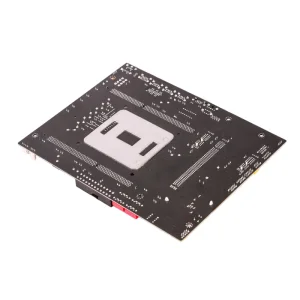
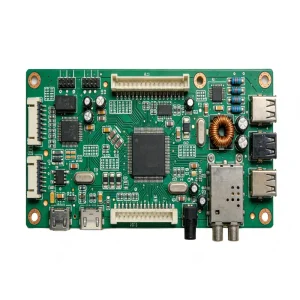
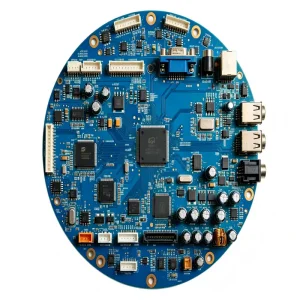
Continuous production examples demonstrating electromechanical integration, power electronics handling, medical-grade cleanliness, and extreme-environment hardening.
Transfer your design files securely under a formal Non-Disclosure Agreement. Our engineering team in Shenzhen will deliver a comprehensive DFM/DFA feasibility report, component lifecycle analysis, and optimized turnkey quotation within 24 business hours.