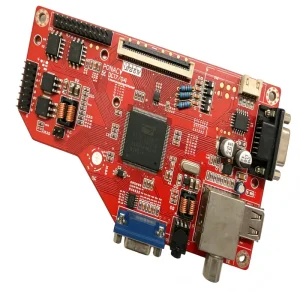
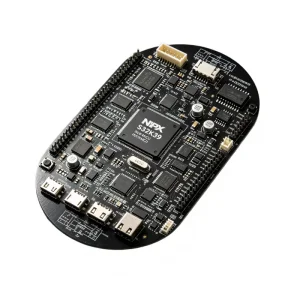
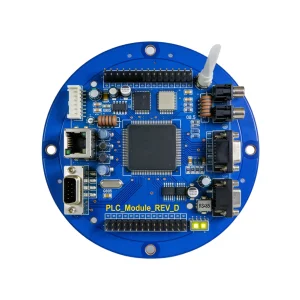
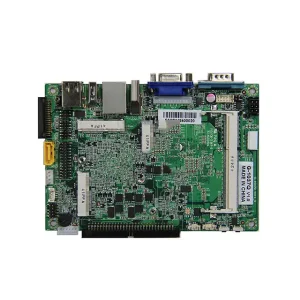
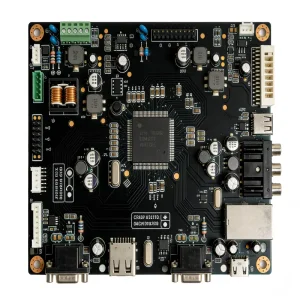
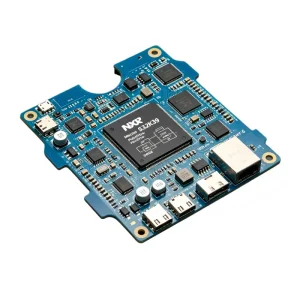
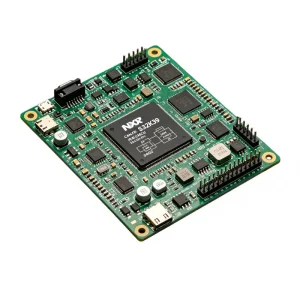
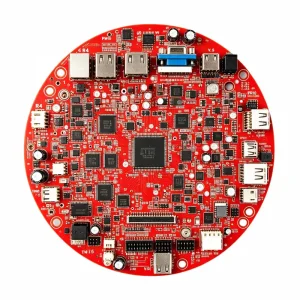
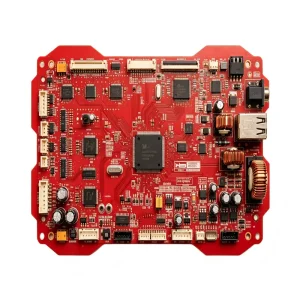
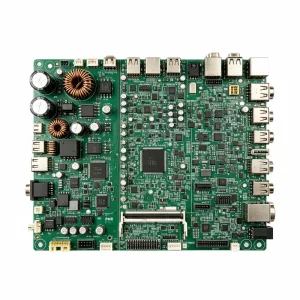
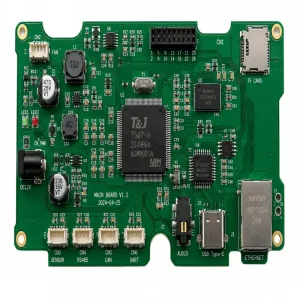
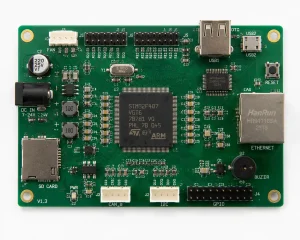
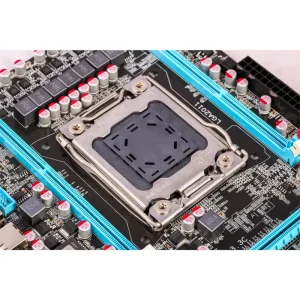
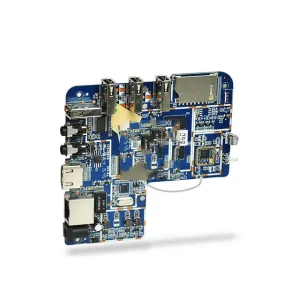
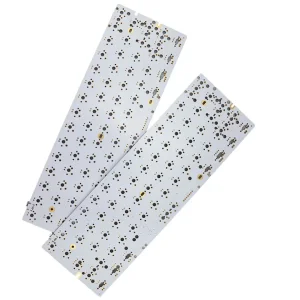
Explore our top-tier turnkey manufacturing executions, spanning edge-lit LED backlights, ADAS domain controllers, critical medical monitoring, and high-frequency communication modules.
In modern power electronics, solid-state automotive matrices, and GaN/SiC power converters, standard FR-4 dielectric materials hit thermal runaways. Insulated Metal Substrate (IMS) technology solves junction overheating via direct thermodynamic coupling.
Aluminum PCBs utilize an engineered composite stack consisting of a copper foil circuit layer, an ultra-thin ceramic-filled dielectric bonding layer, and a base aluminum plate (typically 5052 or 6061 alloy). This architecture yields thermal conductivities ranging from 1.0 W/m·K to 8.0 W/m·K, dropping thermal resistance dramatically compared to polyimide and glass-epoxy cores.
Procurement engineers in North America and Western Europe face two major bottlenecks: copper-aluminum delamination failures under thermal shock and severe lead-time fluctuations in specialized prepregs. STHL mitigates cross-border procurement vulnerabilities through pre-stocked raw IMS laminates and verified tier-1 chemical bonding agents.
The vast thermal capacity of aluminum cores pulls heat rapidly away from solder joints during surface mount technology (SMT) reflow. STHL implements specialized 10-zone nitrogen-reflow profile sculpting, high-tack solder paste formulations, and customized V-score profiling to prevent cracked ceramics and solder bridging.
Whether addressing high-vibration chassis mounting in automotive powertrains or electrical isolation in Class II medical electronics, our aluminum board fabrications adapt to severe real-world demands.
Built under strict IATF 16949 protocols, our aluminum PCB assemblies power Transmission Control Units (TCUs), onboard EV chargers (OBC), and ADAS domain processors, absorbing thermal spikes up to 150°C continuous ambient.
Precision laser surgical interfaces, pulse oximetry engines, and anesthesia ventilators require zero-drift reference voltages and zero RF crosstalk. Our aluminum base boards isolate power stages from delicate sensor logic.
5G macro base transceiver stations (BTS), video acceleration arrays, and VoIP appliances deploy hybrid multi-layer aluminum substrates to maintain junction integrity without adding costly, heavy copper heat sinks.
| Parameter | Commercial Grade | Automotive / Industrial Grade (STHL Standard) | High-Reliability Tier |
|---|---|---|---|
| Base Plate Aluminum Alloy | 1060 Commercial (Pure Al) | 5052 / 6061-T6 High Tensile | AL6082 / Copper Core Direct Bond |
| Thermal Conductivity | 1.0 - 1.5 W/m·K | 2.0 - 4.5 W/m·K (Nano-Ceramic) | >8.0 W/m·K (Direct-Die Contact) |
| Dielectric Breakdown Voltage | > 2.0 kV DC | > 4.0 kV AC / 6.0 kV DC | > 8.0 kV AC Reinforced |
| Finished Copper Weight | 1 oz (35 µm) | 2 oz - 6 oz (70 - 210 µm) | Up to 10 oz Heavy Copper |
| Surface Finishes Available | HASL Lead-Free | ENIG (Electroless Nickel Immersion Gold), OSP | Immersion Silver / Hard Gold Plating |
| Dimensional Tolerance | ±0.20 mm | ±0.10 mm (CNC Routing & V-Scoring) | ±0.05 mm Laser Routing |
As power densities climb with wide-bandgap (WBG) semiconductors like Gallium Nitride (GaN) and Silicon Carbide (SiC), STHL's engineering lab advances tomorrow's substrate manufacturing.
Eliminating the dielectric barrier beneath critical power pads. The component thermal slug sits directly on the metal core, reaching 380+ W/m·K conduction, indispensable for extreme lumen density LED arrays and EV inverters.
Through micro-grooved backplanes and annealed aluminum compositions, our flexible metal core substrates bend conformally inside aerodynamic automotive headlamps without sacrificing dielectric isolation.
Real-time thermal imaging integrated directly with our pick-and-place lines dynamically compensates for metal heat sinking, tuning laser soldering and reflow gradients board-by-board in real time.
Reliability is built into our operational DNA. From the moment your Gerber files arrive under strict Non-Disclosure Agreements, our digital Manufacturing Execution System (MES) enforces total process transparency.
STHL maintains accredited certifications for IATF 16949 (Automotive), ISO 13485 (Medical Devices), ISO 9001 (Quality Management), and ISO 14001 (Environmental Safety), enabling effortless audit qualification for Fortune 500 procurement teams.
Through partnerships with Mouser, Digi-Key, Arrow, Avnet, and verified authorized distributors, every discrete capacitor, power MOSFET, and custom IC is checked for counterfeit marks, logged with lot date codes, and tracked end-to-end.
Delivering securely across 90+ countries with custom vacuum ESD packaging, desiccant barriers, and humidity indicator cards. STHL manages air and sea freight logistics with clear Incoterms (DAP, DDP, FOB) to fit your warehouse needs.
Get prompt, authoritative answers regarding aluminum board fabrication, dielectric insulation, thermal impedance, and high-volume assembly workflows.
FR-4 exhibits a very low thermal conductivity of roughly 0.25 to 0.3 W/m·K, which traps heat inside copper traces. By contrast, aluminum-backed PCBs integrate a thermally conductive dielectric and metallic substrate, providing 1.0 to 8.0+ W/m·K. This enables operating temperature reductions of 15°C to 40°C on power components, eliminating bulky external heatsinks.
Yes. We manufacture both Single-Layer IMS and Multi-Layer IMS boards (2 to 4+ layers). Multi-layer aluminum constructions feature standard circuit layers embedded above the insulated dielectric, combining high-density signal trace routing with direct thermodynamic backing on the bottom base plate.
Because the aluminum base acts as an intentional heatsink, it absorbs thermal energy from the oven rapidly. STHL deploys customized 10-zone reflow ovens running bottom-preheat temperature offsets, specialized flux chemistry, and slow-rise soak profiles. Combined with 3D X-ray inspection (AXI), we consistently maintain solder void rates below 10%, well inside IPC-A-610 Class 3 limits.
STHL has a strict No-MOQ policy. You can build 5 prototype units to validate your thermal design and scale into hundreds of thousands of assemblies on the exact same automated lines. Fast-turn prototype fabrication typically ships in 3 to 7 working days upon DFM signoff.
Review our high-reliability PCBA builds, including point-of-load DC-DC converters, battery management chargers, medical power supplies, and automotive transmission control units.