From mission-critical medical diagnostics to intelligent energy distribution and industrial sensing, our cleanroom SMT production facilities deliver zero-defect surface-mount precision.
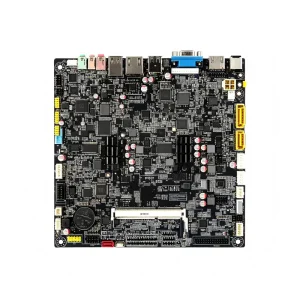
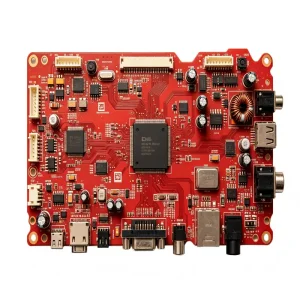
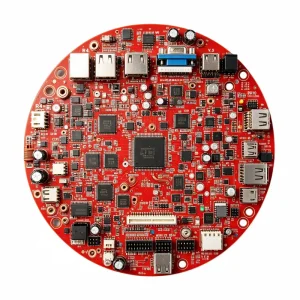
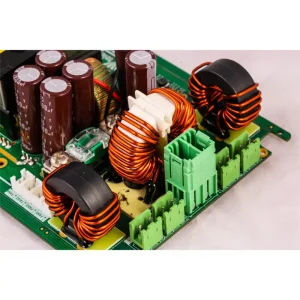
The paradigm shift toward ultra-compact, dynamically movable, and bio-conformal electronics has permanently restructured Tier-1 OEM sourcing strategies. Today's hardware architects demand more than conventional rigid FR-4 manufacturing; they require agile, certified OEM flexible electronics factories capable of mitigating thermo-mechanical stress, signal attenuation, and micro-via fatigue.
Global device developers in aerospace, wearable medtech, and automotive cockpits face unprecedented restrictions on Size, Weight, Power, and Cost (SWaP-C). Flexible Printed Circuits (FPCs) and Rigid-Flex architectures replace bulky wire harnesses and heavy connectors, saving up to 70% in physical volume and 60% in total system weight.
Cross-border OEMs require turnkey assembly facilities that unify raw polyimide (PI) casting, photo-lithographic etching, micro-SMT placement, and functional testing under a single Quality Management System (QMS). Decentralizing assembly across separated fab shops incurs logistical latency, higher scrap rates, and ambiguous defect attribution.
Whether engineering human-implantable biosensors or high-vibration engine bay management units, commercial procurement mandates adherence to stringent industry standards including IPC-6013, IPC-A-610 Class 3, IATF 16949, and ISO 13485. Verified adherence minimizes field failure rates and legal liabilities.
Flexible circuits serve as the circulatory and nervous systems of next-generation hardware. Our specialized manufacturing lines bridge high-density interconnect (HDI) requirements with mechanical durability across diverse sectors.
From anesthesia control systems and multiparameter physiological patient monitors to smart endoscopy probes, medical electronics allow zero margin for failure. STHL operates ISO 13485 certified cleanrooms with strict electrostatic discharge (ESD) and biocontamination controls.
Electric vehicle battery management systems (BMS) have phased out heavy copper wiring harnesses in favor of multi-meter flexible circuits equipped with surface-mounted NTC thermistors, voltage taps, and balancing controllers under IATF 16949 automotive guidelines.
Robotic manipulator arms and modern programmable logic controllers (PLCs) demand continuous dynamic flexing across millions of cycles without conductor cracking. Rigid-flex assemblies eliminate ribbon connector failures in severe industrial EMI and dust environments.
Design for Manufacturability (DFM) and Design for Assembly (DFA) serve as the foundation of yield optimization. Review our benchmark manufacturing thresholds engineered to guide your hardware engineering team before sending Gerbers and CAD data.
| Manufacturing Dimension | Standard Prototype Capability | Advanced Production Threshold | Strategic Industry Benefit |
|---|---|---|---|
| Layer Count (Flex / Rigid-Flex) | 1 to 6 Layers Flexible | Up to 24 Layers Rigid-Flex Hybrid | High-density packaging in aerospace & medical imaging systems. |
| Base Substrates & Dielectrics | Polyimide (PI), PET, FR-4 | Adhesiveless PI, LCP (Liquid Crystal Polymer), Ultra-thin Rogers | Superior dielectric constants (εr ≤ 2.9) for 5G mmWave & RF sensors. |
| Minimum Line Width / Spacing (L/S) | 50μm / 50μm (2 mil / 2 mil) | 30μm / 30μm (1.2 mil / 1.2 mil) via SAP/MSAP | Ultra-dense pitch for miniature wearable wearables & endoscopy sensors. |
| Copper Foil Options | Electro-Deposited (ED) Copper | Rolled Annealed (RA) Copper (1/3 oz to 3 oz) | Maximum resistance to work-hardening and micro-cracking in dynamic bending. |
| SMT Component Placement | 0201 passives, 0.4mm pitch BGA | 01005 passives, 0.3mm micro-BGA, PoP, Flip-Chip | Complete surface-mount assembly of dense silicon directly on flex carriers. |
| Stiffener Integration | Polyimide (PI), FR-4 | Stainless Steel, Aluminum, Ceramic Heat Spreaders | Rigid mechanical backing for ZIF connectors with tailored thermal dissipation. |
| Surface Finishes | ENIG (Electroless Nickel Immersion Gold) | ENEPIG, Immersion Tin, Hard Gold Plating | Zero gold-embrittlement risk for micro-flex pads; superior wire-bonding. |
Assembly on flexible substrates introduces physical handling complexities absent in traditional FR-4 processing. FPC boards require custom magnetic vacuum fixtures, controlled reflow thermal profiling, and nitrogen-purged soldering to prevent warpage and delamination.
Every Flex and Rigid-Flex production file undergoes systematic Valor NPI examination. Our CAM engineers inspect tear-drop fillets on all flex pads, verify neutral-axis layer distribution to ensure traces are not stressed during bending, and design high-precision laser-cut pallet tooling to secure panels through high-speed SMT lines.
Polyimide films exhibit natural hygroscopic properties, absorbing up to 3% atmospheric moisture by weight. Passing unbaked flexible boards through 260°C lead-free reflow leads to catastrophic inner-layer steam delamination (measling). STHL enforces strict 2 to 4-hour nitrogen baking cycles immediately prior to solder paste printing.
Utilizing Panasonic and Yamaha high-speed modular mounters with customized magnetic pallet clamping systems, our lines place 01005 passives and pitch-constrained BGAs with ±15μm accuracy. Ten-zone reflow ovens configured with localized nitrogen shrouding preserve sensitive thin copper films from oxidation.
Surface tension dynamics differ significantly across flexible circuits. We deploy Koh Young 3D SPI (Solder Paste Inspection), dual-side Koh Young 3D AOI, and high-resolution 3D CT X-ray inspection to detect hidden solder bridging, insufficient wet angles, micro-voiding beneath leadless packages, and via barrel cracks.
To protect surface-mount silicon during cyclical bending and physical vibration, our automated Nordson Asymtek dispensing units apply precision silicone, polyurethane, or UV-cure underfill beneath heavy silicon dies and BGA solder joints. This reinforces component attachment against shear fracture.
Every work order undergoes customized testing protocols, including flying-probe analysis, pneumatic bed-of-nails in-circuit testing, firmware flashing, and full parametric operational validation under simulated real-world dynamic flexing conditions to guarantee field performance.
Mitigating regulatory and supply risks is non-negotiable for enterprise procurement directors. STHL integrates comprehensive quality certifications with end-to-end MES scanning across every production touchpoint.
Dedicated PPAP (Production Part Approval Process) Level 3 documentation, FMEA (Failure Mode and Effects Analysis), and rigorous Statistical Process Control (SPC) ensure automotive cockpits, lighting, and BMS flexible assemblies satisfy Tier-1 passenger safety metrics.
Guarantees documented Device Master Records (DMR) and Device History Records (DHR). Every patient monitor, anesthesia board, and wearable sensor holds full component-lot traceability, bio-compatibility certifications, and contamination-free packaging.
Complete compliance with EU RoHS directive 2011/65/EU and REACH regulations (EC 1907/2006). Every chemical substrate, solder flux, underfill, and surface coating is validated free of hazardous substances and conflict minerals.
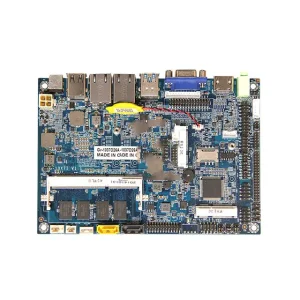
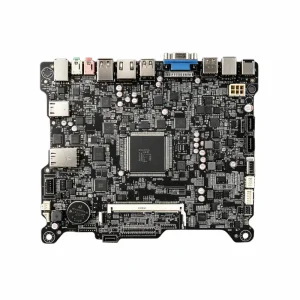
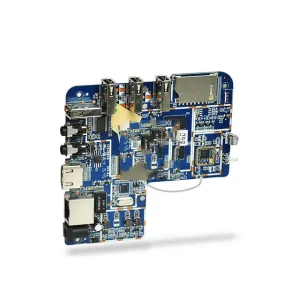
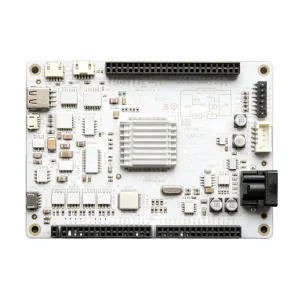
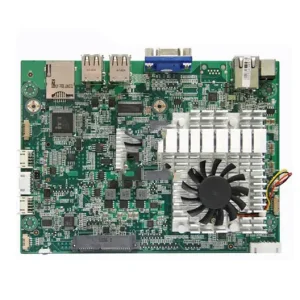
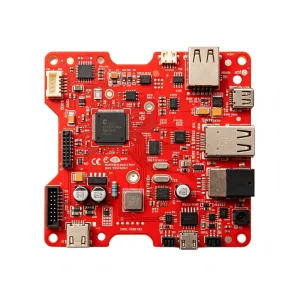
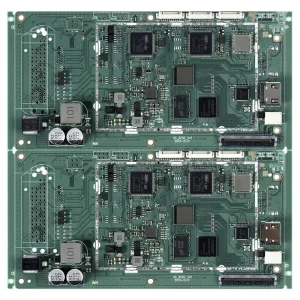
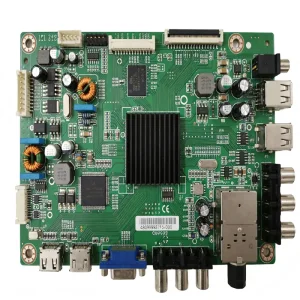
Explore additional specialized hardware builds manufactured across our turnkey Shenzhen facilities—supporting industrial automation, mission-critical power systems, and telecom devices.
Detailed engineering answers covering stack-up constraints, DFM recommendations, minimum order policies, and IP safeguards for hardware purchasing teams.