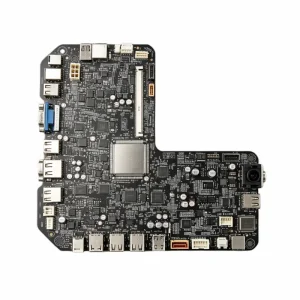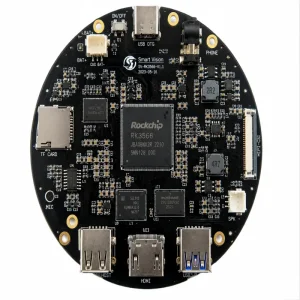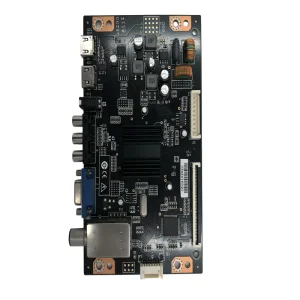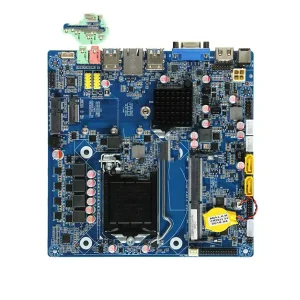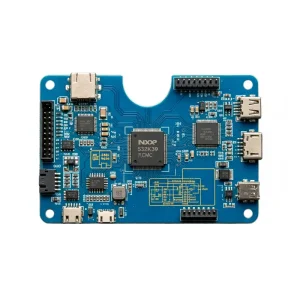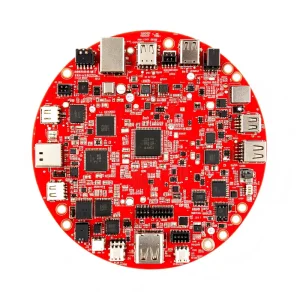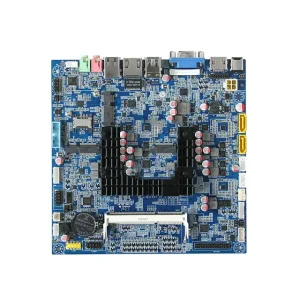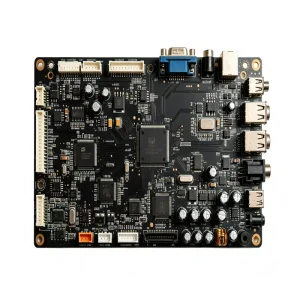
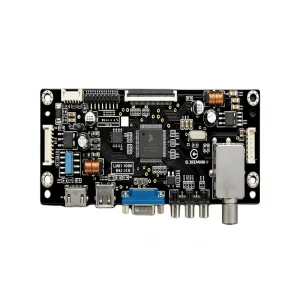
Validated multi-layer FR4 bare boards, thermal-optimized substrates, and turnkey surface-mount assemblies engineered for demanding global mission profiles.
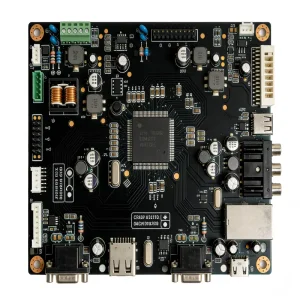
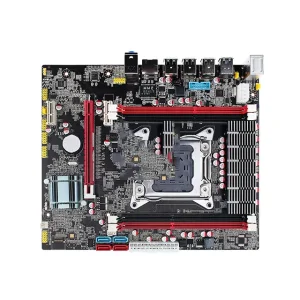
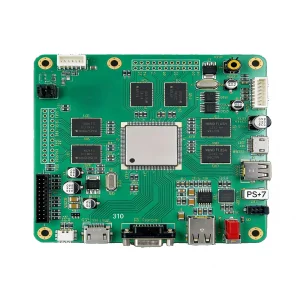
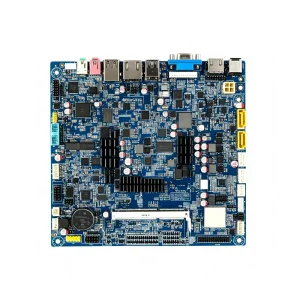
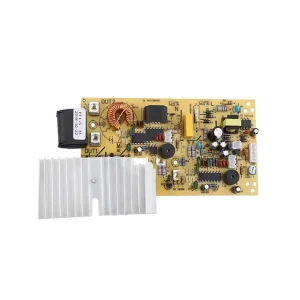
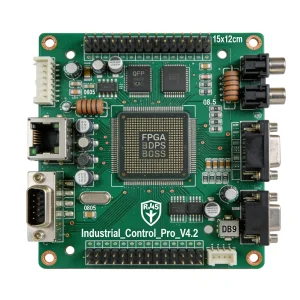
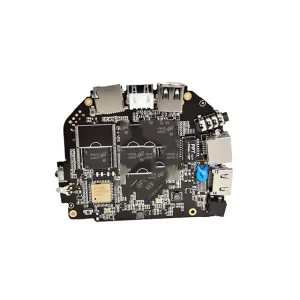
Understanding how modern high-Tg, halogen-free, and high-frequency FR4 variants bridge the performance gap between traditional laminates and exotic RF materials.
Standard FR-4 exhibits a Glass Transition Temperature (Tg) of 130°C–140°C. In contrast, modern OEM applications mandate Tg ≥ 170°C to 180°C (such as Shengyi S1000-2M or ITEQ IT-180A) to prevent Z-axis thermal expansion fatigue, via barrel cracking, and delamination across lead-free reflow profiles peaking above 260°C.
Signal integrity in IoT gateways, multi-gigabit routing, and microstrip RF front-ends necessitates tightly controlled electrical parameters. High-grade modified FR-4 laminates maintain a stable Dk of 3.8 to 4.2 and low dissipation factors (Df < 0.008), minimizing phase jitter and signal attenuation up to 10 GHz.
Conductive Anodic Filament (CAF) failure is the primary threat to ultra-dense pitch multi-layer PCBs. STHL utilizes anti-CAF glass cloth treated with silane coupling agents, combined with precision laser-drilled blind and buried micro-vias, ensuring dielectric reliability under 85°C/85% RH bias test regimes.
| Substrate Category | Glass Transition (Tg) | Decomposition (Td) | Dk @ 1GHz | Df @ 1GHz | Optimal Application Scope |
|---|---|---|---|---|---|
| Standard FR4 | 130°C – 140°C | 310°C | 4.5 – 4.7 | 0.018 – 0.020 | Consumer toys, simple LED arrays, basic power regulators |
| Mid-Tg FR4 | 150°C – 160°C | 330°C | 4.3 – 4.5 | 0.014 – 0.016 | Industrial automation controllers, domestic smart metering |
| High-Tg FR4 (Lead-Free) | 170°C – 180°C | 345°C | 4.0 – 4.2 | 0.008 – 0.012 | Automotive ECU, Medical Diagnostic Terminals, Multi-layer HDI |
| Halogen-Free Low-Loss FR4 | ≥ 170°C | ≥ 350°C | 3.7 – 3.9 | 0.006 – 0.008 | Green computing, high-frequency comms, aerospace telemetry |
Tier-1 hardware enterprises, venture-backed startups, and industrial OEMs require more than cheap quotes—they need risk-eliminated manufacturing and engineering oversight.
Decentralizing PCB bare-board fab, component sourcing, SMT placement, and functional testing across different brokers multiplies logistics lead times and generates costly finger-pointing when yield rates drop. Turnkey integration unifies responsibility.
BOM risks multiply during volatile market cycles. We source active silicon and passive passives strictly through direct-line franchise channels and verified global distributors, supported by incoming component microscopic inspection and X-ray die verification.
Over 73% of prototyping line revisions are caused by undetected footprint design oversights. Our 50+ engineers review pad geometries, component-to-edge clearances, thermal relief vias, and solder mask bridges before metal ever hits copper.
Comprehensive Non-Disclosure Agreements (NDAs) are signed before Gerber file transmission. Access to custom schematic documentation, microcode binaries, and firmware programming registers is segmented through secure on-premise networks.
Headquartered in Shenzhen's Bao'an industrial cluster, STHL combines multi-line SMT automation, MES unit-level data logging, and immediate supplier proximity.
Equipped with high-precision Panasonic and Yamaha modular mounters running across 7 production lines, our facility handles ultra-dense component architectures down to 01005 passive chips and 0.3mm pitch fine-pitch BGA, micro-QFN, and PoP assemblies with 10-zone nitrogen reflow ovens.
Every individual PCBA is engraved with a high-density 2D data-matrix barcode. Our Manufacturing Execution System tracks solder paste lot numbers, SPI height profiles, component reel reels, pick-and-place nozzle telemetry, and final functional test wave recordings.
Located in the heart of global electronics hardware manufacturing, STHL leverages a 2-hour localized procurement radius for exotic raw laminates, custom heat spreaders, precision tooling, and specialized silicon, allowing zero-MOQ quick-turn iterations.
Tailoring substrate glass transitions, dielectric constant control, copper weight distribution, and conformal coatings to actual operating environments.
Under IATF 16949 audit discipline, we produce Electronic Control Units (ECUs), gateway telematics, and in-vehicle Bluetooth modules. Multi-layer high-Tg FR4 boards handle cyclical vibration, automotive load-dump surges, and cabin thermal shifts.
Certified to ISO 13485, STHL fabricates vital monitoring modules, digital imaging interfaces, and handheld radiation instruments requiring near-zero electrostatic interference, low component drift, and strict biosafety-compliant flux removal.
Solar inverters and high-voltage Battery Management Systems (BMS) demand high tracking resistance (CTI ≥ 600V), thick 3oz to 4oz copper outer layers, and automated conformal coating to prevent electrical arcing across creepage paths.
Programmable logic controllers, PoE power injectors, and bench equipment require heavy-duty thermal relief, multi-ground plane isolation, and ruggedized through-hole anchor points engineered to withstand severe industrial power transients.
Everything you need to know regarding technical capabilities, DFM protocols, material certificates, and production logistics.
From rugged power conversion hardware to smart commercial monitoring nodes—explore our high-yield turnkey product series.