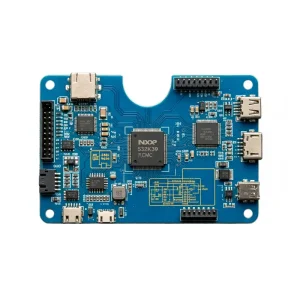
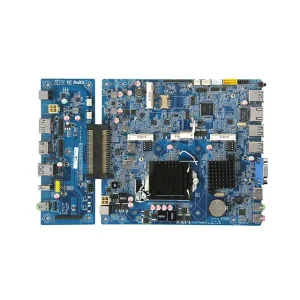
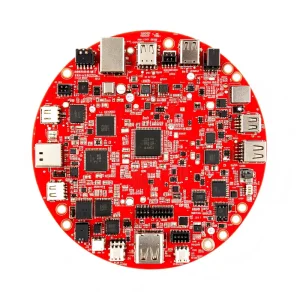
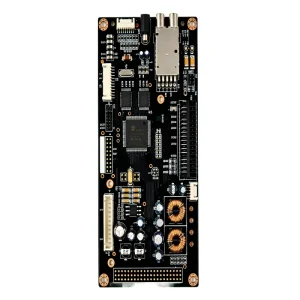
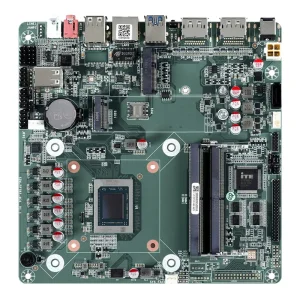
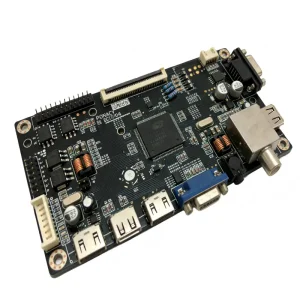
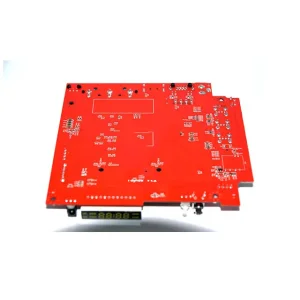
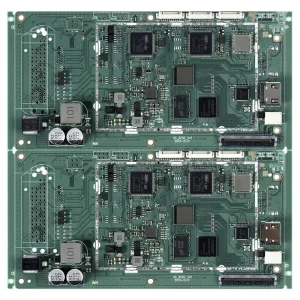
Explore our certified electronic assemblies engineered for non-invasive monitors, drug dispensing systems, and mission-critical telemetry devices.
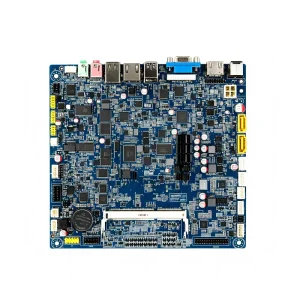
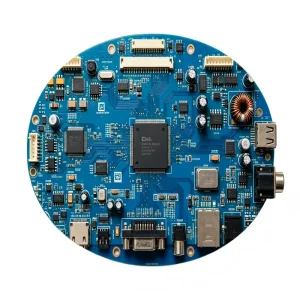
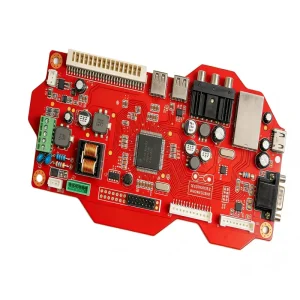
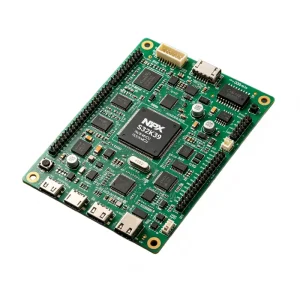
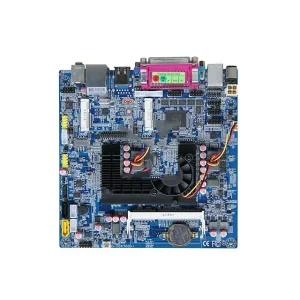
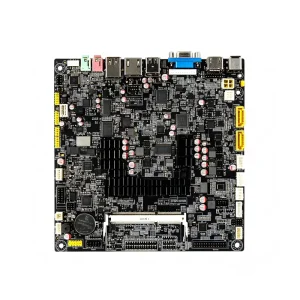
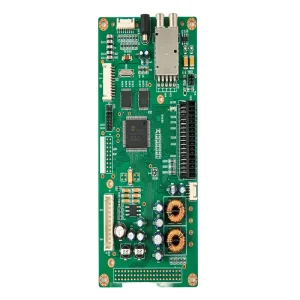
In high-stakes medical device manufacturing, geographic supply-chain maturity correlates directly with time-to-market and regulatory compliance speed.
Located in Shenzhen's Bao'an industrial corridor, our manufacturing infrastructure interfaces directly with semiconductor distributors, raw laminators, and specialized tooling houses within a 50-kilometer radius. This geographic compression cuts raw component procurement lead times by 45% relative to Western counterparts, accelerating prototype turnaround from weeks to days.
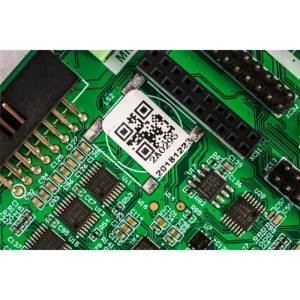
Unlike generic consumer electronics assembly lines, our facility enforces class-segregated cleanroom environments, strict electrostatic discharge (ESD) regimens (ANSI/ESD S20.20), and end-to-end Device History Record (DHR) tracking. Each board receives a laser-etched 2D Data Matrix code logging lot numbers, reflow profiles, and automated optical inspection (AOI) imagery.
By leveraging established global component distributor agreements with Arrow, Avnet, Digi-Key, and local original part manufacturers, we offer cross-referenced alternate components (second sourcing) that reduce active Bill of Materials (BOM) expenditures by 18% to 34% while meeting FDA 21 CFR Part 820 quality systems regulations.
The convergence of artificial intelligence, high-frequency telemetry, and wearable ergonomics is redefining technical requirements for biomedical circuitry.
Point-of-care (PoC) diagnostic wands and wearable biometric patches demand micro-vias, stacked laser vias, and 01005 passives placement. Our Yamaha and Panasonic high-speed SMT lines achieve ±0.025mm placement accuracy, enabling 10-layer Any-Layer High Density Interconnect (HDI) boards with 3mil/3mil trace and space tolerances.
Continuous dynamic flexing in robotic surgical instruments and wearable sensors precludes mechanical wire harnesses. We integrate multi-layer polyimide flexible circuits with FR-4 stiffeners, ensuring impedance-controlled signal lines, superior vibration endurance, and minimal space allocation inside sealed IP68 surgical enclosures.
The Internet of Medical Things (IoMT) demands low-power Bluetooth (BLE), Wi-Fi 6, and 5G cellular communication integrated with sensitive analog sensor front-ends. Our engineering department specializes in RF shielding, antenna matching circuit design, and mixed-signal noise isolation to prevent electromagnetic interference (EMI) in operating rooms.
From bedside clinical diagnostic terminals to portable field monitoring systems, our assembly solutions meet rigorous physiological fidelity standards.
Integrating high-precision multi-channel ADC convertors, pulse oximetry calculation units, and isolated power architectures. Our boards operate continuously in ICU environments with low thermal drift, high signal-to-noise ratio (SNR), and guaranteed defibrillation-proof isolation barrier protection.
Micro-dosing pump assemblies require sub-millisecond stepper motor actuation, closed-loop pressure sensing, and redundant watchdog microcontrollers. We implement IPC Class 3 solder fillet verification, conformal silicone/urethane coating to mitigate fluid ingress, and exhaustive functional burn-in testing.
Rugged, medical-grade processing units deployed on crash carts and diagnostic stations. These systems utilize multi-layer impedance-controlled PCBs capable of running real-time video endoscopy capture, complex telemetry decoding, and seamless HL7/DICOM medical cloud synchronization.
A quantifiable overview of our SMT, testing, and component assembly capabilities tailored to biomedical requirements.
| Inspection & Process Parameter | Medical Capability Specification | Verification Equipment & Standard |
|---|---|---|
| SMT Component Placement | 01005 passives, 0.3mm fine-pitch BGA/CSP, POP (Package-on-Package) | Panasonic NPM-D3A / Yamaha YSM20R (±25µm accuracy @ 3σ) |
| Solder Joint Reliability | IPC-A-610 Class 3 Standards (Medical Life-Support Grade) | In-line 3D SPI (Solder Paste Inspection) & 3D AOI (Koh Young) |
| Hidden Joint Quality (BGA/QFN) | Void ratio < 10%, bridging detection, ball shape uniformity | High-resolution 2.5D/3D X-Ray Inspection (Dage XD7600NT) |
| Environmental Protection | Precision selective spray conformal coating (Silicone, Acrylic, Polyurethane) | Automated Conformal Coating Lines with UV Curable Curing & Blacklight QA |
| Traceability & Documentation | 100% component-to-reel laser serial tracking, full electronic DHR | Proprietary MES (Manufacturing Execution System) + ERP Database Storage (10 Years) |
| In-Circuit & Functional Testing | Custom test jigs, bed-of-nails ICT, boundary scan, RF spectrum validation | Agilent/Keysight 3070 Series ICT, Rohde & Schwarz RF Analyzers |
Biomedical purchasing managers face severe regulatory hurdles, component obsolescence cycles, and strict product lifecycle expectations.
Medical instruments frequently require a 7- to 15-year commercial production lifespan. Our procurement engineers constantly monitor silicon lifecycles via direct API integrations with chip manufacturers, providing 12-to-18-month advance notice of Last Time Buy (LTB) notices and offering form-fit-function redesign support.
Substandard or cloned passives pose catastrophic risks in healthcare environments. STHL enforces 100% franchised vendor procurement policies supplemented by in-house component decapsulation, microscopic silicon die inspection, and X-ray fluorescence (XRF) material composition checks on incoming active ICs.
Beyond board-level assembly, our 4 dedicated system integration lines perform complete mechanical enclosure mounting, display integration, leak-testing for fluidics, wire harness crimping, and clean-packaging—delivering shelf-ready finished medical devices directly to regional fulfillment hubs.
Critical engineering and compliance responses to assist medical device developers and global procurement leads.
STHL maintains a fully audited ISO 13485 quality management architecture. Every medical assembly project is assigned a designated Quality Assurance Engineer who oversees process validation, IQ/OQ/PQ execution, strict ESD controls, and full traceability. All records, including solder paste lot records, automated optical inspection records, and component certificates of conformity (CoC), are archived for a minimum of 10 years to support your FDA and CE MDR submissions.
For urgent NPI (New Product Introduction) and prototype builds, our quick-turn department can deliver assembled and inspected boards within 5 to 7 working days once bare boards and components arrive. Standard production runs typically require 3 to 4 weeks depending on customized functional test fixture preparation and specialized conformal coating requirements.
Yes. Our in-house engineering team of 50+ specialists reviews your Gerber, BOM, and centroid files prior to initiating production. We analyze component clearances, copper balance, thermal relief pads, solder mask bridges, and test point accessibility to eliminate production bottlenecks, reduce solder bridging risks, and maximize automated test fixture coverage.
Our standard verification protocol for Class III boards includes: 100% 3D Solder Paste Inspection (SPI), automated 3D AOI for component placement and solder meniscus geometry, high-resolution X-ray inspection for all array packages (BGAs/QFNs), In-Circuit Testing (ICT) via bed-of-nails or flying probe, and full custom functional testing (FCT) simulating real-world patient signal inputs under thermal stress conditions.
Yes. We understand that medical and clinical diagnostic devices often address specialized clinical niches with moderate annual unit volumes. STHL has no minimum order quantity (No MOQ). We utilize identical automated SMT lines and high-precision inspection systems for pilot runs of 10 units as we do for continuous batch deliveries exceeding 100,000 units.
Explore additional electronics assemblies manufactured within our dust-free Shenzhen facility supporting industrial safety, environmental tracking, and healthcare infrastructure.