Explore real-world turnkey assemblies engineered by STHL for high-consequence aerospace, medical imaging, clean technology, and commercial automation applications.
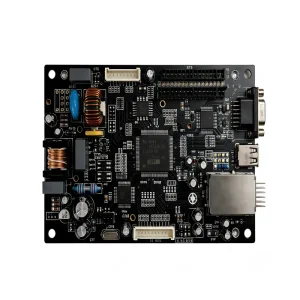
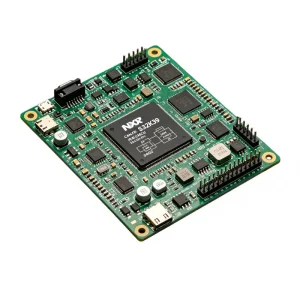
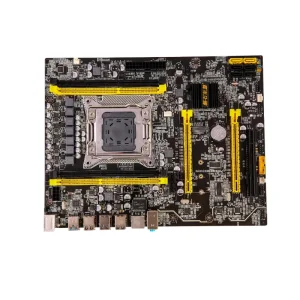
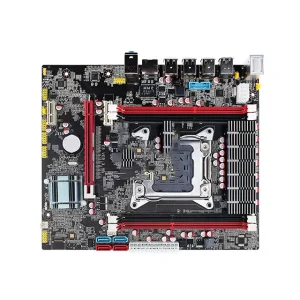
How rapid semiconductor evolution, Edge AI integration, and geopolitically conscious supply chains are redefining electronic contract manufacturing in the mid-2020s.
Modern electronic devices demand unmatched computational density within strictly constrained mechanical footprints. High-Density Interconnect (HDI) technology—utilizing microvias, stacked vias, and line widths down to 0.05 mm/0.05 mm—is no longer restricted to flagship smartphones.
Today, medical wearable diagnostic monitors, industrial robotics controllers, and subsea edge gateways routinely implement Any-Layer HDI with fine-pitch BGAs (down to 0.35 mm pitch). Delivering zero-defect solder joint integrity across these micro-architectures requires sub-micron solder paste deposition, rigorous 3D Solder Paste Inspection (SPI), and closed-loop reflow thermal optimization.
The proliferation of GaN (Gallium Nitride) and SiC (Silicon Carbide) power semiconductors alongside multi-gigahertz RF transceivers has rendered standard FR-4 inadequate for advanced power conversion and 5G/satellite infrastructure.
Contract manufacturing has shifted toward metal-core PCBs (MCPCB), Rogers ceramic laminates, PTFE dielectric systems, and heavy copper (up to 6 oz) builds. OEMs require contract manufacturers equipped with dynamic multi-zone reflow profiling to prevent substrate warping while ensuring 100% solder wetting under massive thermal mass heatsinks and power MOSFET arrays.
The traditional disconnect between CAD design and floor production is obsolete. Contemporary OEM PCBA manufacturing relies on bi-directional Manufacturing Execution Systems (MES) paired with Artificial Intelligence optical analytics.
Real-time machine performance data, continuous thermal sensor feedback, and automated component verification generate an unbroken digital genealogy. Every finished PCB is digitally tethered to specific component reels, solder paste lot numbers, reflow oven temperature curves, and technician IDs—ensuring infallible traceability under IATF 16949 and ISO 13485 mandates.
How Tier-1 engineering procurement managers navigate lead-time volatility, component obsolescence, and authorized distribution channels without project disruption.
STHL maintains direct partnerships with over 100 franchise distributors and primary component manufacturers worldwide, including Digi-Key, Mouser, Arrow Electronics, Avnet, Farnell, Future Electronics, and certified factory-direct agents. With active access to over 500,000 verified line items, our procurement engine leverages real-time API integrations for instantaneous pricing, stock validation, and manufacturer trace-code locking.
Grey-market infiltration presents an existential hazard in safety-critical PCBA manufacturing. Every non-standard incoming lot undergoes our rigorous 4-tier incoming quality inspection: high-resolution decapsulation inspection, internal die verification, X-ray lead-frame analysis, acetone surface swab tests for blacktopping identification, and automated solderability testing in accordance with IPC/JEDEC standards.
End-of-Life (EOL) notices and sudden 52-week lead times can stall serial manufacturing. STHL’s dedicated component engineering taskforce performs algorithmic Bill of Materials (BOM) health audits at the RFQ phase. We identify active lifecycles, pin-compatible second-source equivalents, and functional drop-in alternates (PPAP-verified), slashing both unit cost and delivery lead-time by up to 45%.
To shield strategic clients from macroeconomic freight shocks and cyclical IC allocations, STHL provides custom consignment holding, localized bonded warehousing, and rolling buffer stock agreements. Our enterprise ERP synchronizes with your annual forecasted release schedule, guaranteeing guaranteed JIT (Just-In-Time) board assembly delivery.
Engineered for mission-critical precision. Review our empirical production limits, certified machinery parameters, and assembly technologies validated across daily production floor cycles.
| Process Parameter | Standard Capability / Specification | Advanced / Aerospace Threshold |
|---|---|---|
| Supported Board Types | FR-4 (Standard, High-Tg, Halogen-Free), Aluminum MCPCB, Flexible PCB, Rigid-Flex, Ceramic (Al2O3 / AlN) | Rogers High-Frequency, Megtron 6, Isola 370HR, Polyimide Flex, Heavy Copper (>6 oz) |
| Layer Count Capacity | 1 to 24 Layers (Standard Multi-Layer FR4) | Up to 48 Layers (HDI 4+N+4 Microvia Stacks) |
| SMT Component Range | Passive 0201 packages up to 45 mm x 45 mm Large QFP/SoC | Ultra-miniature 01005 passives & 0.3 mm pitch fine-pitch CSP/WLCSP |
| BGA / Ball Grid Array | Pitch ≥ 0.4 mm, Full 3D X-Ray Void Ratio Analysis < 15% | Pitch down to 0.30 mm, Voiding controlled < 8% per IPC-7095 Class 3 |
| SMT Placement Precision | ±0.035 mm (±35 μm) at 3-Sigma repeatability | ±0.020 mm (±20 μm) high-precision chip shooter & multi-function |
| Through-Hole (THT) Soldering | Selective Wave Soldering, Automated Dual-Wave Solder Pot, Manual Robotic Soldering | Nitrogen (N2) inert atmosphere selective soldering, zero bridging guarantee |
| Inspection & Verification | Inline 3D SPI (Solder Paste Inspection), Inline High-Speed 3D AOI (Post-Reflow) | Full-spectrum High-Resolution AXI (Automated X-ray), In-Circuit Testing (ICT), Flying Probe |
| Conformal Coating & Potting | Automated Selective Film Coating (Acrylic, Silicone, Polyurethane) | Thickness controlled 25–75 μm with UV blacklight fluorescence inspection, 2-part potting |
| Functional Firmware / Flashing | Automated Gang IC Programming, SWD/JTAG Flashing, RF Calibration | End-to-End Cryptographic HSM Key Injection & MAC address serialization |
| Compliance & Quality Systems | ISO 9001:2015, ISO 14001:2015, RoHS 3 (EU 2015/863), REACH | IATF 16949 (Automotive), ISO 13485 (Medical Devices), IPC-A-610 Class 3 Standards |
From operating rooms to automotive drivetrains and renewable energy arrays, we build PCBA architectures that withstand extreme thermal cycling, vibration, and EMI.
Medical electronics do not permit tolerance for intermittent connectivity. Operating under rigorous ISO 13485 quality systems, our assemblies power diagnostic MRI control systems, patient telemetry arrays, automated infusion pumps, and portable ultrasound scanners.
We implement 100% AOI/AXI inspection, medical-grade ultrasonic flux cleaning, biocompatible conformal coating, and strict component lot batch archiving to satisfy FDA Class II and Class III regulatory device qualification demands.
Automotive PCBA demands resilience against extreme thermal shock (-40°C to +150°C), continuous harmonic vibrations, and aggressive electromagnetic interference. As an certified IATF 16949 supplier, STHL manufactures Motor Control Units (MCU), battery management systems (BMS), in-cabin infotainment head units, and LiDAR sensor boards.
All automotive lines feature full PPAP Level 3 documentation, CPK/PPK statistical process monitoring, AOI 3D height validation, and automated potting against moisture ingress.
Factory automation and modern renewable energy grids operate uninterrupted for decades. We produce ruggedized PLC control modules, solar MPPT street light controllers, high-voltage desktop power supplies, and wastewater environmental monitors designed for 100,000+ hours MTBF.
Solutions integrate heavy copper power planes (up to 4 oz internal/external), high-voltage creepage routing with routed isolation slots, and conformal barrier coatings meeting UL94V-0 flammability standards.
From initial design-for-manufacturability gate reviews through to automated box-build assembly and secure global logistics, see how every PCBA project moves flawlessly through our facility.
Complete Gerber and BOM review. Engineers optimize solder mask clearances, pad geometries, thermal relief, component spacings, and testpoint access before tooling.
Direct component acquisition through franchised line cards. Every component reel is logged into our ERP/MES with lot-level barcoding and X-ray inspection.
High-precision bare PCB manufacturing utilizing automated direct optical imaging (LDI), vacuum laminations, and controlled impedance TDR testing.
Electro-polished laser stencils, closed-loop 3D SPI, multi-head chip placement up to 01005 passives, and 10-zone nitrogen-reflow thermal profiling.
Through-hole insertion followed by selective soldering to eliminate thermal stress. 100% 3D AOI and transmission X-Ray (AXI) for BGA/QFN void verification.
Custom bed-of-nails functional testing, automated firmware flashing, serial cryptographic injection, and robotic selective conformal coating.
Cable harness integration, CNC enclosure assembly, full burn-in temperature cycling, and anti-static ESD packaging shipped reliably worldwide.
Overseas OEM partners trust STHL because we bridge technical execution with enforceable Western intellectual property contracts and rigorous global regulatory compliance.
Our quality personnel hold certified IPC Trainer (CIT) and IPC Certified Application Specialist (CIS) accreditations. While standard consumer products follow Class 2 workmanship, our aerospace, medical, and automotive assemblies default to stringent IPC-A-610 Class 3 / IPC-6012 Class 3 rules. This ensures zero barrel cracking, zero solder bridging, minimum 75% barrel fill on through-hole pins, and tight BGA void thresholds below 10%.
Your intellectual property—firmware binaries, schematics, Gerber archives, and proprietary bill of materials—is safeguarded under bilingual Non-Disclosure Agreements enforceable in both domestic and international courts. Within our facility, server network access is physically segmented, USB storage devices are disabled on programming stations, and camera surveillance covers all SMT flash programming lines.
STHL manufactures in full compliance with European Union, North American, and Asian environmental statutory requirements. We ensure all assemblies comply with RoHS 3 (EU Directive 2015/863), REACH SVHC updates, and conflict mineral reporting rules (CMRT). Furthermore, our box-build finished assemblies are pre-engineered to seamlessly pass CE, FCC Part 15, UL 62368-1, and CCC laboratory certification testing.
A strategic overview of STHL’s continuous capital investment in next-generation EMS manufacturing infrastructure, sub-micron tolerances, and environmentally circular manufacturing.
As standard surface mounting approaches physical limits in extreme micro-devices, our technology roadmap introduces active die embedding within inner PCB substrate layers. By embedding passive components (resistors, capacitors) and silicon dies directly inside high-Tg FR-4 cores, our high-density interconnect lines shorten signal transmission paths, virtually eliminate parasitic capacitance, and achieve a 40% reduction in final board surface area.
Next-generation wearable health tech, augmented reality optics, and aerospace navigation transponders demand component placement beyond the 0201 and 01005 footprint. STHL is validating ultra-fine precision placement nozzles capable of processing 008004 passive devices and micro-wafer-level chip scale packages (WLCSP) with micro-solder balls under 150 μm diameter, paired with sub-micron 3D laser topography scanning.
In accordance with corporate ESG and ISO 14001 commitments, STHL is pioneering Low-Temperature Solder (LTS) alloys based on Bi-Sn (Bismuth-Tin) chemistries. LTS reduces peak reflow oven temperatures from 245°C down to 170°C, reducing factory carbon footprint by over 25% while simultaneously safeguarding delicate optical sensors, OLED modules, and memory chips from excessive thermal degradation.
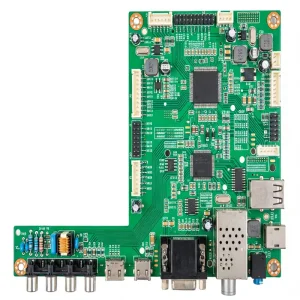
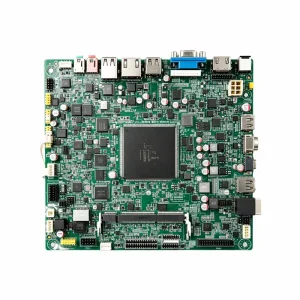
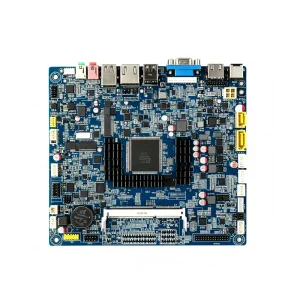
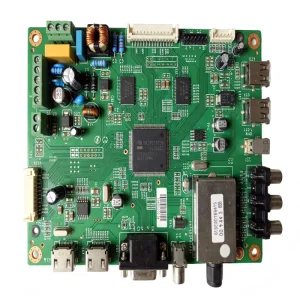
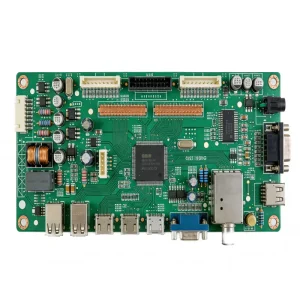
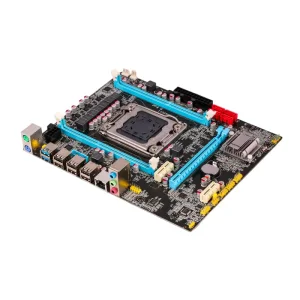
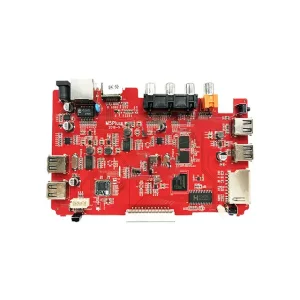
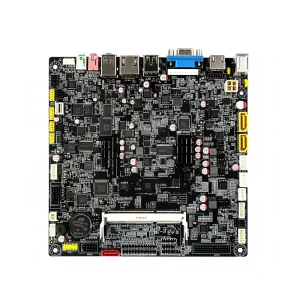
Explore additional mission-critical OEM assemblies engineered by STHL for industrial power networks, optical fiber backbones, smart connectivity, and automotive telemetry.
Direct, transparent answers regarding manufacturing capabilities, engineering workflows, MOQ criteria, warranty standards, and international intellectual property protection.
To deliver a comprehensive DFM audit and binding turnkey quotation within 24 to 48 hours, our engineering team requires: (1) Standard RS-274X or ODB++ Gerber files including copper, solder mask, silkscreen, and drill layers; (2) Bill of Materials (BOM) in Excel format with explicit Manufacturer Part Numbers (MPN), reference designators, package footprints, and preferred brand alternates; (3) Pick-and-Place Centroid file (X, Y, rotation, board side); and (4) Test specification guidelines outlining functional pass/fail criteria or programming instructions.
STHL imposes zero Minimum Order Quantity (No MOQ). We deliberately maintain dedicated NPI (New Product Introduction) quick-turn prototype lines alongside our high-volume automated production bays. This enables hardware development teams to order 5 to 50 prototype verification samples for clinical or field trials, validate the design, and subsequently scale to 100,000+ unit mass production on identical SMT equipment without requalifying tooling or manufacturing processes.
Hidden solder connections under leadless packages (BGA, QFN, LGA, WLCSP) are inspected using dual-method automated verification. First, inline 3D Solder Paste Inspection (SPI) calculates exact paste volume, height, and area across every pad prior to placement. Second, post-reflow boards pass through High-Resolution Automated X-Ray Inspection (AXI). Our 3D computed laminography inspects solder ball concentricity, bridging, head-in-pillow (HiP) defects, and guarantees solder voiding stays strictly under 10%, complying with IPC-A-610 Class 3 standards.
Yes. We operate fully flexible engagement models: Full Turnkey (where STHL procures bare PCBs, active chips, passives, and mechanicals), Partial Turnkey / Hybrid (where clients supply proprietary custom ASICs, pre-flashed microcontrollers, or licensed modules while STHL sources all peripheral passives and substrates), and Full Consignment (where the OEM furnishes all materials and STHL executes precision assembly and test).
Our Shenzhen manufacturing campus operates under 4 globally recognized quality systems independently audited by accredited registrars: (1) IATF 16949:2016 for automotive production parts; (2) ISO 13485:2016 for medical device electronic assemblies; (3) ISO 9001:2015 for total quality management; and (4) ISO 14001:2015 for environmental management and sustainable resource handling. Every production run is serialized and tracked through our automated MES infrastructure.
We provide full-spectrum Incoterms support including EXW, FOB Shenzhen/Hong Kong, CIF, and Delivered Duty Paid (DDP) door-to-door air freight via DHL, FedEx, and UPS. For large volume programs, we coordinate ocean freight container shipping. Our export compliance department handles all customs declarations, Harmonized System (HS) code classifications, Certificate of Origin (COO) documentations, and EUR1 declarations to ensure seamless transit through North American, European, and Asia-Pacific ports of entry.
Upload your Gerber files and Bill of Materials today. Our senior engineering team will return a confidential DFM feasibility audit and competitive turnkey manufacturing quote within 24 hours.