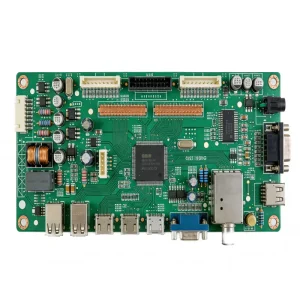
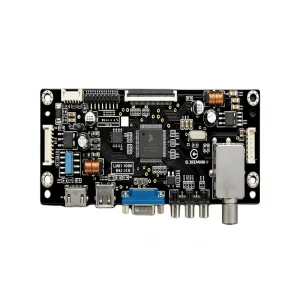
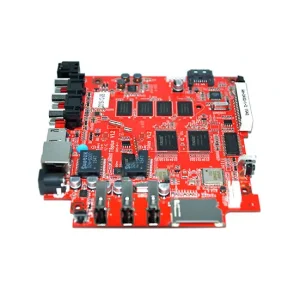
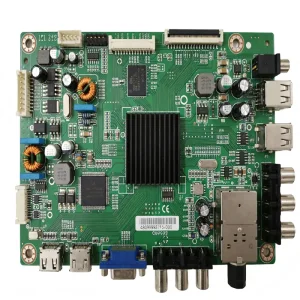
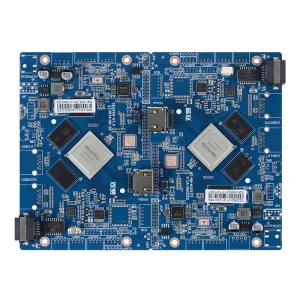
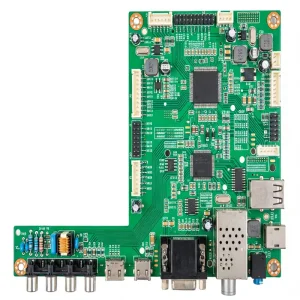
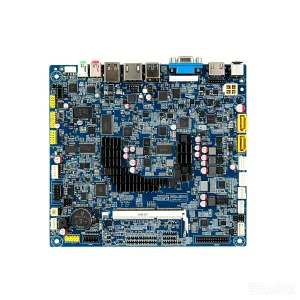
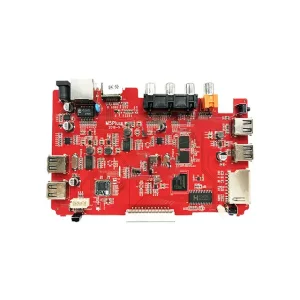
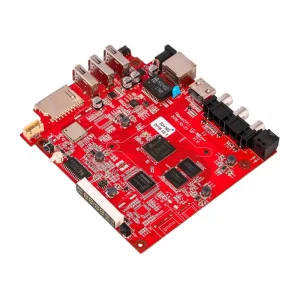
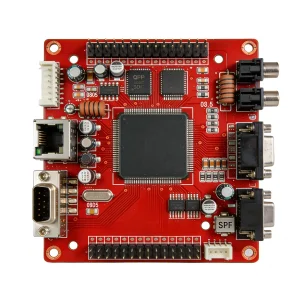
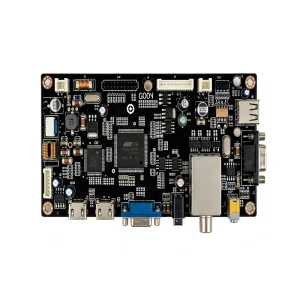
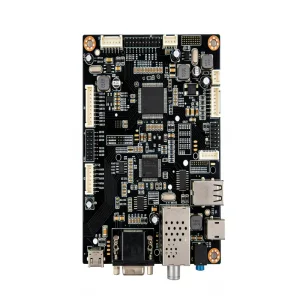
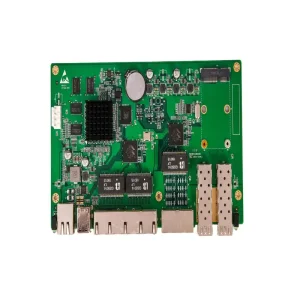
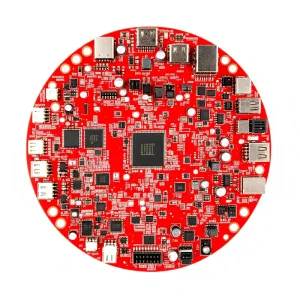
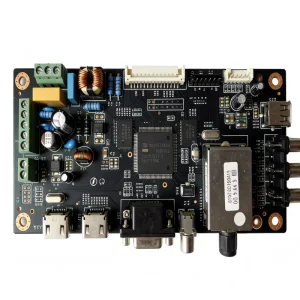
Explore our active turnkey surface mount and through-hole assemblies engineered for automotive, industrial control, green energy, and high-frequency communication protocols.
The global Printed Circuit Board Assembly (PCBA) and Electronics Manufacturing Services (EMS) market has transitioned from standard contractual soldering into a deeply integrated engineering discipline. Valued in excess of $500 billion globally, modern electronic assemblies form the nervous system of modern compute architectures, electric vehicle (EV) powertrains, medical diagnostic arrays, and industrial automation networks. Contemporary OEMs no longer procure mere assembly capacity; they secure end-to-end supply chain resilience, advanced metallurgical validation, automated visual inspection thresholds, and rigorous design-for-manufacturability (DFM) verification.
Geopolitical diversification, fluctuating active component lead times, and the aggressive proliferation of surface mount packages (down to 01005 passives and ultra-fine-pitch 0.35 mm Micro-BGA arrays) have permanently elevated the technical barrier to entry. For procurement executives and principal hardware engineers across North America, Europe, and Asia-Pacific, selecting an OEM PCBA factory requires evaluating multi-tiered capabilities: lot-level electronic component traceability, multi-stage Automated Optical Inspection (AOI), 3D Solder Paste Inspection (SPI), real-time In-Circuit Testing (ICT), and certified compliance spanning ISO 9001, IATF 16949, and ISO 13485.
Located in the heart of China’s Silicon Valley, Shenzhen STHL Electronics Co., Ltd. (operating from Bao'an District since 2006) harnesses the world's most concentrated microelectronics supply ecosystem. Within a 30-kilometer radius sits the entire value chain: raw copper-clad laminate (CCL) fabricators, multi-layer HDI board shops, authorized global distributors (Arrow, Avnet, DigiKey, Mouser), custom metal stamping toolmakers, and certified testing laboratories.
This localized density enables rapid component turnaround cycles that cannot be replicated in isolated manufacturing corridors. Critical engineering prototypes that require 4 to 6 weeks in domestic Western markets are routinely processed through CAD-to-DFM clearance, bare board quick-turn fabrication, full BOM kitting, and SMT assembly in as little as 3 to 7 working days. When supply chains face component obsolescence or unexpected allocation freezes, our dedicated 50+ person engineering division leverages immediate cross-referencing databases, sourcing verified pin-compatible alternates to safeguard delivery velocity without compromising signal integrity or thermal dissipation budgets.
High-speed Yamaha and Panasonic modular placement lines delivering placement accuracies of ±0.03 mm on complex multi-layer FR-4, Rigid-Flex, and Metal Core PCBs.
Multi-spectral optical and high-penetration radiological inspection verifying solder joint wettability, voiding ratios, and pin coplanarity across 100% of production runs.
Complete mechanical integration housing sub-assemblies into custom plastics, extruded aluminum, or sheet metal enclosures ready for end-user retail distribution.
Tailored manufacturing lines calibrated to the thermal, vibration, and electro-mechanical demands of global high-reliability industries.
Robust control boards for Infotainment head units, Advanced Driver Assistance Systems (ADAS), Battery Management Systems (BMS), and powertrain sensors.
Precision sub-assemblies for body temperature monitors, patient telemetry sensors, surgical control systems, and diagnostic imaging equipment.
High-voltage, high-current switching circuits for distributed power generation systems, solar inverters, and heavy-duty industrial LED lighting arrays.
RF circuits, base station transceiver modules, Flight Control Computers (FCC), and Omni-directional VOR receivers demanding low signal loss.
| Manufacturing Dimension | Production Baseline Capability | Advanced / Extreme Capability | Verification Standard |
|---|---|---|---|
| PCB Substrate Types | FR-4 Standard, High-Tg, CEM-1, Aluminum MCPCB | Rogers High Frequency, Polyimide Flex, Rigid-Flex, Ceramic, HDI | IPC-6012 / IPC-6013 |
| Layer Count Range | 1 to 16 Layers | Up to 32 Layers with Blind/Buried Microvias | IPC-A-600 Class 2/3 |
| SMT Component Pitch | 0402 passives, 0.5 mm BGA / QFP pitch | 01005 passives, 0.35 mm Micro-BGA, PoP (Package-on-Package) | IPC-7351 / IPC-A-610 |
| Solder Metallurgy | Lead-Free SAC305, Sn-Bi Low Temp, RoHS/REACH Compliant | Sn63Pb37 Leaded for specialized Mil/Aero contracts | RoHS Directive 2011/65/EU |
| Inspection Density | Inline 2D AOI + Manual Statistical Sampling | 100% 3D SPI + 100% 3D AOI + 3D Computed Tomography X-ray | IPC-A-610 Class 3 / IATF |
| Functional Verification | In-Circuit Resistance/Capacitance Fixture | Automated Flying Probe, ICT, Boundary Scan, Custom Firmware FCT | Customer Quality Plan |
How leading enterprise hardware developers de-risk high-mix and high-volume electronics procurement through structured quality gates.
A flawless schematic file does not guarantee a manufacturable printed board. In our operational methodology at STHL, no production run enters the line without passing through our multi-point engineering review. Our 50+ engineers dissect Gerber, ODB++, and BOM files to detect acute manufacturing bottlenecks before metal stencils are laser-cut: acid traps, thermal relief inadequacies, tombstoning hazards caused by imbalanced copper balances, aspect ratio violations in micro-vias, and component spacing constraints that prevent optical verification heads from achieving focus.
Component counterfeiting remains an acute vulnerability in modern electronics manufacturing. STHL defends supply integrity through an airtight procurement architecture. Active silicon and passive components are purchased directly from original component manufacturers (OCMs) or franchised top-tier distributors—including Arrow, Avnet, DigiKey, Mouser, and Future Electronics. When legacy parts demand secondary sourcing, incoming lots undergo physical decapsulation, marking permanency solvent testing, internal die inspection, and X-ray fluorescence (XRF) spectroscopy to guarantee lead compliance and silicon authenticity.


Verified testimonials from R&D directors, senior hardware designers, and operations managers worldwide.
"Excellent team to work with and fast delivery with high-quality boards. STHL handled our BGA placement with zero solder bridging. We are very happy to work with such a solid supplier."

"Please extend my thanks to your team for the hard work in preparing these complex samples. This experience strengthened our confidence, and we are moving forward into volume production."

"We are completely satisfied with the last run. You did an exceptional job on the multi-layer boards and the turn-around lead time was very short. Placing our repeat order today."







Critical considerations for purchasing managers and electronics design engineers initiating prototype or volume production contracts.
We require standard RS-274X Gerber files (or ODB++ data), an aggregated Bill of Materials (BOM) detailing Manufacturer Part Numbers (MPN) and reference designators, a Pick-and-Place centroid file (X, Y coordinates and component rotation), and assembly drawings with specialized test/potting instructions.
No. STHL operates zero MOQ restrictions. We routinely support hardware teams with 5-to-10 piece engineering pilot runs for bench testing and qualification, transitioning seamlessly into medium batches (hundreds of units) and high-volume monthly releases on the exact same calibrated production lines.
Because Ball Grid Array (BGA) and Quad Flat No-Lead (QFN) packages place solder contacts beneath their bodies, standard 2D optical inspection cannot evaluate joint integrity. STHL uses high-resolution oblique 2.5D/3D X-ray systems to inspect for solder voids, head-in-pillow defects, bridging, and solder ball diameter variations.
Yes. Our in-house component engineering team continuously monitors obsolescence and market allocations. When a part enters long lead-time status, we evaluate candidate pin-compatible alternates, comparing package thermals, voltage thresholds, and pinouts, submitting formal engineering change orders (ECO) for client signoff.
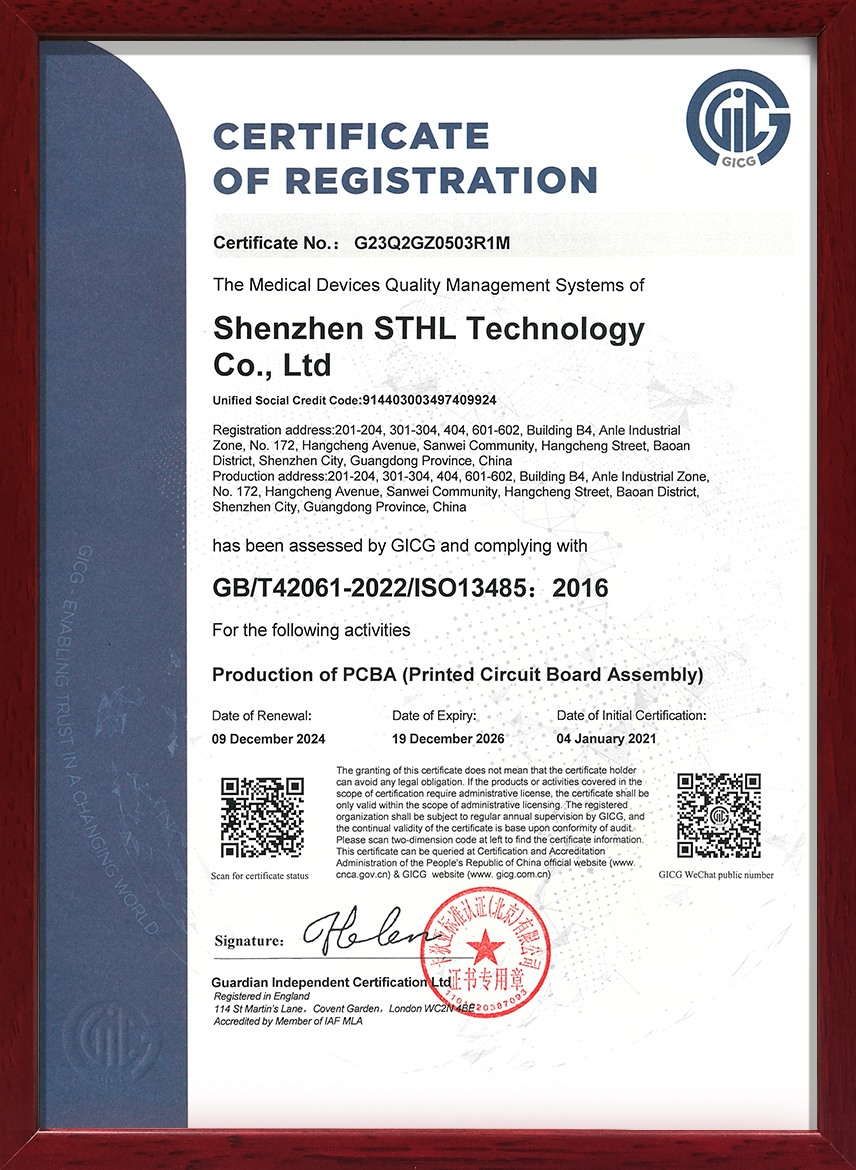
Our Shenzhen factory is audited and certified under IATF 16949 (automotive), ISO 13485 (medical equipment), ISO 9001 (general quality systems), and ISO 14001 (environmental standards). All operators and inspection stations are trained under IPC-A-610 Class 2 and Class 3 criteria.
STHL delivers globally across North America, Europe, Australia, and 90+ countries via air express (DHL, FedEx, UPS), air cargo, or ocean freight. We manage complete export documentation, HS code classification, Certificates of Origin, and drop-ship logistics straight to your final fulfillment centers.
Explore specialized industrial, security, robotics, and environmental PCBA assemblies built under our rigorous automated inspection standards.
Submit your Gerber data, BOM, and assembly drawings for an engineering DFM audit, quotation, and delivery plan. Confidentiality guaranteed through bilateral Non-Disclosure Agreements.