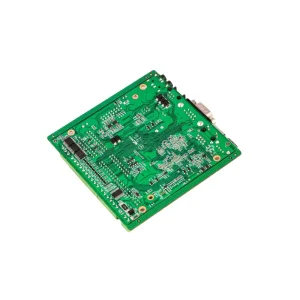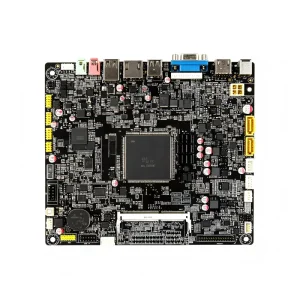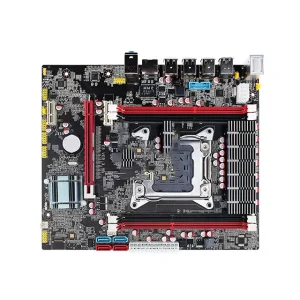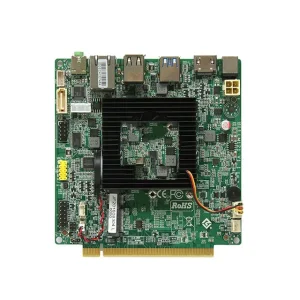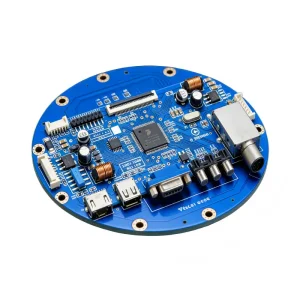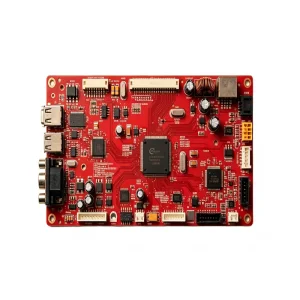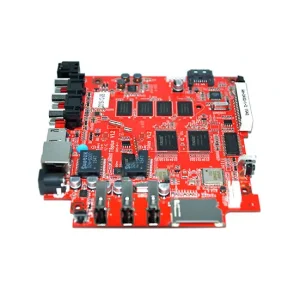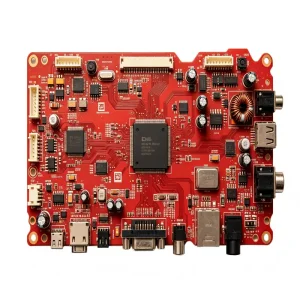
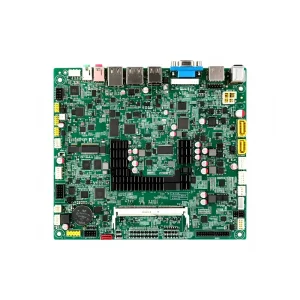
Verified manufacturing records across automated entry systems, in-vehicle telematics, environmental monitors, and critical microelectronics.
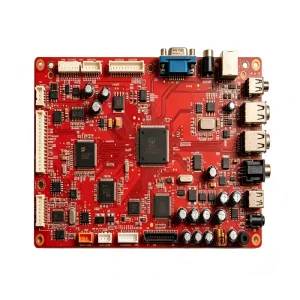
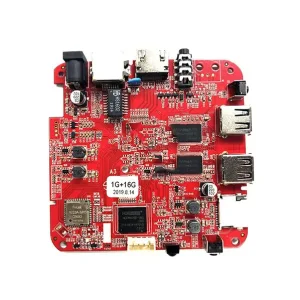
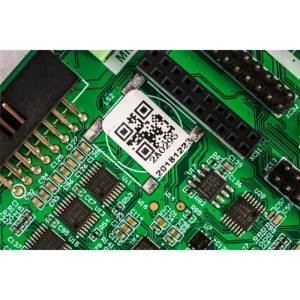
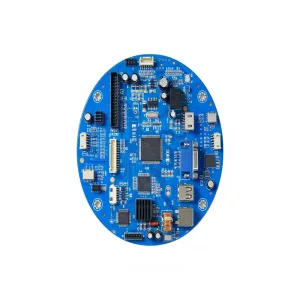
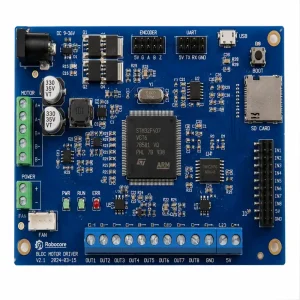
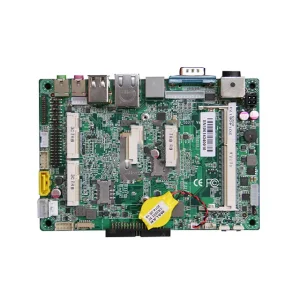
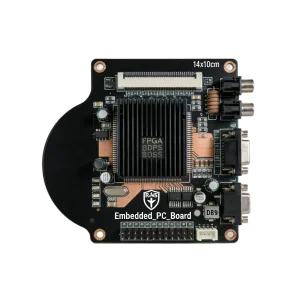
Procurement directors and Chief Technology Officers now evaluate EMS partners far beyond baseline labor arbitrage. True manufacturing success demands systemic supply assurance, verifiable DFM protocols, and micro-defect mitigation.
Global original equipment manufacturers require responsive BOM lifecycle management. The convergence of post-pandemic semiconductor allocations and geo-economic fragmentation makes early second-source component qualification mandatory during initial schematic freeze.
As IoT edge nodes and connected medical hardware shrink, contract assembly demands micro-BGA placement tolerances, 01005 passives capability, precision solder paste deposition, and closed-loop SPI inspection to ensure void-free joints under high thermal cycling.
The convergence of industrial automation, automotive drive units, and critical diagnostic sensors requires tier-1 contract manufacturers to govern production under concurrent IATF 16949 and ISO 13485 certified quality management systems with lot-level traceability.
Leveraging Shenzhen's unique microelectronics ecosystem, STHL integrates automated high-speed SMT placement, digital MES tracking, and immediate access to global distribution networks.
Shenzhen STHL Electronics operates 7 high-speed SMT lines, 2 automated DIP/through-hole lines, and 4 dedicated functional test and box-build stations. Integrated with intelligent Manufacturing Execution Systems (MES), every PCB panel is monitored from solder paste stencil printing, 3D SPI (Solder Paste Inspection), multi-zone nitrogen reflow, to 3D AOI and high-resolution X-ray testing for hidden solder joints on BGA and QFN packages.
Strict operational thresholds established to align with IPC-A-610 Class 2 and Class 3 reliability standards for mission-critical applications.
| Production Volume Capacity | High-mix quick-turn prototyping, pilot NPI runs, to mass turnkey production (Zero MOQ constraint) |
|---|---|
| Substrate Matrix Handled | Standard FR-4, High-Tg FR-4, Rigid-Flex, Flexible Polyimide, Aluminum Base, Ceramic Substrates, Rogers RF laminates |
| SMT Component Geometries | Passives down to 01005 (0402 metric), Fine-pitch BGA down to 0.3mm pitch, POP (Package on Package), CSP, QFN, WLCSP |
| Through-Hole Technology (THT) | Manual insertion stations, Lead-free Wave Soldering, Selective Soldering cells for temperature-sensitive connectors |
| Inspection & Verification | Inline 3D SPI, 3D Optical Inspection (AOI), Offline High-Resolution Real-time X-ray, First Article Tester (FAI) |
| Functional & Stress Testing | ICT (In-Circuit Testing), Flying Probe, Custom Functional Testing (FCT), Firmware Flashing, Environmental Burn-in Churn |
| Quality Registrations | IATF 16949:2016 (Automotive), ISO 13485:2016 (Medical Devices), ISO 9001:2015, ISO 14001:2015 |
| Value-Added Box Build | Automated conformal coating (silicone, acrylic, polyurethane), potting, wire harness integration, custom CNC enclosure assembly |
Validating high-density PCB assemblies across real-world operational environments subject to extreme temperatures, mechanical vibrations, and continuous duty cycles.
Assembled in compliance with IATF 16949 standards. Applications include high-frequency GPS navigation modules, high-voltage battery management systems (BMS) with robust creepage and clearance distances, and CAN-bus telemetry controllers built to endure thermal shock from -40°C to +105°C.
Handling high-power switching and dynamic phase regulation. From wind turbine blade pitch controllers to utility-scale solar boost converters, our through-hole and heavy-copper surface mount capabilities withstand power surges and continuous outdoor vibration.
Manufactured under ISO 13485 clean conditions. Deployments include low-power Bluetooth biometric smart wristbands, optical ecological water probes, and high-sensitivity electrochemical gas leak detectors demanding micro-amp signal preservation.
Key technical, contractual, and logistical answers to support fast supplier audit qualification and RFQ reviews.
To deliver an exhaustive quotation and DFM/DFA review within 24 to 48 hours, we require: (1) RS-274X or ODB++ Gerber files, (2) Detailed Bill of Materials (BOM) identifying exact manufacturer part numbers (MPN) and reference designators, (3) XY Centroid (Pick-and-Place) coordinate file, and (4) Functional test specifications or programming procedures.
STHL partners directly with authorized global franchised distributors (such as Digi-Key, Mouser, Arrow, Avnet) and verified original component manufacturers. Our incoming materials inspection (IQC) protocol checks packaging seal integrity, verifies date codes, conducts solvent resistance testing for markings, and conducts internal microscopic decapsulation verification when required.
We execute legally binding bilateral Non-Disclosure Agreements (NDAs) prior to receiving proprietary schematics. Firmware files are secured on air-gapped programming stations with restricted engineering permissions, and firmware flashing records are logged directly into our MES to prevent unauthorized unit overproduction.
Yes. STHL operates zero MOQ barriers. Prototypes are processed on the exact same high-precision Fuji and Yamaha SMT equipment utilized for million-unit production runs. This guarantees that reflow thermal profiles, solder paste stencil thickness, and optical test parameters remain identical as production volumes scale.
Specialized hardware assemblies engineered for security arrays, power conversion, industrial telemetry, and consumer medical wearables.