
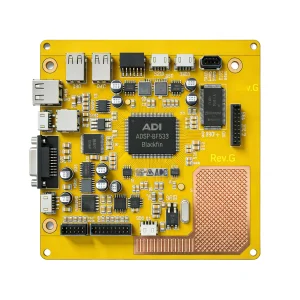
High-density mixed-technology assemblies manufactured with precision wave soldering, axial/radial insertion, and conformal coating.
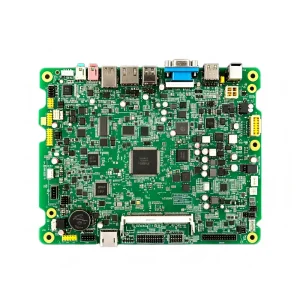
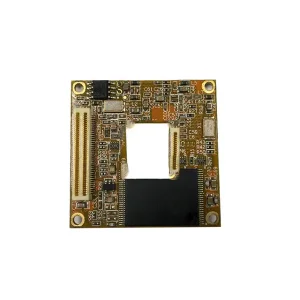
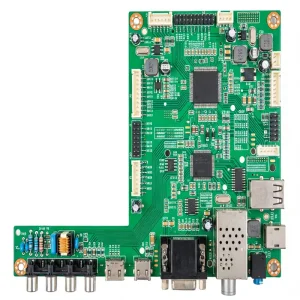
Why the global transition toward Electric Vehicles (EVs), renewable microgrids, and high-frequency GaN/SiC power infrastructure requires robust THT soldering.
Traditional manual hand-soldering introduces human-induced thermal variations and cold solder joints. Modern OEM manufacturing transitions toward robotic selective soldering nozzles under inert Nitrogen (N2) atmosphere, regulating localized thermal profiles within ±1.5°C without exposing adjacent fine-pitch SMDs to thermal degradation.
THR technology leverages precision laser-cut stepped stencils to deposit precise solder paste volumes into plated through-holes (PTH). This allows mixed-technology boards to run through single-pass convection reflow ovens, cutting assembly cycles by 40% while achieving 100% circumferential wetting and capillary fill.
High-power inverters and renewable energy switches require copper planes exceeding 3oz to 6oz. THT assembly provides robust conductive heat spreading through copper-plated vias, preventing solder joint fatigue caused by severe CTE (Coefficient of Thermal Expansion) mismatch between heavy transformers and PCB laminates.
Operating at the nexus of the Greater Bay Area electronics cluster in Shenzhen, STHL pioneers Factory 4.0 digitization. By unifying automated Component Storage Towers, cloud-based ERP material validation, and AI-driven Automated Optical Inspection (AOI) with real-time wave solder height monitoring, we eliminate the traditional vulnerabilities of lead-time bottlenecks and manual insertion errors.
Bridging component obsolescence forecasting, localized raw material sourcing, and zero-defect quality systems.
Access direct component pipelines with over 100 authorized global distributors (Mouser, Digi-Key, Arrow, Avnet) and qualified tier-1 domestic semiconductor manufacturers. Our engineering team conducts active Life-Cycle Risk Assessments, proposing pin-compatible alternative microcontrollers and discrete magnetics to bypass extended market lead times.
Before releasing copper to manufacturing, our senior CAM engineers evaluate pad-to-hole ratios, thermal relief geometries, component clearance around wave solder palettes, and solder dam spacing. This preemptive analysis eliminates solder bridging, blowholes, and insufficient vertical fill before prototype production.
For complex double-sided mixed SMT/THT boards, we design custom CNC-machined Durostone and titanium solder pallets. These pallets insulate precision surface-mount components from molten solder contact during wave processing while exposing selective through-hole leads to optimal flux penetration and solder waves.
Rigorous manufacturing parameters audited against automotive IATF 16949 and medical ISO 13485 quality protocols.
| Process Parameter | Standard Capability | Advanced / Custom Engineering |
|---|---|---|
| Assembly Methods | Dual-wave soldering, manual bench assembly, selective soldering | Through-Hole Reflow (THR), automated robotic selective soldering (N2 purged) |
| Lead Trimming & Clinching | Automated inline lead cutter (1.2mm ±0.2mm) | Custom pre-forming, 3D clinched leads for heavy vibration compliance |
| PTH Hole-to-Lead Tolerance | Lead diameter + 0.25mm to 0.40mm | Tight tolerance push-fit, press-fit compliant pin assembly |
| Wave Solder Solder Alloy | SAC305 (Sn96.5Ag3.0Cu0.5), Sn-Cu-Ni Lead-Free | Sn63Pb37 (High-Rel Aerospace/Military Exemption), Anti-Oxidant doped |
| Fluxing Systems | Automatic spray fluxer (No-Clean VOC-free) | Ultrasonic spray fluxing, selective drop-jet micro-fluxing |
| Maximum PCB Dimensions | 50mm × 50mm up to 510mm × 460mm | Extended pallet format up to 600mm × 1200mm (LED Architectural) |
| Quality Inspection Tier | AOI, visual inspection via HD microscopes | 3D X-Ray Inspection (AXI) for barrel fill percentage, Ionic Cleanliness testing |
| Protective Finishing | Solvent-free selective spray conformal coating | Potting encapsulation (Silicone/Epoxy), Robotic UV cure coating |
Engineered for extreme operating environments where thermal cycling, vibration, and mechanical strain disqualify surface mount alone.
Under-the-hood and chassis applications, such as Anti-Lock Braking Systems (ABS) and Electronic Stability Programs (ESP), undergo perpetual mechanical vibration and thermal shocks from -40°C to +125°C. THT terminal pins and solid copper coils guarantee permanent physical anchoring and zero micro-cracking across years of vehicle operation.
Grid-tied inverters and utility power distribution boards carry transient fault currents exceeding hundreds of amperes. Plated through-hole relay contacts, current transformers, and heavy-gauge busbars withstand inductive kickback and thermal over-currents that would immediately delaminate surface-mount traces.
Air Data Computers (ADC) and high-reliability ecological monitoring equipment operate in high-humidity or sub-atmospheric pressure chambers. STHL pairs IPC-A-610 Class 3 through-hole structural soldering with multi-layer conformal coating, preventing electrochemical migration and whisker growth.
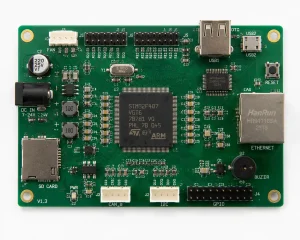
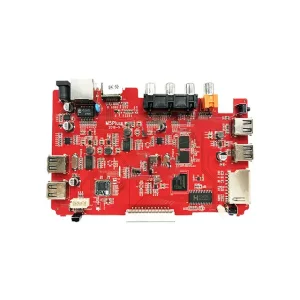
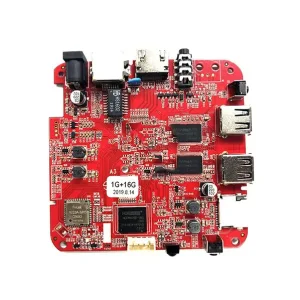
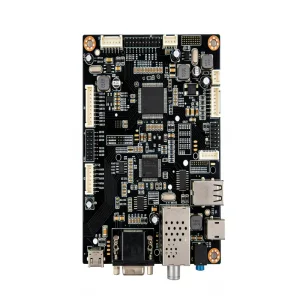
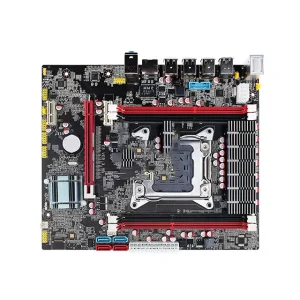
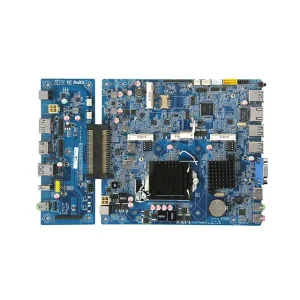
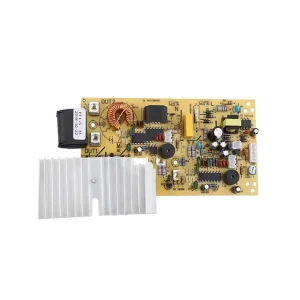
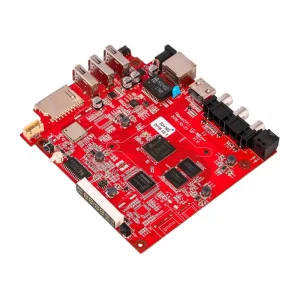
Explore our demonstrated OEM assembly capabilities supporting high-precision commercial, automotive, and robotic platforms.
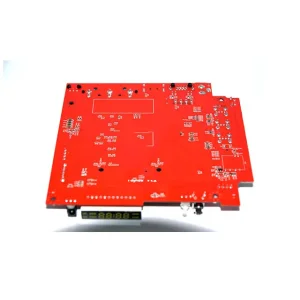
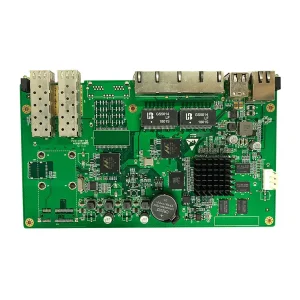
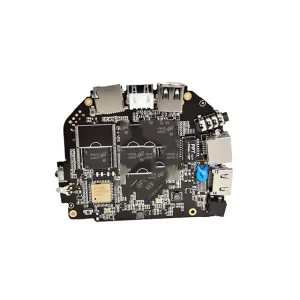
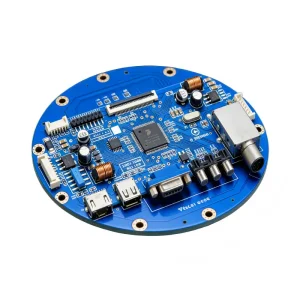
Going beyond basic visual checks to ensure IPC-A-610 Class 3 aerospace and medical-grade solder barrel fill compliance.
Automated X-ray Inspection (AXI) inspects inner-barrel wetting and vertical solder fill on dense multi-layer boards. STHL systems ensure greater than 75% vertical fill for Class 2 assemblies and mandatory 100% fill for Class 3 high-reliability applications, automatically detecting inner voiding and bridging beneath tall connectors.
Custom-engineered ICT fixtures isolate every through-hole node, testing passive components for value accuracy, checking diodes/transistors for polarity, and ensuring zero trace shorts. Pneumatic clamps apply uniform pressure to prevent mechanical stress micro-fractures during bed-of-nails contact.
Each production batch undergoes custom Functional Testing (FCT) simulating actual field duty. High-voltage insulation testing (Hi-Pot up to 5kV AC), programmable load switching, and extended thermal cycling inside environmental burn-in chambers eliminate infant mortality failures before shipment.
In-depth technical answers addressing manufacturability, compliance, lead times, and engineering handoffs.