Direct manufacturer deployment of IPC Class 3 certified assemblies engineered for harsh thermal cycles, intense mechanical vibration, and electromagnetic interference (EMI) resilience.
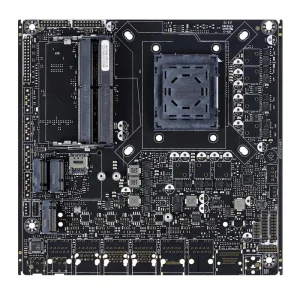
Malaysia Mission-Grade Aerospace PCB Assembly: Extreme Environmental Reliability SMT/THT
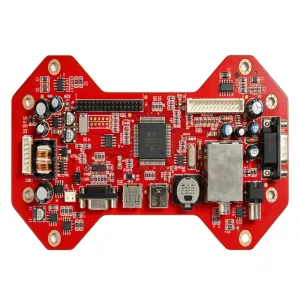
OEM Drone & Flight Autopilot Module PCBA Assembly for Malaysia Avionics Hubs
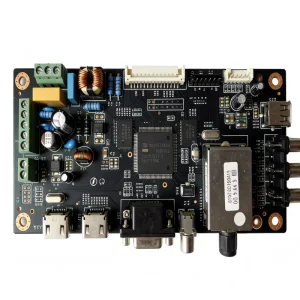
Turnkey Flight Control Computer (FCC) Multi-Layer PCBA Assembly Factory Solutions
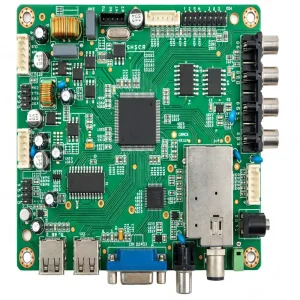
OEM Fly-by-Wire (FBW) High-Integrity Actuator Control Unit PCBA Production
With commercial aviation modernization, electrification of urban air mobility (UAM/eVTOL), and low Earth orbit (LEO) small-satellite constellations booming, the global aerospace PCB assembly sector requires unprecedented manufacturing fidelity.
Unlike commercial electronics where IPC Class 2 suffices, aerospace PCBA demands IPC-6012 Class 3/3A bare boards and IPC-A-610 Class 3 assembly. Critical parameters include zero barrel cracking under cyclic thermal stress (-55°C to +125°C), controlled dielectric breakdown thresholds, and strict voiding limits (<15% under BGA balls).
Aero PCBs face rapid atmospheric pressure variations, condensation, chemical jet fuel vapors, and high structural vibration profiles. Modern assembly incorporates specialized conformal coatings (polyurethane, silicone, and parylene vapor deposition) alongside potted enclosure integration.
Global component scarcity and counterfeit proliferation pose existential hazards to aerospace systems. Robust EMS operations rely on direct franchise distribution lines, real-time decapsulation verification, XRF elemental metallurgy checks, and strict adherence to AS5553 counterfeit mitigation protocols.
Malaysia is rapidly accelerating its standing under the Malaysian Aerospace Industry Blueprint 2030, positioning itself as Southeast Asia's foremost aerospace manufacturing and MRO cluster.
The Malaysian ecosystem is anchored around major hubs: Selangor (Subang Aerotech Park, KLIA Aeropolis) handles substantial commercial aerostructures and avionics MRO operations, while Penang and Kulim High Tech Park (KHTP) offer extraordinary semiconductor, PCB fabrication, and electronics assembly synergy. Tier-1 and Tier-2 integrators require high-mix, low-to-medium-volume PCBA manufacturing partners capable of rapid prototyping and seamless ramp-up to flight-cleared serial production.
Our dedicated turnkey manufacturing services provide direct logistical integration to Penang International Airport (PEN) and Kuala Lumpur International Airport (KUL) free commercial zones (FCZ), mitigating lead times for mission-critical aircraft-on-ground (AOG) replacements.
Commercial operators under the Civil Aviation Authority of Malaysia (CAAM), along with regional defense contractors and commercial OEMs, enforce strict compliance with DO-254 (Design Assurance Guidance for Airborne Electronic Hardware) and DO-160G (Environmental Conditions and Test Procedures for Airborne Equipment).
A rigorous breakdown of fabrication, surface mount, material handling, and quality assurance thresholds maintained for aerospace tier-suppliers.
| Process Parameter | Standard Commercial (Class 2) | STHL Aerospace Standard (IPC Class 3 / Space) | Malaysian Application Value |
|---|---|---|---|
| Base Laminate Glass Transition (Tg) | Tg 130°C - 150°C (Standard FR-4) | Tg > 170°C - 200°C (Polyimide, Rogers, Isola 370HR) | Withstands engine bay heat & high thermal shock |
| BGA Solder Void Percentage | < 25% voiding acceptable | < 15% (Critical interconnects < 10%) | Prevents fracture failure during turbulence/g-force |
| Copper Plating in Through-Holes | Average 20 µm / Minimum 18 µm | Average 25 µm / Minimum 20 µm (IPC-6012 Class 3) | Ensures circuit integrity over thousands of flight cycles |
| Conformal Coating Thickness | Single coat acrylic (~25-50 µm) | Dual-coat robotic selective or parylene deposition | Guarantees hermetic protection against SE Asian humidity |
| Inspection Regimen | Sampling AOI / Manual Visual | 100% 3D AOI + 100% 3D AXI + Flying Probe / ICT | Eliminates escape defects in fly-by-wire and autopilot units |
Our senior aerospace applications engineering team provides complete Gerber design rule checks, stack-up optimization, and Bill of Materials (BOM) obsolescence assessments within 24 hours.
Send Inquiry NowExplore our end-to-end aerospace electronic manufacturing portfolio, supporting flight computers, navigation suites, and crew-alerting platforms across Malaysia and worldwide.
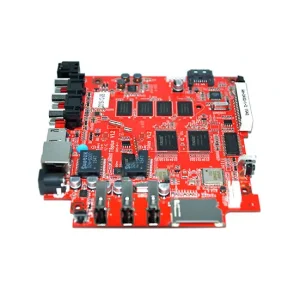
OEM Aviation Magnetometer PCBA Assembly: Precision Heading & Attitude Reference Factory
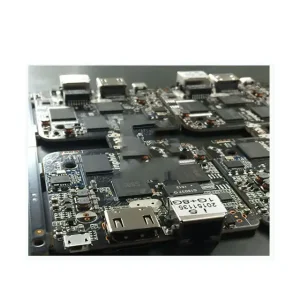
High-Quality Air Data Inertial Reference Unit (ADIRU) PCBA Assembly for Navigation
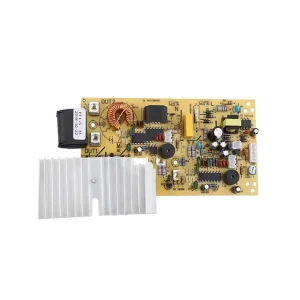
Turnkey Air Data Computer (ADC) High-Precision Pitot-Static Sensor PCBA Factory
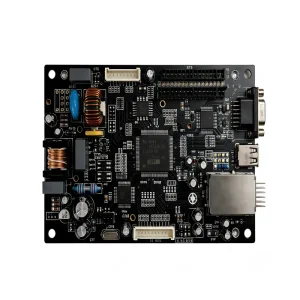
Engine Indicating & Crew Alerting System (EICAS) High-Density Motherboard PCBA
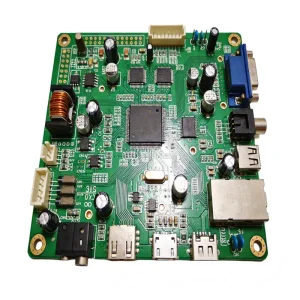
High-Performance Heads-Up Display (HUD) Optoelectronic Driver PCBA Production
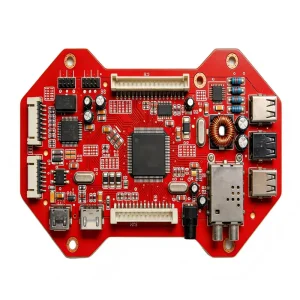
Aviation Multifunction Display (MFD) High-Speed GPU Interface Circuit Board Assembly
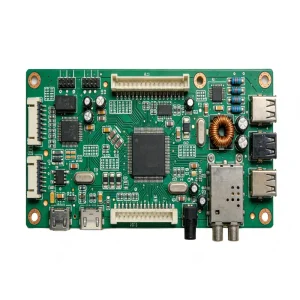
Cockpit Primary Flight Display (PFD) Redundant Core Controller PCBA Assembly
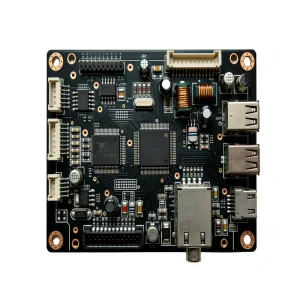
Electronic Flight Instrument System (EFIS) Robust Integrated Glass-Cockpit PCBA
Authoritative technical clarification on standards compliance, quality assurance, logistics, and material engineering for mission-critical electronics.
We provide full hardware traceability dossiers necessary for CAAM and international DO-254 compliance. This includes complete Certificates of Conformance (CoC), micro-sectioning analysis reports, solder paste thermal profiling curves, automated ionic contamination testing records, and material flammability data meeting UL94-V0 aerospace criteria.
For high-reliability aerospace contracts, we utilize traditional tin-lead (Sn63Pb37) solder formulations where permitted by military/aerospace exemptions to fundamentally eliminate tin whisker risks. When lead-free assembly is mandatory, we enforce conformal dipping/spraying, stress-relief component lead forming, and underfills to safeguard fine-pitch arrays against cyclical harmonic vibration.
Quick-turn engineering prototypes can be produced and delivered to Kuala Lumpur (KUL) or Penang (PEN) within 7 to 10 working days, provided raw components are readily available or consigned. Full turnkey volume production runs typically range between 4 to 6 weeks, accounting for comprehensive bare board fabrication, burn-in testing, and conformal cure cycles.
We execute strict bilateral Non-Disclosure Agreements (NDAs) prior to receiving any design, schematic, or firmware documentation. Firmware programming takes place within an isolated, encrypted network segment, and all bare PCBs undergo serialization via laser data-matrix codes linked to our secure MES platform to maintain zero information leakage.