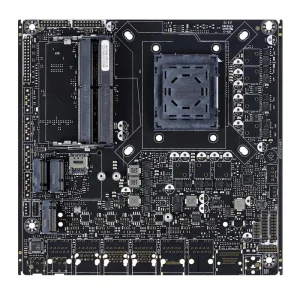
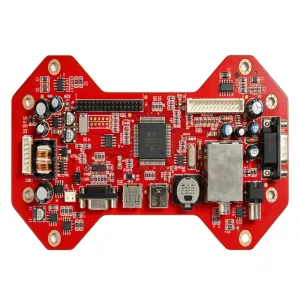
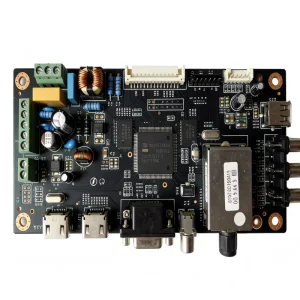
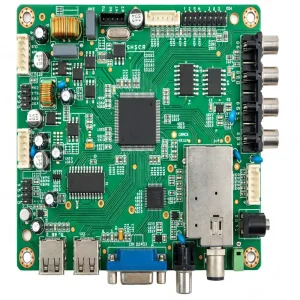
Engineered to withstand rigorous Arctic thermal differentials, high-vibration launch stresses, and continuous orbital radiation. Below are key systems currently produced with complete component-level traceability.
Finland has rapidly transformed into a global vanguard for orbital small-satellite technology, synthetic aperture radar (SAR) constellations, and resilient polar avionics. Connecting Finnish R&D with precision volume manufacturing bridges the laboratory-to-orbit lifecycle.
Anchored around Aalto University and VTT Technical Research Centre of Finland, the Otaniemi cluster pioneers commercial microsatellites and hyperspectral imaging. These missions demand hyper-miniaturized Rigid-Flex HDI PCBA layouts with severe spatial and thermal dissipation constraints.
Renowned for world-class wireless infrastructure, RF engineering, and signal processing, Tampere and Oulu developers produce next-generation phased-array radar, telemetric transceivers, and Arctic autonomous drone avionics requiring impedance tolerances under ±5% on high-frequency Rogers/PTFE substrates.
Home to sounding rocket campaigns and severe sub-orbital testing, systems deployed in northern Finland must operate under brutal cryogenic temperatures down to −55°C with sudden rapid aerodynamic ascent heating, necessitating specialized underfill materials and Class 3 solder barrel fills.
As Finnish enterprises transition from initial academic proof-of-concept CubeSats to continuous orbital constellations (such as commercial Earth observation fleets) and commercial UAV networks, procurement friction emerges. High regional prototype fab expenses and prolonged component procurement cycles in Northern Europe create bottlenecks. Partnering directly with an agile, high-reliability Chinese PCBA manufacturing partner delivers the industrial agility needed to bring Finnish designs into scaled production without compromising stringent European Space Agency (ESA) or defense quality standards.
From the extreme freezing conditions of Lapland to Low Earth Orbit (LEO), Finnish hardware demands non-negotiable operational integrity. STHL customizes SMT assembly workflows for these precise target use cases.
Finnish space companies lead the world in miniaturized SAR radar satellites that provide round-the-clock imagery regardless of cloud cover or Arctic darkness. These payloads feature high-density multi-channel RF transmitters and field-programmable gate arrays (FPGAs) drawing intense peak currents.
Unmanned aerial vehicles operating along Finland’s extensive border corridors face freezing mist, icing conditions, and intense mechanical vibration during maritime patrol missions across the Gulf of Finland.
Finland's forestry and climate monitoring institutions leverage optical nanosatellites to track vegetation health and carbon sequestration. Sensitive optical sensors and analog-to-digital converters require clean power rails and zero electromagnetic interference (EMI).
Communication networks supporting critical civil safety and defense infrastructure across the Nordic terrain require ruggedized communication PCBAs that guarantee uptime under harsh electromagnetic and physical conditions.
Aerospace PCBA demands process controls far exceeding conventional industrial electronics. At STHL, our cleanroom SMT production lines are calibrated to comply with IPC-A-610 Class 3, IPC-6012DS (Space and Military Avionics Supplement), and align with European ECSS manufacturing protocols.
| Technical Parameter | STHL Aerospace Production Capability | Finnish Mission Value & Compliance Benefit |
|---|---|---|
| Base Laminate Materials | Polyimide (Tg >250°C), Nelco, Rogers 4003C/4350B, Megtron 6, Shengyi S1000-2M, Metal Core (Al/Cu base). | Prevents delamination during severe thermal cycling between −55°C and +125°C in LEO orbital cycles. |
| HDI & Microvia Architecture | Stacked / staggered microvias (Laser drilled 75μm diameter), Any-Layer HDI up to 32 layers, VIPPO (Via-in-Pad Plated Over). | Maximizes compute capability per cubic centimeter inside constrained 1U/3U/6U CubeSat deployers. |
| SMT Component Placement | 01005 passives, ultra-fine pitch QFP (0.3mm pitch), BGA/WLCSP (0.35mm pitch), POP (Package on Package). | Facilitates high-speed DSP and FPGA integration for on-board autonomous image processing. |
| Solder Voiding Control | Multi-zone nitrogen-purged reflow + vacuum vapor phase soldering (void rates certified <10%, standard QFN/BGA <8%). | Eliminates micro-void blowouts and hotspot formation in the vacuum of space. |
| Soldering Workmanship | IPC-A-610 Class 3 Certified Operators, 100% minimum 75% barrel fill on plated through-holes (PTH). | Ensures mechanical survival against 20G+ RMS random vibration profiles encountered during rocket launches. |
| Conformal Coating & Potting | Automated selective robotic spray: Parylene C, Dow Corning silicone, Humiseal acrylics & polyurethanes. | Prevents tin whisker short-circuits, dielectric breakdown, and condensation in humid Arctic field operations. |
| Advanced Non-Destructive Testing | 3D SPI (Solder Paste Inspection), 3D AOI (Koh Young), 160kV Transmission 3D X-Ray Computed Tomography (CT). | 100% verification of non-visible solder joints, head-in-pillow defects, and micro-cracking prior to shipping. |
Thermal vacuum stability is verified through our environmental stress screening (ESS) infrastructure. We perform rapid-ramp thermal shock cycling (−55°C to +125°C at 10°C/min) with in-situ daisy-chain resistance monitoring to preemptively identify micro-crack propagation in via barrels before deployment to Finland's research institutions.
Ionic contamination testing (Rose test) guarantees residual contamination levels below 0.1 μg/cm² of NaCl equivalent, well below the stringent MIL-STD-2000 specification. This ultra-clean baseline prevents electrochemical migration, dendritic growth, and leakage currents in high-impedance space sensors.
Combining Nordic engineering ingenuity with the world's most concentrated electronics manufacturing ecosystem gives Finnish high-tech hardware firms an undeniable market velocity advantage.
While European electronics assembly facilities often quote 8 to 14 weeks for aerospace prototype turnarounds, STHL leverages Shenzhen’s 1-hour supply chain cluster. Quick-turn engineering prototypes are completed in as fast as 5 to 7 working days, allowing Finnish aerospace start-ups to validate revision cycles 300% faster.
Every incoming active and passive component is barcoded, dry-storage logged, and tracked via our integrated Manufacturing Execution System (MES). Solder paste lot numbers, reflow temperature profiles, optical inspection images, and X-ray radiographs are permanently archived against each serial number for audit readiness.
Finnish engineering teams frequently face tight venture capital or Horizon Europe grant budgets. Our DFM (Design for Manufacturability) and BOM cross-referencing engineers offer Pin-to-Pin equivalent proposals for long-lead passives and connectors, reducing BOM expenditures by 25% to 45% without sacrificing qualification standards.
Partner with an engineering-driven EMS provider certified in IATF 16949, ISO 13485, and ISO 9001. Send your Gerbers and BOM for complete DFM review.
The global aerospace sector has irreversibly shifted from legacy, multi-year state programs toward commercial "New Space" models reliant on upgraded COTS+ components and agile production cycles.
Historically, space hardware required bespoke rad-hard silicon with lead times extending into years and budgets reachable only by superpower agencies. Today, Finnish companies like Iceye and Kuva Space have rewritten the rules by proving that commercial off-the-shelf components, when subjected to rigorous up-screening, conformal encapsulation, and IPC Class 3 precision surface mounting, achieve equal or superior performance at a fraction of legacy capital costs.
Globally, defense modernization and autonomous commercial logistics in Scandinavia demand resilient manufacturing partnerships outside single-source dependencies. By collaborating with Shenzhen STHL, Finnish buyers secure a resilient, high-volume production pipeline insulated against local European labour shortfalls and material allocation shortages.
Comprehensive pre-assembly screening, including lot-specific burn-in, XRF alloy validation to eliminate tin whisker risks, and precise baking cycles to prevent moisture-induced popcorning.
Independent thermocouple profiling for every assembly configuration, verifying that solder peak temperatures, soak durations, and cooling gradients strictly honor component maximum stress thresholds.
Application of high-tensile epoxy staking compounds (e.g., Araldite, 3M Scotch-Weld) on all components exceeding 5 grams, mitigating mechanical resonance failures during high-G launch dynamics.
Aerospace manufacturing requires absolute legal transparency, robust intellectual property security, and uncompromising environmental compliance. We engineer certainty into every transaction.
We operate fully compliant with international export regulations and civil aerospace treaties. For proprietary Finnish hardware designs, bilateral Non-Disclosure Agreements (NDA) are formally executed prior to Gerber file transfer. All production data is housed on air-gapped, isolated CAD/CAM servers, preventing unapproved dissemination.
While civil industrial electronics require lead-free compliance under EU RoHS, aerospace and military applications frequently require tin-lead (Sn63Pb37) soldering to prevent tin whisker formation in high-reliability critical applications. We maintain strictly segregated Lead-Free and Leaded SMT lines to eliminate cross-contamination.
Every shipment to Finnish destinations is accompanied by full quality documentation packs: First Article Inspection (FAI) reports per AS9102 format, Certificates of Conformance (CoC), material certification sheets, solder temperature profile logs, and automated 3D X-ray inspection defect-free records.
Seamless DDP/DAP expedited logistics via FedEx, DHL Express, and direct air cargo straight into Helsinki-Vantaa Airport (HEL), with transparent EU customs documentation, Harmonized System (HS) code classification, and zero customs clearance delays for seamless Nordic integration.
Clear, technical answers to critical engineering, validation, and logistics queries before engaging with our Shenzhen aerospace factory.
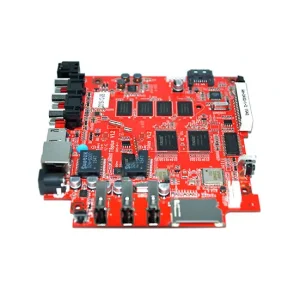
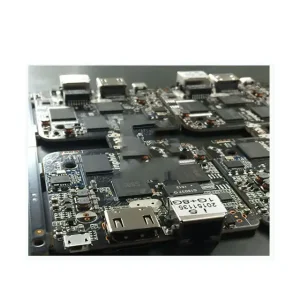
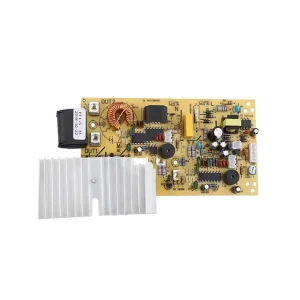
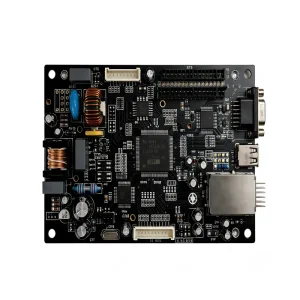
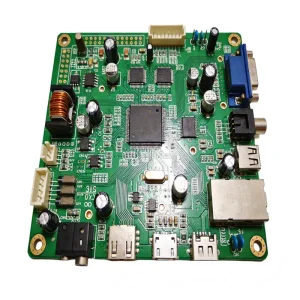
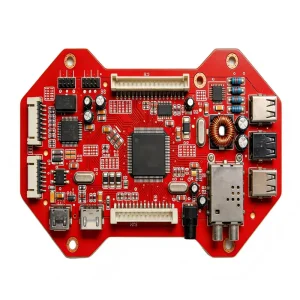
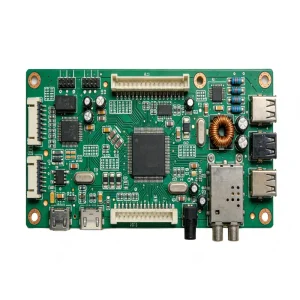
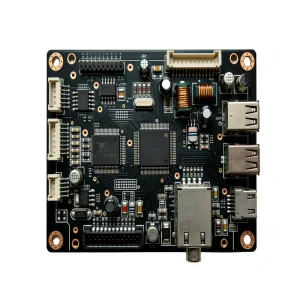
Explore our certified avionics and sub-system PCB assembly capabilities. All assemblies are manufactured in dust-free, ESD-protected cleanrooms with full traceability for Finnish and international flight programs.
Have custom aerospace Gerber layouts, high-Tg Rogers stack-ups, or specialized Arctic test requirements?
Send Inquiry Now — Get Instant Engineering Feedback