
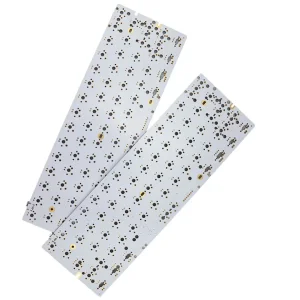
Toronto Commercial High-Bay OEM LED PCB Assembly
View Product Specifications
Engineered for high thermal conductivity, precision color matching (MacAdam 3-step ellipse), and sustained output under extreme Canadian ambient conditions.
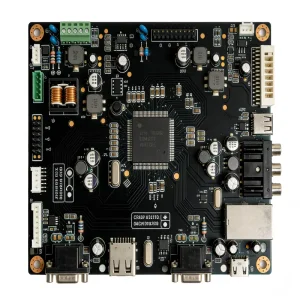
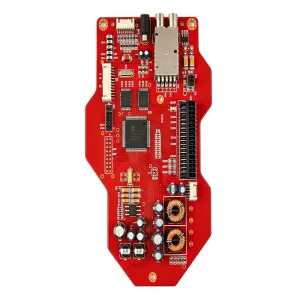
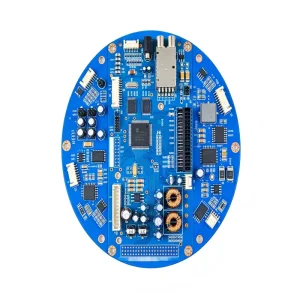
Analyzing operating environments, localized electrical grid regulations, and environmental mandates driving the demand for tier-1 LED PCBA fabrication across Southern Ontario.
The City of Toronto enforces aggressive decarbonization policies through TGS Version 4 and Ontario Regulation 404/12. Commercial luminaires must deliver luminous efficacies exceeding 140 lm/W while meeting low Unified Glare Ratings (UGR < 19). Solid-state lighting manufacturers serving Vaughan, Markham, and Downtown Toronto need assemblies engineered with ultra-low thermal resistance dielectrics to maintain strict photon flux levels without premature phosphor degradation.
Southern Ontario experiences severe outdoor temperature differentials ranging from -35°C during peak lake-effect winter events to +38°C in high-humidity summer peaks. For outdoor roadway luminaires along the 400-series highways (Highway 401, 407 ETR, QEW) and exterior architectural illumination, solder joints face massive shear stresses caused by Coefficient of Thermal Expansion (CTE) mismatches between aluminum substrates and ceramic LED packages.
The logistics and advanced warehousing corridor spanning Peel Region (Mississauga, Brampton) requires continuous 24/7/365 solid-state high-bay illumination. Downtime translates directly into operational overhead. Our custom LED assemblies utilize high-grade aluminum-core laminates (1.5mm to 3.0mm thickness) designed to achieve LM-80/TM-21 projected lifespans exceeding L90 @ 65,000 hours, lowering maintenance costs in high-ceiling industrial facilities.
In high-power LED systems, heat is the single greatest catalyst for luminous decay, chromaticity shift, and junction failure. Here is how we engineer boards to outperform standard commercial assemblies.
Conventional Metal Core PCBs (MCPCBs) isolate the copper circuit traces from the aluminum or copper baseplate via a dielectric bonding layer. While this dielectric provides electrical isolation (typically rated from 1.5 kVAC to 6.0 kVAC), it acts as a thermal bottleneck with thermal conductivity commonly limited to 1.0 - 3.0 W/m·K.
For high-power stadium projectors, horticultural grow arrays, and automotive headlamps engineered for Ontario brands, STHL implements Direct Thermal Path (DTP) Copper Base Substrates. By eliminating the dielectric layer beneath the LED thermal slug pad, the LED junction interfaces directly with the copper base, achieving conductive figures exceeding 385 W/m·K. This drops junction operating temperatures by up to 22°C, radically stabilizing chromaticity coordinates across long operational shifts.
Under standard SMT convection reflow, flux outgassing creates micro-voids trapped beneath large surface-mount LED thermal pads (such as Cree XP-E/XP-G, Lumileds LUXEON, or Osram OSLON packages). Standard industrial assembly lines commonly display void rates between 15% and 25%, causing hot spots and early catastrophic diode burnout.
STHL utilizes ten-zone nitrogen-purged convection reflow systems integrated with inline vacuum chambers. By dropping atmospheric pressure to < 10 mbar in the liquidus phase, outgassing voids are drawn out before crystallization, reducing thermal voiding to under 5%. This guarantees uniform conductive thermal dissipation into our custom extruded heatsinks.
| Substrate Architecture | Thermal Conductivity | Dielectric Breakdown | Typical Applications in Ontario | Cost / Reliability Balance |
|---|---|---|---|---|
| Standard FR-4 with Thermal Vias | 0.3 - 0.8 W/m·K | > 15 kV/mm | Interior ambient strips, retail linear diffusers | Economy • Low Stress |
| Aluminum MCPCB (1060 / 5052 Alloy) | 1.5 - 3.0 W/m·K | 3.0 - 4.5 kVAC | Office troffers, commercial downlights, parking garage fixtures | Standard Industrial |
| High-Conductivity Aluminum Core | 4.0 - 8.0 W/m·K | > 5.0 kVAC | Highway 401 cobra heads, industrial high bays, tunnel lighting | High Performance |
| Direct Thermal Path (DTP) Copper Base | 385 - 400 W/m·K | Non-isolated slug | Horticultural grow bars, stadium floodlights, architectural spot | Ultra-Reliability |
| Ceramic Substrate (Al2O3 / AlN) | 24 - 180 W/m·K | > 10 kV/mm | UV curing systems, high-intensity medical surgical lighting | Mission Critical |
From smart skyscraper façades along Lake Ontario to intensive greenhouse operations in the Greenbelt, our PCBA production addresses localized electrical, optical, and mechanical realities.
Southern Ontario represents Canada's densest concentration of greenhouse cultivation (Niagara, Holland Marsh, and Leamington corridors). We engineer specialized horticultural LED PCB assemblies with custom photon spectrum mixes (Deep Blue 450nm, Hyper Red 660nm, Far Red 730nm) configured to maximize Photosynthetic Photon Flux Efficacy (PPE > 3.0 μmol/J). PCBs incorporate specialized hydrophobic fluoropolymer conformal coatings to withstand constant 95% relative humidity and chemical fertilizers.
High-rise developments in Downtown Toronto and along the Harbourfront require exterior LED media facades and accent linear lighting capable of enduring atmospheric salt fog, ice freezing cycles, and high wind-shear vibrations. Our assemblies feature automated silicone dispensing and polyurethane encapsulation, preventing moisture ingress (IP67/IP68 rating) and eliminating micro-cracking across precision surface-mount resistors and microcontrollers.
Processing plants, chemical manufacturing hubs in Hamilton, and automated manufacturing plants in Oshawa and Oakville demand explosion-proof, Class I Division 2 certified luminaires. STHL manufactures heavy-copper (3oz to 6oz) MCPCBs with reinforced creeping distances, surge protection suppression circuitry up to 10kV/6kA, and flame-retardant soldermask systems carrying UL94 V-0 flammability ratings.
Entering the Canadian commercial market requires strict adherence to Electrical Safety Authority (ESA) and Canadian Standards Association (CSA) regulations. We manufacture with full compliance foresight.
Deploying lighting products within Ontario requires compliance with the Ontario Electrical Safety Code (OESC). STHL builds and tests to meet the precise requirements of:
Every LED PCBA batch processed for North American commercial partners undergoes an automated, six-tier quality gateway before dispatch:
How our Shenzhen manufacturing lines are evolving to support Toronto OEMs developing next-generation intelligent lighting systems and micro-photonic platforms.
Transitioning from discrete mid-power LEDs (2835, 3030, 5050) toward Chip-on-Board (COB) and Mini-LED matrix architectures. With pick-and-place capabilities down to 01005 passives and 0.2mm ultra-fine-pitch diode dies, we deliver seamless backlighting solutions for high-contrast medical displays and architectural video walls across Toronto's corporate sectors.
Toronto's commercial workspace designers prioritize well-being in corporate retrofits. We produce multi-channel tunable-white LED arrays capable of smooth dynamic range dimming from 1800K to 6500K with ultra-high color fidelity (CRI > 98, TM-30 Rf > 95, Rg ~ 100), managed through embedded microcontrollers supporting DALI-2, Zigbee, and Bluetooth Mesh protocols.
The convergence of PCBA fabrication with on-board edge processing allows modern luminaires to serve as smart building nodes. We integrate daylight harvesting photodiode sensors, passive infrared (PIR) occupancy detectors, and wireless transceivers directly onto the luminaire engine PCB, eliminating external enclosures and assembly complexity.
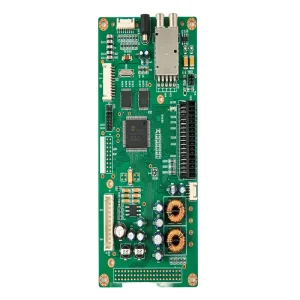
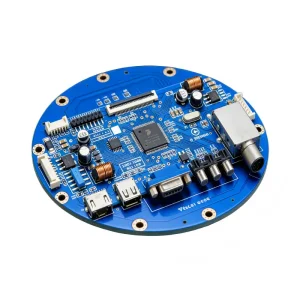
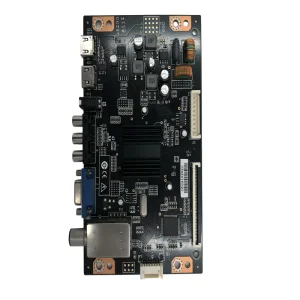
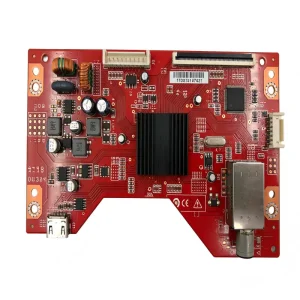
Explore our turnkey product lineup spanning rigid strip lights, flexible dynamic systems, signage modules, and ruggedized outdoor luminaire assemblies.
Detailed engineering answers regarding thermal dissipation, testing, CSA certification paths, and shipping logistics into the Greater Toronto Area.
Send your Gerber files, BOM, and thermal specifications today. Our engineering team returns a complete Design for Manufacturability (DFM) review and comprehensive price quote within 24 hours.