Industrial-grade LED assembly systems engineered for high thermal dissipation, rapid photometric binning, and extreme operating longevity under Latin American power conditions.
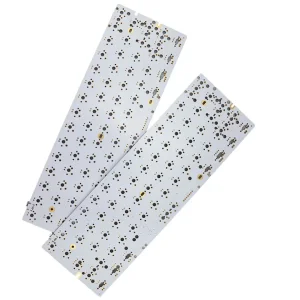
A technical white paper on Latin America's accelerating solid-state lighting transition and the supply chain architecture supporting modern infrastructure deployments.
Colombia has committed to aggressive energy-efficiency goals under its PROURE (Programa de Uso Racional y Eficiente de Energía). Municipalities from the Andean highlands of Bogotá (altitude 2,600m) to coastal industrial hubs like Barranquilla are completely overhauling high-pressure sodium (HPS) and metal halide fixtures with solid-state LED systems. The extreme topographical variance—ranging from equatorial humidity and salt-spray corrosion to high-altitude low atmospheric pressure—creates distinct hardware failure modes that generic LED assemblies cannot withstand.
The Reglamento Técnico de Iluminación y Alumbrado Público (RETILAP) governs all lighting fixtures sold or installed in public and private commercial sectors across Colombia. Compliance is not merely cosmetic; it dictates rigorous photometric performance, minimum luminous efficacy (lm/W), power factor thresholds (>0.92), total harmonic distortion (THD < 15%), and documented thermal resistance paths. Sourcing partners must deliver printed circuit board assemblies (PCBAs) with proven junction-temperature dissipation paths to ensure drivers and emitters comply during third-party lab verification by organisms like CIDET and ICONTEC.
Globally, tier-one lighting OEMs are facing margin compression, component shortages, and lengthened NPI cycles. In Colombia, local electronics fabrication capacity remains limited to basic low-layer prototyping without local wafer fab or substrate cladder access. By establishing a direct Tier-1 engineering bridge between China's advanced electronics hub in Shenzhen and Colombian system integrators, projects secure high-dielectric metal core raw materials (Bergquist, Polystrata equivalents) and Tier-1 diode binning (Lumileds, Osram, Cree, Samsung) at genuine direct-factory economies of scale.
Specific hardware architectures tuned for local environmental stresses, high surge hazards, and tropical operations.
Operating electronics at altitudes exceeding 2,500 meters results in lower air density, which dramatically diminishes convective heat transfer. Standard FR-4 boards fail rapidly due to dielectric heating and emitter overheating. Our solutions deploy single-layer and two-layer aluminum core substrates engineered with dielectric polymer-ceramic layers rated up to 3.0 W/m·K, ensuring thermal junction management prevents chromaticity shift in office panels and high-bay fixtures throughout Cundinamarca.
Caribbean coastal installations suffer extreme humidity exceeding 85% RH coupled with airborne sodium chloride particles. We integrate automated selective conformal coating lines applying IPC-CC-830 certified silicone and modified polyurethane chemistries. Our LED PCB assemblies resist galvanic corrosion, dendritic growth, and sulfur creep, passing rigorous 1000-hour neutral salt spray (ASTM B117) tests for municipal streetlights and port perimeter projectors.
Modern greenhouse operations across Antioquia, Risaralda, and Caldas rely on supplemental solid-state horticulture lighting. Rural distribution lines in these mountainous terrains experience severe line surges, brownouts, and lightning-induced voltage spikes. We engineer PCBAs featuring on-board Metal Oxide Varistors (MOVs), Transient Voltage Suppressors (TVS), and ceramic gas discharge tubes directly into the front-end layout, surviving 6kV-10kV surges.
Technical specification differences between generic import boards and our industrial-grade, RETILAP-optimized PCBA builds.
| Performance Characteristic | Generic Commodity LED Boards | Our Industrial LED PCBA (STHL Colombia Standard) | Impact on Colombian Projects |
|---|---|---|---|
| Base Substrate & Core | Low-grade standard FR-4 or 1.0 W/m·K Aluminum | AL5052 / AL6061 Aluminum or Copper Core (1.5 - 3.8 W/m·K) | Prevents thermal trapping at high elevations (Bogotá); triples L70 life. |
| Dielectric Breakdown Voltage | < 1.5 kV AC | ≥ 3.0 kV to 6.0 kV AC Hi-Pot tested | Resists mountain grid spikes and seasonal lightning surges. |
| SMT Placement Accuracy | ±50 μm (Consumer grade) | ±25 μm CPK ≥ 1.67 (Automotive high-speed optical alignment) | Zero micro-bridging; eliminates solder joint stress on high-flux LEDs. |
| Solder Alloy & Flux Chemistry | Standard SAC305 without void control | Low-voiding SAC305 / Sn96.5Ag3.0Cu0.5 (< 10% thermal pad voiding) | Maximum thermal conduction from diode slugs straight into metal chassis. |
| Environmental Protection | No protective barrier or thin air-dry resin | Robotic Conformal Coating (IPC-CC-830, Silicone/Polyurethane) | Impervious to Caribbean coastal salt fog and Amazonian tropical dampness. |
| Compliance Documentation | Generic self-declarations without test data | Full material batch mill certificates, RoHS, REACH, RETILAP readiness | Smooth homologation through Colombian municipal and electrical inspectors. |
Eliminate distributor friction, markups, and component gray-market risks through automated manufacturing execution.
Procuring passive components, specialized constant-current driver ICs (from MPS, Mean Well, Diodes Inc.), and optical-grade LEDs requires direct factory authorized tier-1 access. With our central warehouse in Bao'an, Shenzhen, we eliminate counterfeiting risks through automated Incoming Quality Control (IQC), 3D optical inspection, and digital barcoding down to individual reels. Colombian procurement teams gain factory gate pricing without intermediate distributor overhead.
We understand customs documentation protocols, tariff classifications (Arancel de Aduanas), and international freight routes to Colombia. Whether shipping time-sensitive prototype boards via air express directly into El Dorado International Airport (BOG) in Bogotá or dispatching high-volume 40ft containers directly to Puerto de Buenaventura (Pacific corridor) and Puerto de Cartagena (Atlantic corridor), our documentation guarantees swift clearance without administrative holdups.
Speak directly with our senior SMT manufacturing engineers. Upload your Gerber files, BOM, and schematic for an immediate Design for Manufacturability (DFM) assessment and factory-direct quotation.
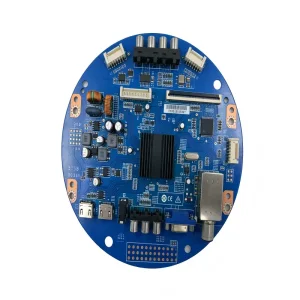
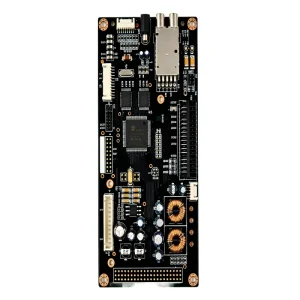
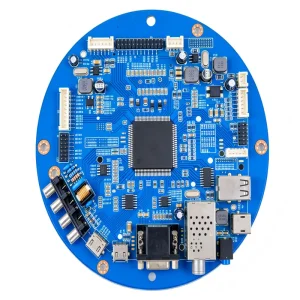
Send Inquiry NowComprehensive printed circuit board assemblies ready for custom luminaire integration, commercial architectural displays, and mission-critical illuminations.
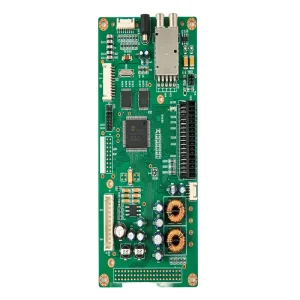
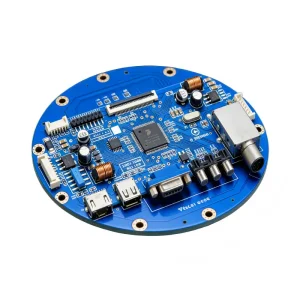
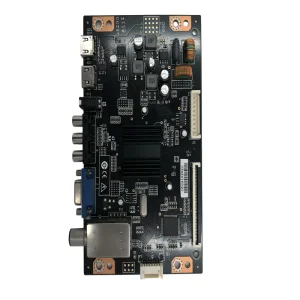
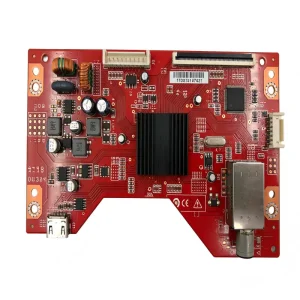
Key regulatory, logistical, and technical questions answered for engineering teams and procurement directors.
We work directly from RETILAP's electrical safety and photometric parameters. We ensure creepage and clearance distances comply with local safety margins, supply high-grade metal core PCBs with verified thermal dissipation paths to maintain luminous flux, and integrate surge protection components directly onto the board layout to pass harsh insulation and surge tests.
Yes. We implement tight MacAdam Ellipse 3-step (or 5-step for standard outdoor) binning controls. Through direct tier-1 contracts with LED manufacturers like Lumileds, Osram, and Cree, we log exact reel part numbers, bin ranks, and forward voltages in our MES software, ensuring visual color consistency between separate shipments.
Standard quick-turn PCBA prototypes take 5 to 7 working days post-DFM signoff. Mass volume production typically runs 2 to 3 weeks depending on component procurement horizons. Air freight to Bogotá (BOG) takes approximately 4 to 6 transit days, while sea freight to Barranquilla, Cartagena, or Buenaventura ranges between 24 and 32 sailing days.
Yes. Our high-speed Yamaha and Panasonic SMT lines are fitted with extended feeder tables capable of continuous LED rigid board placement up to 1,200mm or 1,500mm in a single pass without manual bridging. This preserves conductor resistance balance and structural integrity across architectural and street fixture builds.