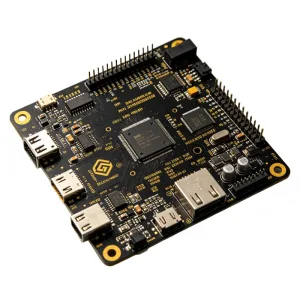
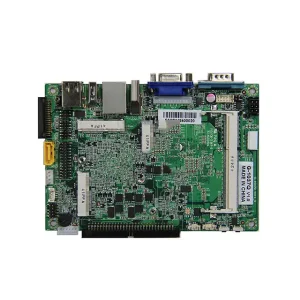
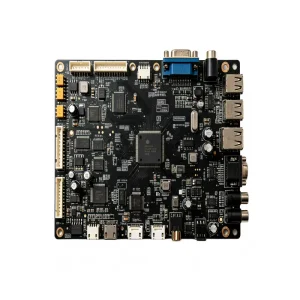
Engineered for automotive harsh environments, extreme thermal cycling, and high-vibration applications across Southeast Asian transport networks.
A comprehensive examination of how the Philippine automotive manufacturing corridor leverages advanced overseas SMT manufacturing to bridge local component supply chains with Tier-1 vehicle integration.
The Republic of the Philippines occupies a pivotal strategic position within the Association of Southeast Asian Nations (ASEAN) automotive supply chain. Geographically anchored around the Calabarzon industrial belt (Cavite, Laguna, Batangas, Rizal, and Quezon), particularly the manufacturing corridors of Laguna Technopark and First Philippine Industrial Park (FPIP), the country represents one of the world's highest-density hubs for automotive wire harness manufacturing, passive component production, and semiconductor backend packaging.
However, while local ecozones governed by the Philippine Economic Zone Authority (PEZA) excel in wire harnesses, sub-assemblies, and discrete component packaging, a structural challenge exists: advanced, high-layer-count HDI bare PCB fabrication and high-reliability IATF 16949-certified surface-mount technology (SMT) assembly remain scarce within the domestic borders. Global Tier-1 system integrators operating in Laguna and Clark Freeport frequently encounter supply bottlenecks when sourcing Class 3 automotive boards locally, driving the necessity for direct partnerships with turnkey PCBA manufacturing factories that integrate raw PCB fabrication, AEC-qualified components, and cleanroom SMT under one roof.
The Philippine automotive sector is undergoing a historic transformation catalyzed by the enactment of the Electric Vehicle Industry Development Act (EVIDA - Republic Act No. 11697) and the Comprehensive Automotive Resurgence Strategy (CARS) framework. The government's mandate to electrify public utility vehicles (PUVs)—most notably modernizing over 200,000 iconic Philippine jeepneys and municipal tricycles with pure electric drivetrains—has triggered unprecedented demand for automotive-grade power electronics.
This regulatory push demands robust electronics capable of surviving the tropical reality of Philippine operating environments: extreme humidity (frequently exceeding 85% RH), torrential monsoon rainfall, urban heat-island thermal loads, and unpaved arterial road vibrations. Consequently, assemblies for Battery Management Systems (BMS), Traction Motor Controllers, Isolated DC-DC Converters, and Vehicle Control Units (VCUs) cannot tolerate commercial-grade assembly tolerances. They necessitate rigorous potting, conformal coating, high-Tg base laminates, and IPC Class 3 defect-free soldering.
Automotive electronics allow zero margin for failure. We operate under stringent international automotive mandates, ensuring every printed circuit board assembly delivered to the Philippines operates predictably over its complete design life.
Automotive quality starts before the first solder paste deposit. We enforce Advanced Product Quality Planning (APQP) across every manufacturing campaign destined for Philippine Tier-1 plants.
We eradicate counterfeit risks through authorized supply lines, exclusively integrating components certified to Automotive Electronics Council stress qualifications.
For safety-critical automotive systems, IPC Class 2 commercial standards are unacceptable. We inspect and accept assemblies strictly to IPC-A-610 Class 3.
Deploying automotive electronics in Southeast Asia presents severe reliability hurdles. Here is how our precision PCBA manufacturing architecture mitigates systemic failure risks in the Philippines.
| Operational Risk Factor | Impact on Automotive Electronics | STHL Engineering & Assembly Countermeasure | Validation / Standard |
|---|---|---|---|
| High Relative Humidity (>85% RH) | Moisture condensation, electrochemical migration, and dendrite growth leading to parasitic shorts across high-voltage traces. | Automated selective conformal coating (Polyurethane / Silicone / UV Cure Acrylic) with 100% boundary masking and automated optical inspection under blacklight. | IPC-CC-830B, UL94V-0, IEC 60068-2-78 (Damp Heat Constant) |
| High Operating Temperature (>105°C under hood) | Delamination of FR-4 laminates, thermal fatigue of SAC305 solder joints, and localized power throttling in motor inverters. | High-Tg base materials (Tg > 170°C, Td > 350°C), heavy copper boards (3oz to 6oz), metal core (MCPCB) aluminum backplates, and direct thermal via arrays. | IPC-4101D, ASTM E1356, 1,000 thermal cycles (-40°C to +125°C) |
| Mechanical Vibration & Pothole Shock | Micro-fractures in ceramic surface mount capacitors (MLCC), BGA ball solder tearing, and through-hole pin fatigue. | Automated structural underfill for large BGAs, mechanical staking / RTV bonding of tall inductive components, and optimized reflow profile cooling rates. | ISO 16750-3 (Mechanical Loads), SAE J1455 Vibration Profile |
| Conductive Anodic Filament (CAF) | Internal sub-surface dielectric breakdown along glass weave bundles in high-voltage EV battery distribution circuitry. | Advanced CAF-resistant raw laminate selection with tight resin-to-glass coupling, optimized drill hole-to-copper spacing (>0.35mm), and low-residue flux chemistries. | IPC-TM-650 Method 2.6.25 (CAF Resistance Test at 85°C/85% RH) |
Our engineering team in Shenzhen provides comprehensive Design for Manufacturability (DFM) and Design for Testing (DFT) reports within 24 hours of Gerber submission.
Bridging Chinese electronics manufacturing speed with Philippine bonded warehouse zones, export-oriented processing estates, and local Tier-1 manufacturing plants.
Navigating Philippine customs regulations requires meticulous documentation. Operating as a seasoned export manufacturing partner, we structure transactions to align seamlessly with PEZA bonded warehouse procedures, Automated Export Documentation Systems (AEDS), and the Bureau of Customs (BOC) Electronic-to-Mobile (e2m) framework.
Whether your assembly line is situated inside the Laguna International Industrial Park (LIIP), Carmelray Industrial Park, or Subic Bay Freeport Zone, our logistics partners ensure uninterrupted green-lane freight forwarding. We support direct delivered duty paid (DDP), free carrier (FCA Hong Kong / Shenzhen), and cost, insurance, and freight (CIF Manila Port / Batangas Port / NAIA Air Cargo), ensuring tax-exempt transit under applicable investment promotion agency incentives.
We recognize that proprietary circuit designs, firmware binaries, and system architectures are your core enterprise assets. Before receiving a single Gerber file or BOM, we execute binding, enforceable Non-Disclosure Agreements (NDAs). Our internal data infrastructure isolates customer engineering files on encrypted, segregated servers with strict role-based access control.
Furthermore, our enterprise MES assigns a 2D DataMatrix code laser-marked directly onto the bare substrate of each PCB assembly. This provides complete forward and backward traceability: connecting individual board serial numbers with solder paste lot numbers, reflow oven temperature profiles, technician IDs, and automated functional test log outputs for a minimum retention window of 15 years.
As vehicle electronic architectures migrate from decentralized electronic control units (ECUs) toward centralized zonal computing, our Shenzhen assembly lines continuously integrate cutting-edge SMT processes.
High-Density Interconnect (HDI) Any-Layer fabrication with micro-via stackups (3+N+3), fine-pitch BGA mounting down to 0.35mm pitch, and RF radar substrate processing (Rogers/Isola laminate integration).
Wide Bandgap (WBG) Silicon Carbide (SiC) and Gallium Nitride (GaN) surface assembly, heavy copper track layouts managing up to 250A continuous loads, and advanced creeping/clearance design validation.
Controlled-impedance signal trace routing up to 10Gbps, low-loss dielectric substrate verification, shielded sub-enclosure integration, and high-frequency RF automated vector network analyzer testing.
Key technical, contractual, and quality validation questions evaluated by automotive procurement directors and lead hardware engineers.
STHL operates fully certified quality management systems audited in accordance with IATF 16949:2016 (Automotive Quality Management), ISO 9001:2015 (Quality Systems), ISO 13485:2016 (Medical Devices), and ISO 14001:2015 (Environmental Management). Our processes fulfill all AIAG (Automotive Industry Action Group) standards, including MSA, SPC, FMEA, and APQP protocols.
We supply complete Production Part Approval Process (PPAP) Level 3 documentation as standard protocol for automotive programs. This package comprises the Design Record, approved Engineering Change Documents, DFMEA/PFMEA, Process Flow Diagrams, Process Capability Studies (Cpk/Ppk > 1.67), Measurement System Analysis (Gage R&R < 10%), Dimensional Results, Material Certifications, and the Part Submission Warrant (PSW).
We control solder voiding on critical automotive IC thermal pads strictly below 15% (substantially exceeding IPC's 25% threshold). This is achieved through engineered stencil apertures (window pane / matrix cross designs), vacuum-assisted reflow soldering chambers, formulation-matched SAC305/Sn-Pb pastes, and 100% automated 3D X-ray inspection (AXI) calibrated across every assembly shift.
Yes. We deploy robotic selective conformal coating systems operating specialized silicone, acrylic, or polyurethane materials compliant with IPC-CC-830B and UL746E. Coating thickness is maintained consistently between 25µm and 75µm, avoiding keep-out zones such as test points and automotive connector interfaces, validated through high-magnification automated optical UV inspection.
Our component procurement infrastructure interfaces directly with franchised distributors (Arrow, Avnet, Digi-Key, Mouser, Future) and direct semiconductor fabricators. Every received component reel undergoes incoming inspection, including microscopic lead analysis, marking permanence verification, barcode registration into our ERP/MES, and Certificate of Conformance (CoC) archiving.
Standard turnkey prototype-to-pilot runs typically range from 10 to 15 business days following engineering DFM sign-off and component arrival. For expedited automotive launches, fast-track SMT production is available. Direct air courier shipments from Shenzhen/Hong Kong to Ninoy Aquino International Airport (NAIA) or Clark International Airport require just 2 to 3 transit days.
Explore our broader multi-industry high-reliability turnkey assemblies, spanning industrial monitoring, security, IoT, healthcare, and automotive body domains.
Connect directly with our senior automotive engineering specialists in Shenzhen. Receive comprehensive DFM analysis, BOM component cost-down evaluations, and formal PPAP quotations within 24 hours.