Enterprise video capture, real-time edge processing, and critical life-safety circuit units manufactured to stringent zero-defect benchmarks.
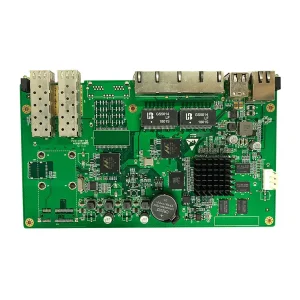
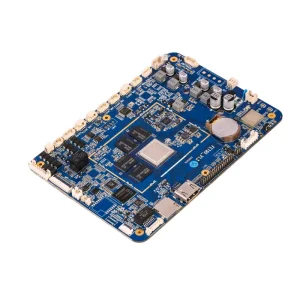
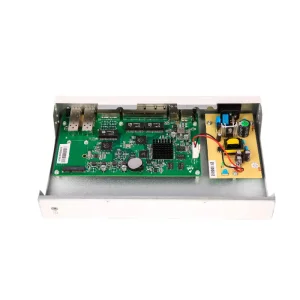
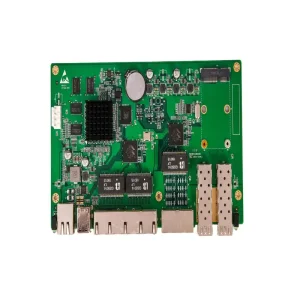
Adapting to hyper-aging demographics, smart metropolitan automation, and strict disaster mitigation directives (Bosai) through ruggedized PCBA engineering.
Japan's transition toward integrated smart cities demands AIoT-driven facial recognition, automated crowd dynamics surveillance, and biometric access control. Our PCBA services incorporate micro-BGA placement down to 0.3mm pitch and high-speed differential pairs (PCIe Gen4, HDMI 2.1) ensuring zero signal integrity degradation in dense multi-sensor installations across transit terminals like Shinjuku and Tokyo Station.
Japanese building codes under the Fire and Disaster Management Agency (FDMA) require uncompromised operation during seismic events and power fluctuations. We employ heavy-copper board stackups, underfill dispensing, and vibration-resistant conformal coatings (acrylic, polyurethane, silicone) to guard critical fire sensors and emergency evacuation systems against mechanical shock and thermal resonance.
Japanese tier-1 OEMs require stringent adherences to zero DPPM (Defective Parts Per Million) regimes. By aligning our Shenzhen manufacturing lines with Toyota Production System (TPS) principles, 5S discipline, and IPC-A-610 Class 3 inspection criteria, we guarantee the level of cosmetic perfection and functional longevity expected by top-tier Japanese industrial conglomerates.
Bridging cutting-edge smart manufacturing clusters in the Greater Bay Area directly to Tokyo, Osaka, and Nagoya industrial centers.
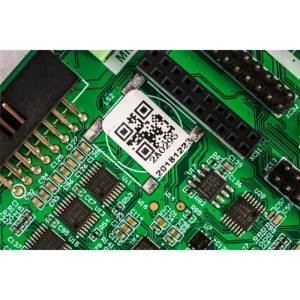
Every single PCB assembly produced for our Japanese clients carries a high-resolution 2D DataMatrix code. Our Manufacturing Execution System (MES) digitally couples solder paste inspection thickness logs, reflow oven thermal profiling charts, component batch reel numbers, and automated test station results, yielding end-to-end component traceability preserved for over 10 years.
We mitigate geopolitical volatility and component shortages through direct procurement franchises with domestic Japanese semiconductor leaders (Renesas, Rohm, Murata, TDK) supplemented by qualified global electronic distributors (Arrow, Mouser, Digi-Key). Our BOM optimization team proposes pin-to-pin, second-source alternatives during the NPI phase to avert lead-time bottlenecks.
Situated within 30 minutes of Shenzhen Bao'an International Airport and Hong Kong logistics corridors, finished PCBA batches clear export customs in hours. With scheduled daily air freight direct to Haneda (HND), Narita (NRT), and Kansai (KIX), critical prototype samples arrive in Japan within 48 to 72 hours from the completion of the final functional test.
Architecting electronic manufacturing capabilities for next-generation AI optics, low-power edge surveillance, and zero-failure life safety electronics.
Implementation of 16-24 layer HDI boards with blind and buried via-in-pad plating. High thermal conductivity metal core PCBs (MCPCB) and thermal gap filler integration for continuous 24/7 video compression ICs (H.265/AV1).
Integration of low-power Wi-Fi 7, Matter, and 920MHz (Japan Wi-SUN band) transceivers. Embedded RF shielding covers with automated robotic placement to eliminate electromagnetic interference in compact alarm sensors.
Transition to event-based neuromorphic vision processing PCBA with rigid-flex designs for 360-degree pan-tilt-zoom (PTZ) domes. High-Tg halogen-free laminates designed to sustain extreme operating environments (-40°C to +85°C).
Autonomous tamper-proof secure enclave hardware assembly. Laser-depaneling and nano-scale conformal waterproofing protecting security hubs deployed in hazardous chemical, petrochemical, and coastal seismic hazard zones across Japan.
Navigating Japan's stringent technical barriers with verified testing and global certification infrastructure.
Safety & security electronic devices connected to mains voltages must comply with the Electrical Appliance and Material Safety Law (DENAN). We ensure all power supply sub-assemblies, AC-DC converter circuits, and battery management boards adhere to Diamond and Circle PSE compliance specifications, passing comprehensive dielectric withstand and insulation tests.
Security cameras, smoke detectors, and burglar alarms featuring wireless communication (Wi-Fi, Bluetooth, Sub-GHz, LTE-M) must receive Ministry of Internal Affairs and Communications (MIC) Technical Regulations Conformity Certification. We enforce rigorous RF matching circuit layout, impedance tuning, and radiated harmonic screening during SMT production.
To eliminate electromagnetic interference across municipal surveillance and corporate campus networks, we run in-house pre-compliance EMI scans against Japanese VCCI criteria. Furthermore, our entire manufacturing footprint is strictly RoHS, REACH, and J-Moss (JIS C 0950) compliant, prohibiting hazardous chemicals and guaranteeing green electronics credentials.
Detailed insights on technical specifications, quality control gates, intellectual property protections, and international delivery schedules.
For high-power security processing ICs and video compression microprocessors, we utilize vacuum reflow soldering systems that reduce solder joint voiding under large QFN and BGA thermal pads to below 8%, well exceeding IPC Class 3 standards (15%). Every batch undergoes 100% 3D Automated X-ray Inspection (AXI) to verify void distribution, solder fillet curvature, and bridge prevention.
Coastal and maritime installations across Japan (such as port security in Yokohama or Kobe) face intense salt spray, relative humidity exceeding 90%, and seasonal typhoons. We operate automated selective film-coating systems dispensing Humiseal acrylics, silicones, or polyurethane compounds down to 25–75μm thickness. Coatings are cured via automated UV inspection tunnels to assure complete coverage over sensitive circuit traces without contaminating connectors or optical sensor mounts.
Intellectual Property integrity is essential for Japanese corporate partnerships. We provide closed-network, encrypted IC programming. Firmware binaries are uploaded directly into standalone automated offline programming systems located in access-controlled rooms. We maintain digital checksum audits, MAC address binding logs, and auto-purging routines to ensure proprietary safety and encryption algorithms can never be intercepted or cloned.
For urgent NPI prototypes and pilot runs, our standard turnaround is 7 to 10 working days from BOM confirmation and PCB bare board fabrication. Completed assemblies pass flying probe testing, first article inspection (FAI), and optical verification prior to express overnight shipment. Door-to-door transit via DHL, FedEx, or SF Express to Tokyo and Osaka typically takes 1 to 2 business days.
Industrial-grade NVR storage engines, high-sensitivity fire/gas telemetry boards, and immediate response alert systems engineered for Japanese OEM ecosystems.