Engineered to comply with stringent Egyptian import standards (NTRA, GOEIC) and withstand high ambient operating temperatures up to 55°C.
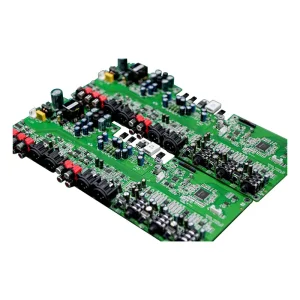
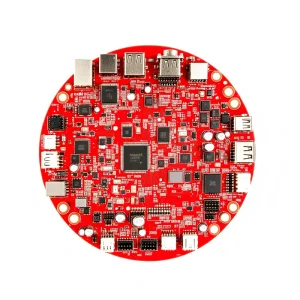
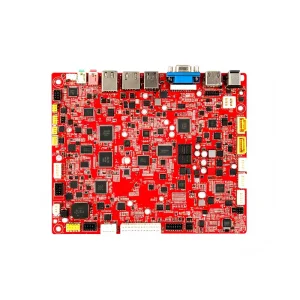
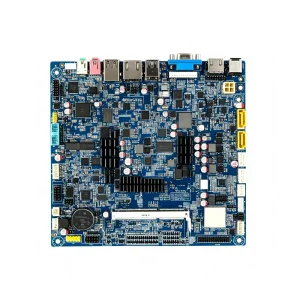
The Arab Republic of Egypt is experiencing an unprecedented structural industrial transformation. Under the banner of Egypt Vision 2030, massive infrastructure initiatives—such as the creation of the New Administrative Capital (NAC), rapid expansion throughout the Suez Canal Economic Zone (SCZone), and national green energy commitments like the Benban Solar Park—have triggered an unprecedented surge in demand for high-grade electronic power systems. At the foundation of every smart meter, solar photovoltaic inverter, industrial motor control module, and telecommunications base transceiver station (BTS) lies the core subsystem: the Power Supply Printed Circuit Board Assembly (PCBA).
Historically, Egyptian manufacturing operations relied primarily on imported, fully boxed off-the-shelf power modules. However, the macro-industrial landscape has pivoted radically toward localized integration and customized electronic design. Egyptian electronics original equipment manufacturers (OEMs), engineering procurement contractors (EPCs), and state infrastructure entities are increasingly searching for experienced EMS partners capable of delivering specialized, bare-board and system-level power assemblies that satisfy two critical requirements: rigorous climatic durability and uncompromised energy efficiency.
As a seasoned Chinese electronics manufacturing services (EMS) leader established in Shenzhen since 2006, STHL bridges the geographic and technical divide. We provide Egyptian engineers, tier-1 suppliers, and public utility partners with complete end-to-end turnkey assembly: from high-frequency magnetic integration and heavy copper bare board fabrication to robotic SMT placement, conformal coating, automated optical inspection, and rigorous burn-in testing under load.
Implementing specialized IPC Class 3 assembly protocols, advanced wide-bandgap (GaN/SiC) semiconductors, and dual-layer protective coatings.
Thermal management is the single most decisive factor dictating the Mean Time Between Failures (MTBF) of power supplies running in desert environments.
Fine sand dust from the Sahara and eastern deserts exhibits abrasive and hygroscopic properties, causing surface leakage currents and arc tracks.
Grid integration in developing industrial parks frequently subjects power electronics to severe undervoltage, harmonic distortion, and lightning surges.
Building high-efficiency power assemblies requires an exceptional level of component traceability, specialized capital equipment, and deep supply chain density. Power PCBs differ fundamentally from simple consumer logic boards: they contain bulky transformers, high-mass inductors, sensitive feedback loops, heat sinks, and high-voltage isolation barriers. The following comparative matrix outlines why leading procurement managers in Cairo and Alexandria rely on STHL's Shenzhen facility rather than fragmented local sourcing channels:
| Evaluation Parameter | STHL Turnkey Shenzhen Manufacturing | Fragmented Sourcing / Domestic Prototyping |
|---|---|---|
| Component Traceability | Direct franchise tier-1 distribution (Mouser, Digi-Key, Arrow, Avnet) with full CoC, zero counterfeit risk, and lot-level MES tracking. | Open broker markets; inconsistent date codes; vulnerability to refurbished MOSFETs and out-of-spec passive components. |
| Assembly Capabilities | High-speed Yamaha & Panasonic SMT lines, selective wave soldering for heavy THT leads, nitrogen reflow, and 3D SPI/AOI. | Manual soldering for through-hole power components causing thermal shock, cold joints, and uneven solder fillets. |
| Thermal & Reliability Testing | 100% automated In-Circuit Testing (ICT), dynamic functional load testing (FCT), and elevated-temperature environmental burn-in rooms. | Basic bench multimeter checks; failure to uncover latent thermal-drift defects prior to field commissioning. |
| Compliance & Certifications | Certified IATF 16949, ISO 9001, ISO 13485, ISO 14001; IPC-A-610 Class 2 & Class 3 standard manufacturing. | Incomplete documentation; difficulties obtaining required CE, UL, and Egyptian GOEIC / NTRA conformity certificates. |
| Cost vs. Speed Ratio | Aggressive economies of scale via Shenzhen component ecosystem; prototype-to-volume transition with zero minimum order quantity (No MOQ). | High individual part tariffs, long lead times for imported ICs, and cost penalties on low-to-medium manufacturing runs. |
Modern power conversion in Egypt is rapidly transitioning from legacy silicon-based superjunction MOSFETs toward Gallium Nitride (GaN) and Silicon Carbide (SiC) architectures. By integrating GaN high-electron-mobility transistors (HEMTs) into high-frequency switching converters (operating from 200 kHz up to 2 MHz), STHL helps engineering teams reduce passive transformer volume by up to 60% while elevating overall conversion efficiency to over 96%.
Operating at higher switching speeds dramatically lowers thermal dissipation, which is essential for sealed, fanless power supplies deployed in the desert where mechanical cooling fans fail quickly due to sand accumulation. However, high-frequency GaN assemblies require precision high-speed SMT placement, controlled-impedance PCB layouts, minimal parasitic gate-loop inductance, and flawless paste deposition—competencies deeply entrenched in STHL's engineering protocols.
STHL's custom power supply assemblies power essential hardware across multiple critical sectors in Egypt's industrial and economic landscape:
Deployments in Upper Egypt (Aswan, Benban) and off-grid desert agricultural reclamation require solar charge controller PCBAs, maximum power point tracking (MPPT) circuits, and bidirectional grid-tie inverter assemblies capable of continuous operation in ambient temperatures reaching 55°C.
The Egyptian Ministry of Electricity and Renewable Energy's nationwide smart meter rollout relies on ultra-compact, low-quiescent-current AC-DC power supply boards that provide long-term measurement stability, withstand high line surges, and remain operational over a 15-year lifecycle.
Automated gantry cranes, container monitoring telemetry, petrochemical plants, and steel mills operating along the Suez Canal utilize heavy-duty DIN-rail power modules engineered to resist severe mechanical vibration, saltwater marine air corrosion, and heavy electrical noise.
Procuring custom electronic assemblies internationally requires navigating regulatory compliance, documentation standards, and logistics channels. STHL is deeply experienced in supporting the bilateral trade frameworks connecting China and Egypt under the Comprehensive Strategic Partnership and the Belt and Road Initiative (BRI).
We work smoothly with Egypt's mandatory Advance Cargo Information (ACI) system. Before shipment departure from Shenzhen or Hong Kong, our documentation department coordinates with Egyptian buyers via the CargoX platform to ensure error-free recording of ACID numbers, Commercial Invoices, and certified Packing Lists.
For communication-enabled power boards (such as IoT-linked smart meters or GSM/NB-IoT telemetry power modules), our engineering staff provides comprehensive test reports, RoHS declarations, CE/EMC data sheets, and Certificate of Origin (CO) documentation to accelerate clearance through the National Telecommunications Regulatory Authority (NTRA).
Depending on project requirements, we ship rapid prototypes and time-sensitive batches via air freight directly to Cairo International Airport (CAI) within 4–7 business days. For volume rollouts, regular ocean routes run directly from Shenzhen Port to Port Said and Ain Sokhna Port, optimizing containerized shipping costs.
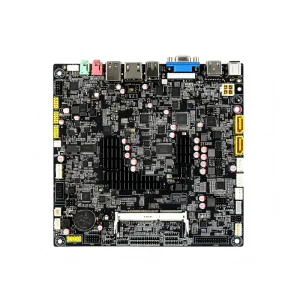
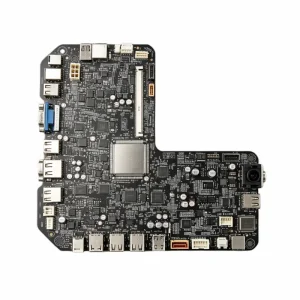
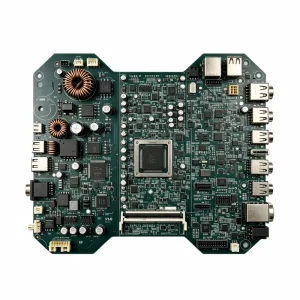
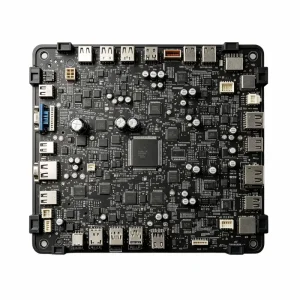
Explore our full line of AC-DC, DC-DC, programmable, linear, and modular power conversion assemblies built to international quality standards.
Direct answers to the engineering and commercial questions Egyptian procurement teams ask most during supplier audits.
We perform rigorous Design for Manufacturability (DFM) and Design for Thermal Reliability (DFTR) analysis prior to manufacturing. This includes optimizing thermal relief patterns, sizing heavy copper planes (up to 6oz) to carry high switching currents, specifying high-temperature Japanese or top-tier Taiwanese electrolytic capacitors rated for 105°C/125°C, and executing automated robotic conformal coating (silicone or polyurethane) to prevent sand particle bridging.
STHL has a dedicated export compliance department fully trained on the Egyptian National Single Window for Foreign Trade (Nafeza). Upon order confirmation and proforma issuance, we upload all mandatory shipping documents, verified commercial invoices, packing lists, and certificates directly onto the CargoX blockchain platform using the Egyptian importer's ACID number, ensuring zero customs demurrage at Alexandria, Sokhna, or Port Said.
Yes. Our engineering procurement team actively monitors component life cycles across global databases. If a critical power controller IC (from Texas Instruments, Analog Devices, STMicroelectronics, or Infineon) faces long lead times, our electrical engineers propose pin-compatible or drop-in alternates with identical electrical parameters, updating the BOM and testing prototypes for full verification before mass production.
Every single power supply board undergoes multi-stage verification: First, 3D SPI checks solder paste height and volume; dual-track AOI inspects SMT alignment; X-Ray verifies BGA and QFN thermal pad voiding (kept strictly below 15%). Following through-hole soldering, assemblies undergo 100% In-Circuit Testing (ICT), dynamic Functional Circuit Testing (FCT) at rated and overload conditions, and extended full-load burn-in cycles in temperature-monitored chambers.
Yes. We enforce a No Minimum Order Quantity (No MOQ) policy. We frequently support Egyptian start-ups, university R&D spin-offs, and industrial OEMs by assembling fast-turn prototypes (5 to 50 units) to validate designs before ramping up to medium-batch production (500 to 5,000 units) and high-volume mass production—all on the same automated production lines.
To initiate a quotation within 24–48 hours, please supply: 1) Gerber files in RS-274X or ODB++ format; 2) A comprehensive Bill of Materials (BOM) in Excel format with explicit Manufacturer Part Numbers (MPN); 3) Pick-and-place XY centroid data; 4) Assembly drawings indicating mechanical constraints; and 5) Your specific electrical testing/programming specifications.