Engineered for mission-critical reliability, seamless system integration, and zero-defect signal and power transmission across demanding consumer, industrial, and high-frequency environments.
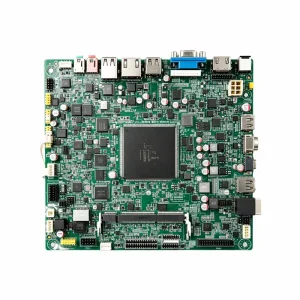
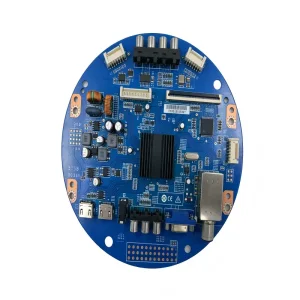
OEM Desktop Power Supply (External Adapter) PCB Assembly--STHL Service, Factory
View Product DetailsIn-depth technical analysis on market trajectory, macro trends, and why global OEMs are consolidating their cable, wire harness, and PCBA supply chains within high-precision Chinese manufacturing ecosystems.
In high-reliability industrial automation, renewable energy infrastructure, medical instrumentation, and automotive electrification, an electrical harness assembly is vastly more than a collection of bundled insulated conductors. It serves as the physical neural network, deterministic data pipeline, and power backbone of modern cyber-physical machinery. According to global industrial telemetry, the global wire and cable harness market has exceeded USD $105 billion and is on track toward USD $160 billion by 2032, expanding at a resilient compound annual growth rate (CAGR) of over 5.2%. This structural surge is heavily propelled by the rapid shift toward multi-voltage architectures, decentralized battery energy storage systems (BESS), software-defined vehicles (SDVs), and automated collaborative robotics.
Historically, overseas original equipment manufacturers (OEMs) struggled with fragmented sourcing models—procuring bare printed circuit boards from one region, discrete wire harnesses from small custom assembly shops, and specialized electronic components from third-party distributors. This segregated paradigm introduced critical operational liabilities: impedance mismatch across connector interfaces, unexpected micro-arcing from improperly matched crimp terminal heights, tolerance stack-up during final box build mechanical enclosure assembly, and administrative finger-pointing during failure analysis. As a premier China electrical harness assembly manufacturer and factory, STHL eliminates this vulnerability through an integrated, vertically synchronized approach uniting turnkey SMT PCB assembly, wire harness fabrication, ultrasonic conductor welding, potting, and 100% automated electrical continuity verification under a certified IATF 16949, ISO 13485, ISO 9001, and ISO 14001 production umbrella in Shenzhen, China.
From micro-coaxial interconnects to high-voltage multi-gauge busbars, our precision crimping, ultrasonic welding, and low-pressure overmolding operate under rigorous process controls.
Delivering tailored electrical wiring assemblies engineered to withstand extreme thermal cyclic fatigue, electromagnetic noise (EMI/RFI), dynamic mechanical flexure, and aggressive chemical exposure.
High-voltage orange silicone cable harnesses operating between 400V and 800V DC. Shielded wiring for onboard chargers (OBC), motor inverter interfaces, regenerative braking sensors, and battery management systems (BMS) with high-vibration IP6K9K sealed interlocks.
ISO 13485 compliant biocompatible harness builds. Low-noise shielded micro-coaxial cable looms for patient monitoring, digital X-ray machines, laparoscopic video probes, and invasive ventilators capable of enduring autoclave sterilization and chemical disinfection.
High-flex drag chain cable assemblies engineered for multi-axis articulation, enduring over 10 million continuous flexure cycles. Shielded servo encoder cables, deterministic Industrial Ethernet (EtherCAT, PROFINET), and heavy-duty M12/M8 round connector interfaces.
High-density backplane cabling, QSFP-DD / SFP28 high-speed differential signal jumpers, internal DC power distribution bus connections, and load-balancing server interconnects engineered with ultra-tight skew control and minimal insertion loss.
Tracking how modular architecture, digital twins, intelligent sensor integration, and eco-friendly polymers are redefining the future of commercial electrical harness manufacturing.
Transitioning from complex decentralized point-to-point wiring looms to domain and zonal control architectures. Harness weights are being engineered down by up to 28% through thin-wall cross-linked polyethylene (XLPE) jacketing, localized sub-harness modules, and integrated flat flexible cable (FFC) sub-branches directly soldered onto PCB assemblies.
Deploying embedded fiber-optic Bragg grating sensors and printed micro-thermocouples directly into the conductor matrix. This enables real-time prognostic health monitoring (PHM), measuring copper temperature fluctuations, dynamic mechanical strain, and localized insulation breakdown before critical machinery failure occurs in industrial robotics.
Full integration of hybrid electro-optical harness technology supporting 100 Gbps deterministic real-time vision sensor streams alongside 1,000V DC solid-state power transmission. Adoption of halogen-free, bio-derived thermoplastic elastomers that drastically reduce carbon footprints while facilitating complete end-of-life closed-loop circular recycling.
A critical engineering breakdown of conventional multi-vendor subcontracting versus STHL's unified EMS, cable harness, and box-build system integration model.
| Evaluation Parameter | Traditional Split Sourcing Model | STHL Integrated Harness & PCBA Ecosystem |
|---|---|---|
| BOM & Connector Sourcing | Multiple POs across disjointed vendors; severe lead time exposure and minimum order quantity (MOQ) inflation. | Centralized procurement leveraging 500k+ part numbers, authorized agent partnerships, and verified cross-equivalencies (TE, Molex, JST, Deutsch, Amphenol). |
| Electrical Continuity & Hipot Testing | Harness and PCB tested in isolation; inter-system pin-out inversion and high-voltage breakdown often caught only during end assembly. | 100% End-to-end computerized Cirrus testing including high-potential (Hipot) insulation resistance up to 1500V, open/short, and loaded functional testing. |
| Mechanical Enclosure Integration | Frequent bend radius clashes, pinch points, wire chaffing, and connector misalignment inside tight mechanical housings. | Collaborative DFM 3D CAD modeling verifying routing clearances, strain relief points, and custom grommet seating prior to pilot builds. |
| Quality Traceability & Auditing | Disjointed paperwork, fragmented lot codes, and no unified MES tracing when defects arise in field operation. | Unified ERP & MES barcoding tracking crimp tool serial, batch wire lot, operator ID, and reflow profile across the entire manufacturing cycle. |
Authoritative, clear answers to technical parameters, quality verifications, lead times, and global shipping policies.
Our manufacturing processes are certified to IATF 16949 for automotive assemblies, ISO 13485 for medical electrical devices, ISO 9001 for general quality management systems, and ISO 14001 for environmental sustainability. All operators, technicians, and QA inspectors are trained to IPC/WHMA-A-620 Class 2 and Class 3 standards, ensuring exact crimp heights, pull-force thresholds, solder joint integrity, and proper heat shrink positioning.
We employ a three-tier quality verification system: First, our semi-automated and fully automated crimping machines are equipped with real-time electronic Crimp Force Monitoring (CFM) that flags subtle variations in wire strands or conductor thickness. Second, every shift setup undergoes calibrated destructive pull-force testing conforming to UL486 and IPC-620 standards. Third, our metallographic laboratory performs cross-sectional optical micro-analysis to inspect crimp compression ratio, strand distribution, and terminal wing symmetry.
Yes. Our engineering and global procurement teams maintain comprehensive parametric databases covering industry-standard connector brands including TE Connectivity, Molex, JST, Hirose, Amphenol, Delphi/Aptiv, and Deutsch. When customers experience extended lead times (e.g., 26+ weeks) or prohibitive pricing from primary vendors, our engineers propose rigorously tested, functionally identical, and mechanically validated drop-in equivalents that reduce lead times and material costs by 20% to 45% without compromising safety or signal integrity.
No. STHL operates a flexible, scale-adaptive manufacturing model with No MOQ requirements. We welcome quick-turn engineering prototypes, low-volume pilot production runs (e.g., 50 to 500 units) for field trials and regulatory certifications, as well as high-volume automated production lines exceeding hundreds of thousands of assemblies annually. All builds run under the exact same ERP traceability and IATF/ISO quality protocols.
100% of our electrical wire harnesses undergo computerized wire harness testing utilizing advanced programmable Cirrus / CableEye test fixtures. We execute comprehensive point-to-point pinout verification, low-resistance continuity testing (identifying partial wire breaks), insulation resistance testing (typically >100 MΩ at 500V DC), high-potential (Hipot) breakdown testing up to 1500V AC/DC for automotive and medical harnesses, and optional four-wire Kelvin testing for high-precision low-milliohm ground lines.
Confidentiality and IP integrity are core pillars of STHL's global customer relationships. We execute bilateral, legally binding Non-Disclosure Agreements (NDAs) prior to receiving any CAD files, Gerber data, wire diagrams, or BOMs. All customer engineering data is stored on encrypted, access-restricted internal servers, and our cleanroom workshops enforce strict physical and electronic access controls with comprehensive CCTV monitoring.
Explore our specialized electronic contract manufacturing capabilities spanning programmable power delivery, onboard automotive charging, biological monitoring, and mission-critical medical PCBA systems.
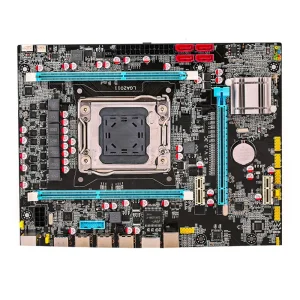
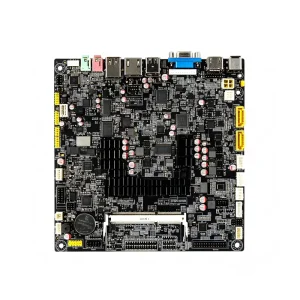
China Computer PCBA Factory Electronic Contract Assembly High Quality PCB Assembly Factories, Factory
View Product Details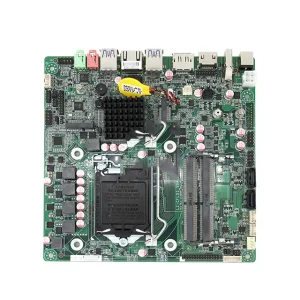
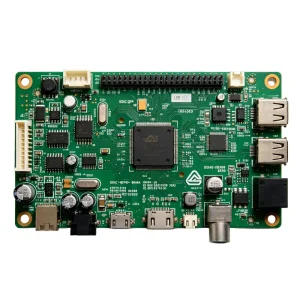
High-Quality Biological Monitoring System PCB Assembly--STHL Manufacturer, Manufacturers
View Product Details