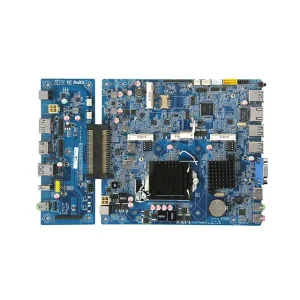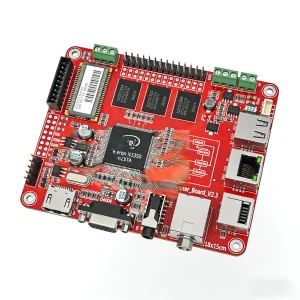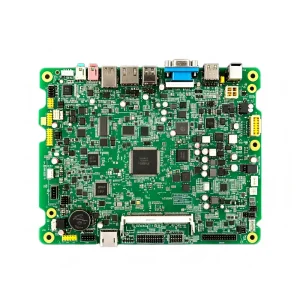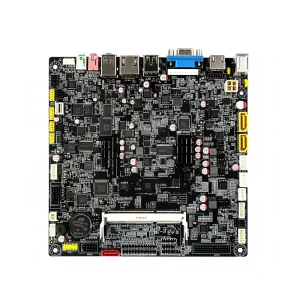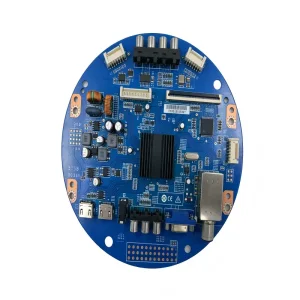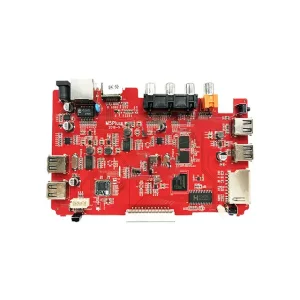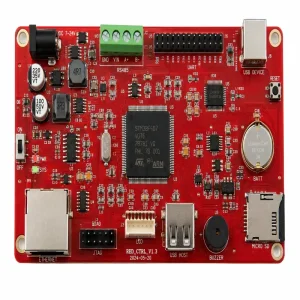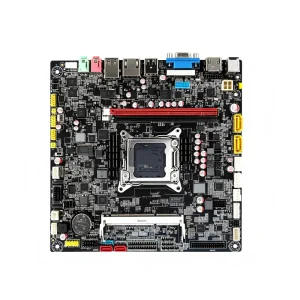
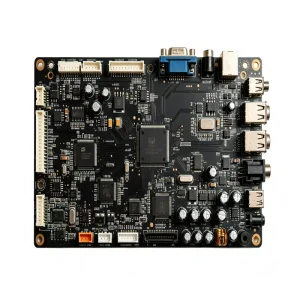
Featured turnkey sub-assemblies demonstrating advanced component placement, substrate flexure resistance, and rigorous functional validation.
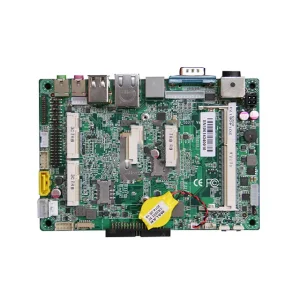
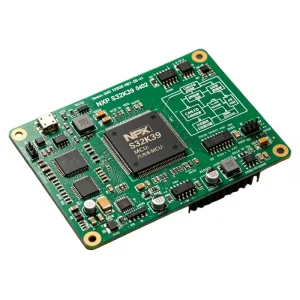
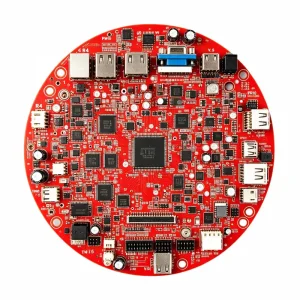
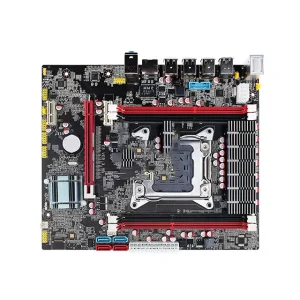
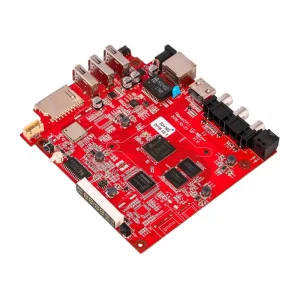
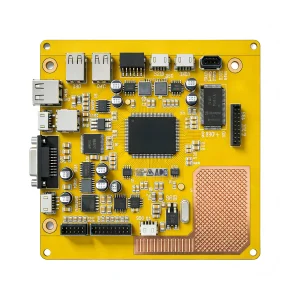
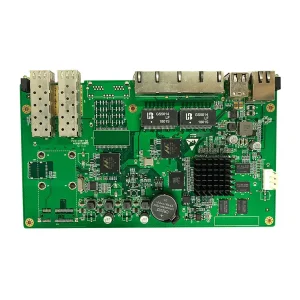
The convergence of mature raw polyimide material supply chains, ultra-fine-pitch lithography, and high-velocity prototyping clusters in Shenzhen gives international hardware developers an unmatched structural edge.
Within the Greater Bay Area, Chinese manufacturers secure adhesiveless FCCL (Flexible Copper Clad Laminate), specialized coverlays, and stiffener substrates within hours, compressing standard engineering lead times from months down to days.
High-tier Chinese facilities utilize state-of-the-art UV laser micro-via drilling down to 25μm and LDI line-width/spacing down to 30/30μm, supporting micro-BGA components and high-density interconnect (HDI) dynamic flex circuitry.
China flex manufacturers support rapid continuous-flow transitions: from rapid quick-turn prototypes with zero minimum order quantities (MOQ) straight into multi-million-unit automated roll-to-roll (R2R) high-throughput production runs without retooling friction.
A granular technical walk-through detailing how flexible copper laminates transform into high-reliability dynamic circuit assemblies under strict IPC Class 3 and automotive standards.
Polyimide base films undergo dehydration baking at 120°C to eliminate absorbed ambient moisture and normalize dimensional stability prior to photo-tool alignment.
Precision UV and CO2 laser machines drill blind and buried micro-vias. Chemical and plasma desmearing clears polymer residue to ensure robust via-barrel adhesion.
Conductive carbon/palladium coating followed by electrolytic copper plating builds uniform via walls. High-resolution dry film photoresist is laminated in a Class 1000 cleanroom.
Alkaline or cupric chloride etching reveals precise conductor paths. Automated Optical Inspection (AOI) scans conductors for micro-shorts, pinholes, and cross-sectional deviations.
Polyimide coverlay films are aligned and thermally fused under vacuum hydraulic hot lamination. FR4, stainless steel, or aluminum stiffeners are applied for SMT rigidity.
Electroless Nickel Immersion Gold (ENIG), Immersion Silver, or ENEPIG is applied to open contact pads, preventing copper oxidation while ensuring exceptional solderability.
100% netlist electrical verification using dedicated flying-probe or high-density bed-of-nails testers validates net continuity and high-voltage dielectric insulation resistance.
UV laser singulation profiles flex borders without micro-cracking mechanical stress. The bare flex proceeds to vacuum carrier-assisted SMT component assembly and reflow.
Production tolerances engineered for aerospace, medical biosensors, and dynamic in-vehicle electronics.
| Design Parameter | Standard Capability | Advanced / Fine-Pitch Limit | Quality Standards |
|---|---|---|---|
| Layer Count | 1 to 6 Layers (Single, Double, Multi) | Up to 16 Layers (Rigid-Flex Combinations) | IPC-6013 Class 2 & 3 |
| Conductor Width / Spacing (L/S) | 50 / 50 μm (2 / 2 mil) | 30 / 30 μm (1.18 / 1.18 mil) | AOI Verified 100% |
| Base Copper Thickness | 1/3 oz (12μm) to 1 oz (35μm) | 1/4 oz (9μm) to 2 oz (70μm) RA Copper | IPC-4562 |
| Minimum Laser Micro-Via Diameter | 0.10 mm (4 mil) | 0.05 mm (2 mil) | IPC-A-600 Cross-Section Checked |
| Dynamic Bend Endurance | 100,000 cycles (R ≥ 10x thickness) | > 5,000,000 cycles (Optimized neutral axis) | JIS C5016 Dynamic Bend Test |
| Surface Finishes | ENIG (Au: 1-3u", Ni: 120-240u"), OSP | ENEPIG, Immersion Tin, Hard Gold Plating | IPC-4552 / RoHS & REACH Compliant |
Engineered solutions designed to resist thermal shock, constant kinetic flexing, and weight constraints across global technology domains.
Replacing bulky wire harnesses with lightweight FPC busbars in EV battery management systems, radar antenna arrays, and high-frequency steering controls under IATF 16949 standards.
Ultra-thin biocompatible polyimide substrates engineered for continuous glucose monitors, endoscopic cameras, smart hearing aids, and hospital infusion pump controller heads.
Continuous-bend flex-circuits designed for humanoid robot joint wiring, automated robotic arms, and high-speed pick-and-place end-effectors requiring millions of defect-free flexures.
Compact, high-density interconnections enabling sleek foldable smartphones, smartwatches, AR/VR optical micro-displays, and tactical field sensors with high drop-shock tolerance.
Strategic changes driving modern electronics manufacturing, including supply-chain traceability, material evolution, and intelligent automated assembly.
Global procurement teams demand full digital genealogy. Chinese Tier-1 facilities now integrate laser-etched 2D DataMatrix codes tracking every flex circuit through raw material batch, reflow thermal profiles, and functional test logs.
As 5G/6G and millimeter-wave frequencies dominate communication hardware, traditional polyimides yield to LCP substrates. LCP delivers minimal dielectric loss (Df < 0.002) and negligible moisture absorption for next-generation telecommunications.
Global procurement teams increasingly avoid raw un-assembled flex circuits. Chinese EMS partners deliver turnkey assembly utilizing high-precision magnetic vacuum carrier tooling, precision low-stress solder printing, and 3D AOI/AXI inspection under one roof.
In-depth technical answers addressing common design feasibility, material selection, and procurement questions.
Adhesive FCCL utilizes an acrylic or epoxy bonding agent between the copper foil and polyimide substrate. While cost-effective, it increases overall thickness, lowers thermal resistance, and degrades dynamic bend fatigue life. Adhesiveless FCCL directly bonds rolled-annealed (RA) copper to polyimide, delivering superior thermal endurance, tighter bend radii, and stable high-speed impedance control.
For dynamic cycling applications, position conductors precisely along the mechanical neutral axis of the stack-up. Utilize rolled annealed (RA) copper instead of electro-deposited (ED) copper, avoid 90-degree trace corners, widen conductor fillets at pad transitions, stagger traces on opposing layers rather than stacking them directly over each other, and prohibit vias within designated bend zones.
FR-4 stiffeners are typically selected to provide mechanical rigidity under SMT components and connectors during automated placement and insertion. Polyimide stiffeners are favored when increasing local thickness for ZIF connector mating without introducing sharp stiffness delamination boundaries. Stainless steel or aluminum stiffeners are applied when thermal dissipation or extreme planar flatness is mandatory.
Flex boards lack the inherent mechanical rigidity required for typical edge-conveyor SMT lines. Manufacturers utilize custom CNC-machined magnetic, vacuum, or mechanical fixture carriers made from synthetic stone (Durostone) or aluminum. These carriers hold the flex completely flat through solder paste stencil printing, high-speed pick-and-place, and multi-zone convection reflow ovens.
Explore specialized industrial, monitoring, and networking assemblies engineered to rigid international quality and environmental benchmarks.