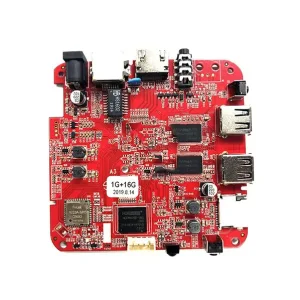
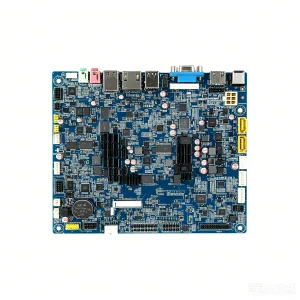
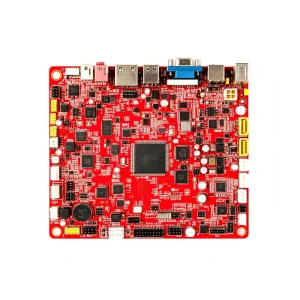
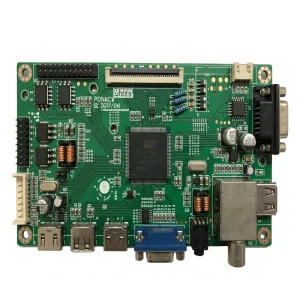
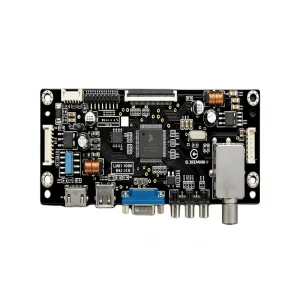
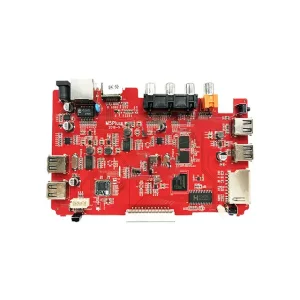
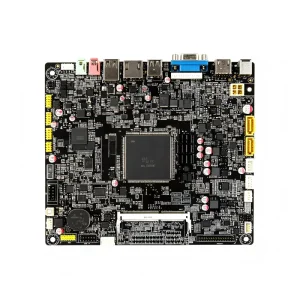
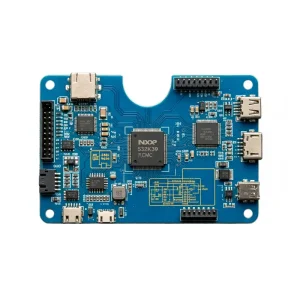
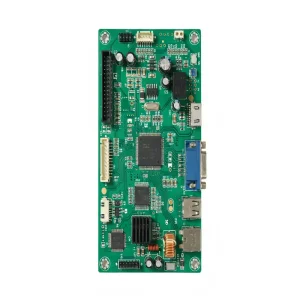
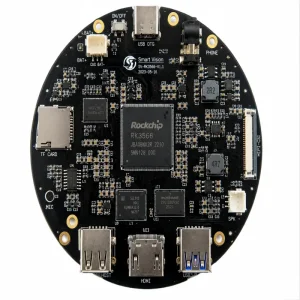
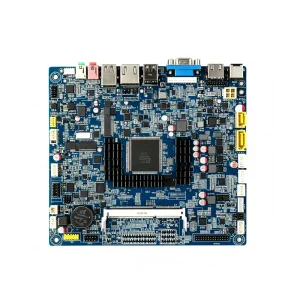
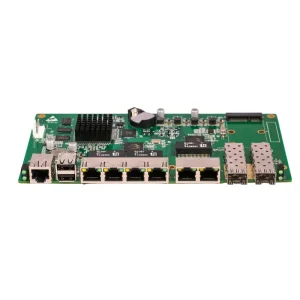
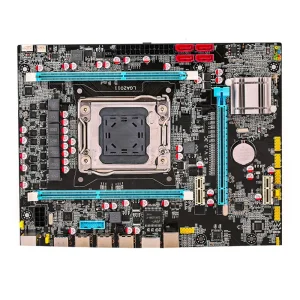
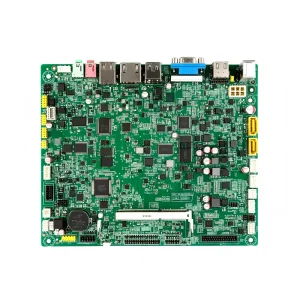
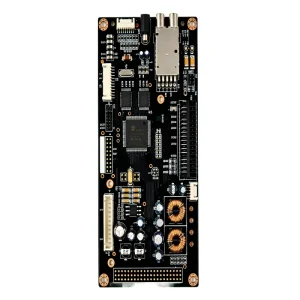
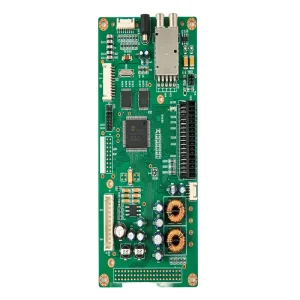
Turnkey electronic assemblies featuring fine-pitch surface mount, high-density flex circuit routing, and end-to-end testing.
Demystifying polyimide chemistry, copper foil grain orientation, dynamic bending limits, and advanced surface finishes for mission-critical deployments.
Flexible printed circuits rely predominantly on Polyimide (PI) base films. STHL leverages modern adhesiveless copper clad laminates (FCCL) that significantly eliminate the thermal failure modes and thickness penalties caused by acrylic or epoxy adhesive layers, providing superior dielectric breakdown strength (>200 kV/mm) and enhanced dimensional stability during reflow.
Understanding copper grain structure dictates mechanical durability. Rolled Annealed (RA) Copper offers elongated horizontal crystal structures suited for dynamic flex-to-install applications surpassing 100,000 flex cycles. In contrast, Electro-Deposited (ED) Copper features vertical columnar grain structures, optimal for cost-sensitive static flex designs.
Achieving stable SMT assembly on ultra-thin flexible substrates requires customized mechanical support. We engineer hybrid stiffeners utilizing localized FR-4, Stainless Steel, and Aluminum backers bonded via pressure-sensitive (PSA) or thermosetting adhesives, maintaining strict coplanarity for BGA packaging down to 0.4mm pitch.
Why Tier-1 global technology firms continuously concentrate their flex PCB and PCBA manufacturing in Shenzhen, China.
Our centralized position in Shenzhen affords immediate access to over 500,000 qualified parts through direct distributor pipelines with Arrow, Avnet, Digi-Key, and licensed local silicon manufacturers, slashing component procurement cycle times from weeks to hours.
Flexible circuit assembly requires specialized precision SMT carrier fixtures, custom magnetic vacuum plates, and laser cutting dies. China's dense tooling ecosystem yields turn-around times of under 24 hours for bespoke SMT clamping pallets.
With 7 high-speed SMT lines and dedicated prototype channels, STHL enables rapid NRE cost absorption. Whether commissioning a 5-piece validation prototype or a 500,000-unit continuous run, tooling costs are mitigated via extensive automated infrastructure.
Shenzhen provides direct bonded warehousing options, seamless consolidation with Hong Kong airfreight terminals, and flexible incoterms (FOB, CIF, DDP) that streamline international customs compliance and deliver a 99.5% on-time arrival rate.
Ensuring overseas enterprises maintain full governance, intellectual property defense, and total audit readiness.
Automotive powertrain systems and sterile medical instrumentation demand zero-defect tolerance. Our cleanroom assembly lines operate under IATF 16949 automotive and ISO 13485 medical device registrations, enforcing strict PPAP (Production Part Approval Process), APQP, and FMEA protocols.
Technical hand-offs are led by a 50+ staff engineering group providing comprehensive DFM/DFA feedback in fluent English. Stringent bi-lateral Non-Disclosure Agreements (NDAs) protect proprietary IP, firmware encryption binaries, and custom Gerber layouts prior to quotation.
Every flexible board fabricated and assembled at STHL is serialized with high-density 2D laser micro-datamatrix barcodes. Integrated Manufacturing Execution Systems (MES) link each individual board to solder paste batch numbers, SMT feeder positions, reflow thermal profiles, and AOI/X-ray inspection records.
Overcoming spatial constraints, vibration wear, and thermal saturation across modern industries.
Catheters, endoscope camera heads, biometric sensors, and hearing aids utilize ultra-thin 1-to-2 layer flexible circuits capable of continuous articulation inside biocompatible enclosures, certified to ISO 13485 standards.
Replacing heavy, cumbersome wire harnesses in Electric Vehicle (EV) Battery Management Systems (BMS). Flex printed circuits deliver integrated cell voltage monitoring, temperature sensing, and lightweight busbar routing.
Radar front-ends, aerospace avionics, and 5G optical transceivers demand controlled impedance (differential 100Ω, single-ended 50Ω) flex structures utilizing low-loss polyimide or liquid crystal polymer (LCP) substrates.
Continuous dynamic flexing demands exceptional tensile strength and fatigue life. Multi-axis articulating robotic joints rely on specialized RA copper flex circuits qualified to withstand multi-million bend radii.
Definitive manufacturing limits, layer counts, track tolerances, and testing modalities maintained across our Shenzhen facilities.
| Technical Parameter | Standard Capability | Advanced / Precision Tier | Methodology / Standard |
|---|---|---|---|
| Layer Count (Flex / Rigid-Flex) | 1 - 6 Layers | Up to 16 Layers (Rigid-Flex HDI) | IPC-6013 Class 2 & Class 3 |
| Base Substrate Core Material | Polyimide (PI), 0.5 mil - 2 mil | Adhesiveless FCCL, LCP, Modified PI | IPC-4204A Compliance |
| Min. Trace Width / Spacing (Outer) | 0.075 mm / 0.075 mm (3/3 mil) | 0.040 mm / 0.040 mm (1.6/1.6 mil) | Laser Direct Imaging (LDI) |
| Laser Micro-Via Diameter | 0.10 mm (4 mil) | 0.075 mm (3 mil) UV Laser Drilled | CO2 / UV Precision Laser |
| Copper Thickness Weight | 1/3 oz, 1/2 oz, 1 oz | 2 oz, 3 oz (High Power BMS Flex) | Rolled Annealed (RA) / ED |
| Surface Finish Chemistry | ENIG (>2 u" Gold, >120 u" Nickel) | ENEPIG, Immersion Silver, Soft Bondable Gold | IPC-4552 / IPC-4556 |
| Coverlay / Solder Mask | Yellow/White/Black PI Film (0.5/1mil) | Photoimageable Flex Solder Mask (LPI) | Vacuum Thermal Lamination |
| SMT Fine Pitch Component Pitch | 0.4 mm BGA / 0201 passives | 0.3 mm BGA / 01005 chips / CSP | 3D Solder Paste Inspection + 3D AOI |
| Defect Screening & Verification | Flying Probe + Open/Short Netlist | Automated 3D X-Ray (AXI) + Four-Point Kelvin | 100% Electrical Net Test Verification |
Market dynamics, technological evolutions, and sustainability trends impacting the global EMS ecosystem through 2030.
As microelectronics scale into edge-AI wearables and micro-displays, conventional subtractive etching reaches physical line-width limitations. The sector is pivoting toward modified Semi-Additive Processes (mSAP), fabricating lines down to 25μm, directly bridging the gap between PCB assembly and IC substrate packaging.
Millimeter-wave radar and multi-gigahertz 5G/6G RF hardware present strict dielectric loss challenges. Standard polyimides exhibit moisture absorption (>1.0%) that impairs RF consistency. LCP flex circuits boast an exceptionally low dissipation factor (Df < 0.002) and moisture uptake (<0.04%), ensuring unattenuated high-frequency signal integrity.
Global procurement teams prioritize carbon-neutral initiatives and RoHS/REACH compliance. Modern flexible PCBA operations demand halogen-free laminates, biodegradable rinse cycles, vacuum solder recycling systems, and closed-loop copper recovery plants operating in full harmony with ISO 14001 guidelines.
In-depth responses covering yield optimization, dynamic bend fatigue, SMT palletization, and procurement security.
Turnkey electronic assemblies featuring fine-pitch surface mount, high-density flex circuit routing, and end-to-end testing.