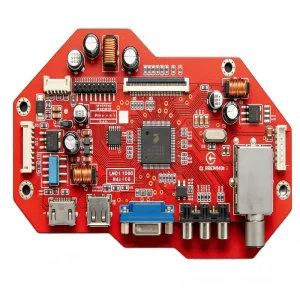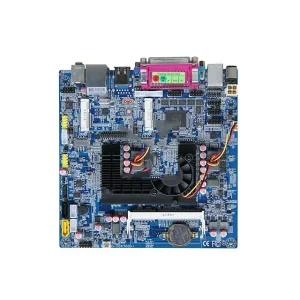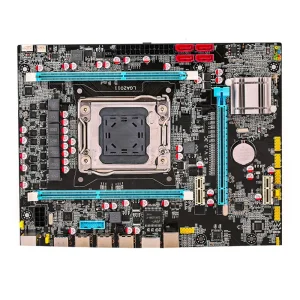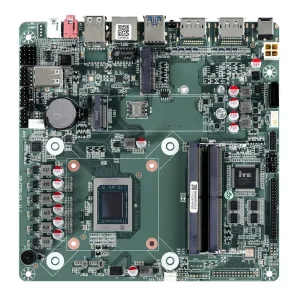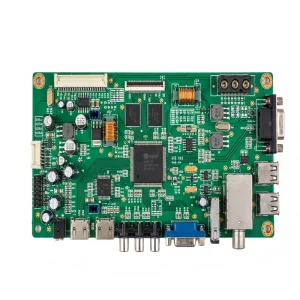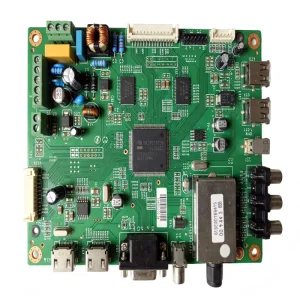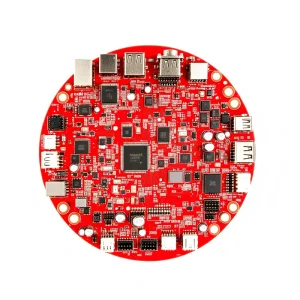
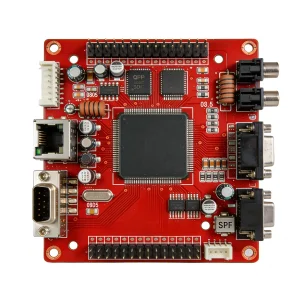
Standard and complex multi-layer turnkey builds, engineered for rapid hardware iteration and functional field testing.
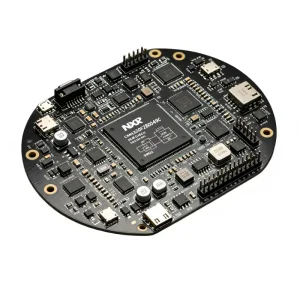
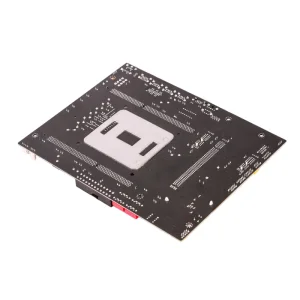
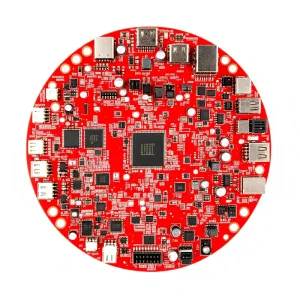
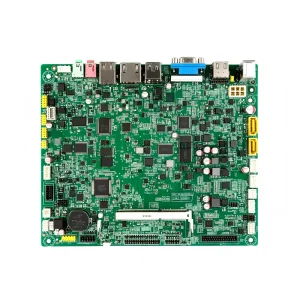
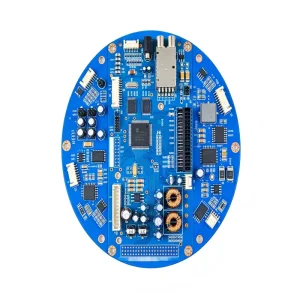
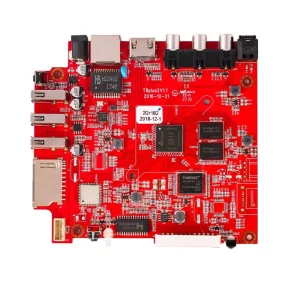
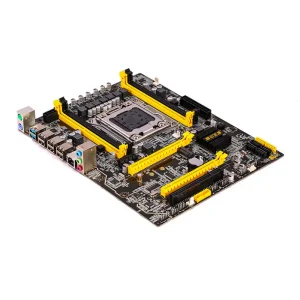
Electronic product lifecycles have contracted sharply across global enterprise sectors. Hardware engineering teams in Silicon Valley, Munich, Tokyo, and Cambridge cannot afford multi-week prototype delays when evaluating New Product Introductions (NPI). The modern electronics landscape demands that prototype PCB assembly operate as an empirical extension of the R&D engineering lab rather than a legacy batch assembly workshop.
Modern agile hardware development treats prototypes as physical sprints. Fabricating, populating, and debugging 5 to 50 boards within 24 to 72 hours drastically compresses the design-verification-test (DVT) and production-validation-test (PVT) validation horizons.
Silicon allocation volatility and sudden lifecycle obsolescence require agile sourcing channels. Modern prototype assemblers interface directly with authorized distribution networks to detect footprint risks before stencil laser-cutting commences.
Early prototypes can no longer rely on hand-soldered workarounds. Automotive ECUs, medical diagnostics, and mission-critical telecommunications require prototype builds executed with the exact same automated precision as full mass-production lines.
The convergence of edge AI computing, high-frequency RF transmission, and compact power management architectures has reshaped the PCB assembly envelope. SMT factories must adopt rigorous mechanical and physical safeguards during the prototyping phase.
Miniaturization demands sub-0.35mm pitch BGA placement and Package-on-Package (PoP) vertical integration. Prototype validation necessitates sophisticated 3D Solder Paste Inspection (SPI) to prevent bridge faults and micro-voiding beneath non-visible solder joints.
Gallium Nitride (GaN) and Silicon Carbide (SiC) switching systems require extreme thermal management. Prototyping involves custom multi-zone nitrogen reflow profiling, heavy copper substrates, vacuum vapour-phase soldering, and embedded thermal dissipation planes.
Traditional threshold-based AOI produces false alarms on prototype mixed geometries. Deep-learning machine vision classifiers combined with high-resolution 3D AXI (Automated X-ray Inspection) instantly identify inner-layer voids and solder volume variances without manual delays.
Prototyping is never purely abstract; assemblies are engineered for exact physical conditions, compliance mandates, and electromagnetic environments across localized global markets.
Prototypes for ventilators, portable ultrasound systems, and vital-sign monitors undergo rigid IPC Class 3 assembly protocols, bio-compatible conformal coating reviews, and component lot tracing aligned with ISO 13485 risk mitigation workflows.
In-cabin electronics and external sensor boards must withstand severe vibration and wide temperature fluctuations (-40°C to +125°C). Assemblies follow IATF 16949 APQP procedures, high-Tg substrate profiling, and structural underfill reinforcement.
Factory automation nodes, edge gateways, and renewable energy inverters require noise-immune routing and surge isolation. Prototypes are verified via In-Circuit Testing (ICT) and flying probe arrays to guarantee zero-defect operational continuity under harsh EMI.
How our intelligent Shenzhen facility bridges the chasm between initial hardware conception, quick-turn DFM optimization, and continuous mass production.
Immediate automated validation of Gerber, IPC-2581, and centroid data against 100+ design-for-manufacturability rules to prevent solder bridging and tombstoning prior to stencil etching.
Automated BOM scrub against international franchised component catalogs. Automated counterfeit verification, dry-baking of sensitive moisture components (MSL 3+), and rapid feeder prep.
High-precision SMT placement supported by closed-loop 3D SPI and multi-angle 3D AXI inspection. Verification of void percentages below 10% on power dissipation thermal pads.
Custom bed-of-nails and flying probe functional test (FCT) benches with firmware flashing, functional signal validation, and environmental Highly Accelerated Stress Screening (HASS).
Navigating global contract manufacturing trade-offs: Why integrated turnkey prototyping in Shenzhen solves lead time, quality consistency, and total lifecycle expenditure issues.
| Operational Dimension | Fragmented Multi-Vendor Sourcing | Domestic Prototyping Only | Integrated China Turnkey (STHL Factory) |
|---|---|---|---|
| Accountability & Risk | High; vendor finger-pointing between bare-board fab and assembly house. | Clear accountability, but limited to initial low volumes; cannot scale seamlessly. | Single Turnkey Account; unified guarantee across raw board, parts, and assembly. |
| BOM Procurement Velocity | Fragmented; multiple shipping costs and customs brokerage hurdles. | Constrained by regional component warehouse inventories and elevated pricing. | 500k+ Sourced Parts via direct access to global distributor hubs in Shenzhen/HK. |
| Traceability & MES Rigor | Inconsistent data silos; manual records and fragmented lot tracking. | Often manual or partial for quick-turn prototype runs due to high setup costs. | Full MES & ERP Barcoding down to individual reel and component feeder positions. |
| Path to Mass Production | Requires redesigning assembly parameters and re-qualifying vendors. | Extremely expensive tooling transfers when scaling overseas for volume. | Zero Friction Migration; runs on the same production floor from 5 to 500,000 units. |
| Quality Certifications | Variable by individual vendor involved in the chain. | Often basic ISO 9001; rarely holds automotive/medical credentials for prototypes. | IATF 16949, ISO 13485, ISO 9001 & ISO 14001 certified lines. |
Crucial engineering, lead time, file preparation, and intellectual property considerations for hardware decision-makers.
To provide a firm, binding quote within 24 hours, our engineering team requires: Gerber files (RS-274X or ODB++ format including fabrication notes), a structured Bill of Materials (BOM) specifying manufacturer part numbers, designated approved alternates, reference designators, and quantities, an XY Pick-and-Place (centroid) coordinate file, and specific testing/programming directives.
We implement a strict zero-tolerance anti-counterfeit protocol compliant with AS6081/IDEA standards. All electronic components are procured directly from original component manufacturers (OCM) or Tier-1 franchised global distributors (Digi-Key, Mouser, Arrow, Avnet). For custom or secondary-market parts, incoming lots undergo incoming microscopic inspection, pin decapsulation verification, solderability validation, and date-code authentication.
No, we have no Minimum Order Quantity requirement. We routinely assemble engineering validation batches ranging from 1 to 5 boards for initial proof-of-concept testing, up to several hundred units for regulatory compliance (CE, FCC, UL, RoHS). Crucially, prototypes are built using identical high-speed automated SMT equipment, ensuring seamless transition to mass production without requalification delays.
We execute comprehensive bilateral Non-Disclosure Agreements (NDA) before reviewing design files. Our internal engineering networks use isolated firewalled servers, strict role-based access controls, and strict internal NDA agreements. Hex/binary firmware files for IC programming are loaded onto cryptographically isolated flashing tools, and production test fixtures are quarantined in dedicated security areas.
Yes. Our advanced PCB fabrication capability spans high-density interconnect (HDI) boards up to 40+ layers with laser-drilled blind and buried micro-vias, flexible polyimide circuits, rigid-flex configurations with complex flex arms, and metal-core/heavy copper thermal substrates up to 10oz copper thickness for high-power industrial power supplies.
Every board undergoes 100% automated optical inspection (AOI) for component polarity, solder volume, and placement alignment. Ball Grid Arrays (BGA), QFNs, and hidden leadless packages are inspected using 3D high-resolution X-ray systems to evaluate ball roundness, wetting, and void criteria against IPC-A-610 Class 2 or Class 3 standards. Additional flying probe and functional testing are carried out according to client test procedures.
Tested, verified, and certified electronic assemblies powering automotive control, smart consumer hardware, and mission-critical renewable power grids.