Advanced electronics assemblies manufactured under IATF 16949, ISO 13485, and IPC Class 3 quality control workflows.
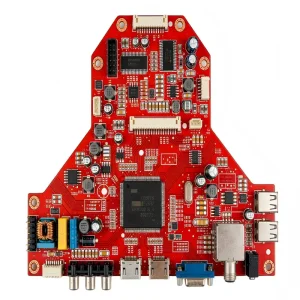
High-Quality Smart Home Hub PCBA Assembly--STHL Manufacturers, Factories
Configure Assembly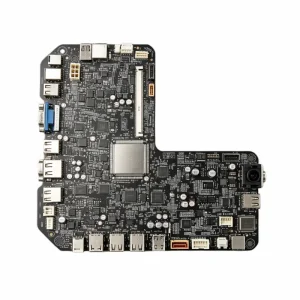
High-Quality Hot-Swappable Power Supply PCB Assembly--STHL Service, Factory
Configure Assembly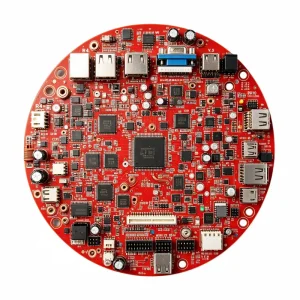
OEM Industrial Power Supply PCB Assembly--STHL Service, Factories
Configure Assembly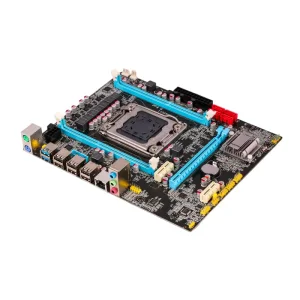
China Wireless Network Router PCB Assembly--STHL Service, Factory
Configure Assembly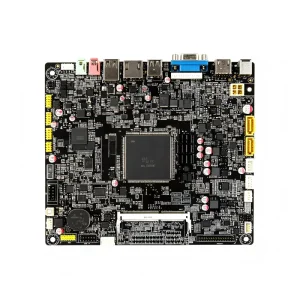
High-Quality DC-DC Converter PCB Assembly--STHL Manufacturer, Manufacturers
Configure Assembly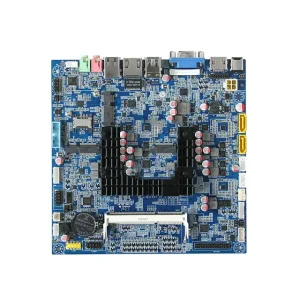
OEM Battery Management System (BMS) PCB Assembly-1 Manufacturers, Factory
Configure Assembly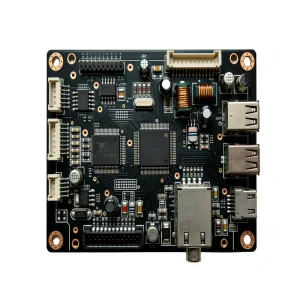
High-Quality Electronic Flight Instrument System (EFIS) PCBA Assembly--STHL Manufacturer, Factory
Configure Assembly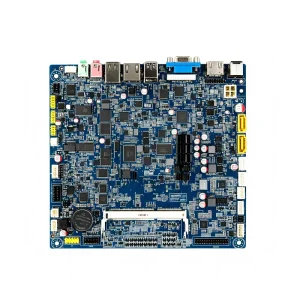
China Water Leak Detector PCBA Assembly--STHL Manufacturer, Factories
Configure AssemblyA comprehensive examination of how flexible electronics have transitioned from space-saving interconnects to fundamental structural foundations across global automotive, computing, and biomedical engineering sectors.
Modern industrial equipment demands radical spatial density. High-density flex circuits (single, double, and multilayer polyimide configurations) replace bulky planar wire harnesses. This transition eliminates wiring errors, optimizes thermal dissipation vectors, and drastically cuts spatial volume by up to 65% in aerospace cockpits, medical endoscopy handpieces, and ultra-thin mobile computing devices.
Unlike rigid FR-4 substrates, premium flexible circuit boards utilize rolled-annealed (RA) copper foil layered over adhesive-less polymide. This architecture withstands millions of dynamic bend cycles without trace micro-fractures, making it indispensable for high-speed industrial pick-and-place robotics, foldable consumer devices, aerospace flight surfaces, and automotive steering-column clock springs.
Global original equipment manufacturers (OEMs) have shifted from procurement models that treat bare flex fabrication, stiffener attachment, and surface-mount technology (SMT) as siloed phases. Turnkey flexible printed circuit board assembly (PCBA) under unified quality assurance eliminates interface failures, reduces total cost of ownership, and accelerates New Product Introduction (NPI) cycles.
How state-of-the-art flexible substrate engineering responds to high-frequency 5G/6G transmission, harsh thermal cycling, and complex geometric spatial boundaries.
| Technology Vector | Legacy Specifications (Standard FPC) | Advanced Manufacturing (STHL Factory Standard) | Next-Generation Roadmap (Emerging Horizon) |
|---|---|---|---|
| Base Dielectric Substrate | Adhesive-based Polyimide (PI) (50 µm / 25 µm) | Adhesiveless Polyimide (12.5 µm / 20 µm) & Cast Polyimide | Liquid Crystal Polymer (LCP) & Ultra-Low Dk/Df Fluoropolymer Composites |
| High-Frequency Signal Loss | Standard Df: ~0.015 @ 10 GHz | Modified Polyimide (MPI) Df: ~0.004 @ 10–28 GHz | LCP Substrates Df: <0.002 @ 77–110 GHz mmWave Radar bands |
| Trace Width / Space (L/S) | 75 µm / 75 µm (Subtractive Etch) | 30 µm / 30 µm (Modified Semi-Additive Process - mSAP) | 15 µm / 15 µm Semi-Additive SAP with Laser Direct Imaging (LDI) |
| Interconnect Micro-Vias | Mechanical Drilling (Min Via: 0.20 mm) | UV / CO₂ Laser Blind & Buried Micro-Vias (Ø 50–75 µm) | Pico-second Laser Micro-ablation (<30 µm), Copper-Filled Stacking |
| Coverlayer Architecture | Polyimide Film with Acrylic/Epoxy Adhesive | Photo-Imageable Coverlay (PIC) & Laser-Excised Polyimide | Direct-Deposit Nano-Dielectric Conformal Coatings with Vacuum Metallization |
| Stiffener Integration | Hand-aligned FR-4 or standard Stainless Steel | Automated Vision-Guided Placement: 304 Stainless, BeCu, AL5052 | Thermally Conductive Carbon-Fiber & Ceramic Hybrid Selective Stiffeners |
Leveraging deep industrial agglomeration to solve complex flexible circuit prototyping, material allocation, and volume manufacturing bottlenecks.
SMT placement onto flexible circuits demands specialized vacuum tension pallets, precision solder paste stencil clamping, and low-thermal-stress reflow profiles. Our 7 automated Yamaha and Panasonic SMT lines in Bao'an leverage custom steel carrier fixtures that stabilize dynamic flex assemblies, preventing coplanarity failure and tombstoning on fine-pitch 0201 passives and 0.35 mm pitch micro-BGAs.
Operating from the world's electronics epicenter allows instant cross-verification of component pipelines. Through relationships with 100+ authorized distributors (Digi-Key, Mouser, Arrow, Avnet, and factory-direct micro-controllers), STHL audits BOMs, predicts end-of-life (EOL) risks, and provides rapid parametric alternate recommendations with full lot traceability via ERP/MES software architectures.
Flex circuits deform under uneven heat distributions if not managed correctly. We integrate 3D Automated Optical Inspection (AOI), inline 3D X-Ray Inspection (AXI) for BGA/QFN void calculation (<15% threshold), automated flying-probe continuity verification, and 4-wire Kelvin micro-resistance testing. We ensure zero mechanical delamination or cold solder interconnects prior to box build packaging.
Tailored flexible printed circuit board assemblies engineered to meet international safety and environmental compliance standards.
Certified under IATF 16949, STHL designs long-span flexible busbar assemblies for electric vehicle Battery Management Systems (BMS). Integrated with NTC thermistors, nickel-plated copper terminals, and high-dielectric polyimide films, these flex harnesses monitor cell voltage and temperature across high-vibration battery packs while resisting electrolytic exposure.
Operating in strict compliance with ISO 13485, our cleanroom-assembled flex circuits serve inside surgical visualization wands, physiological monitoring instruments, and ultrasonic probes. Utilizing biocompatible adhesiveless substrates and non-magnetic surface finishes (ENEPIG or soft gold wire-bondable finishes), we prevent ion migration and ensure signal integrity.
Flex assemblies designed to IPC-6013 Class 3 standards function under continuous acoustic shock, rapid pressure changes, and operating temperatures from -55°C to +125°C. Fabricated for Air Data Inertial Reference Units (ADIRU) and Electronic Flight Instrument Systems (EFIS), these multilayer rigid-flex boards eliminate ribbon cable degradation.
For smart environmental monitors, water leak detection grids, and high-frequency wireless routers, flexible circuits unlock unique three-dimensional enclosure conformability. Polyimide circuits wrap tightly around cylindrical outer housings, embedding high-efficiency antennas with matched differential 50Ω/100Ω impedance traces.
Authoritative technical answers to common queries raised by hardware architects, sourcing directors, and DFM engineers.
Rolled Annealed (RA) copper foil is manufactured via continuous mechanical rolling, resulting in a horizontally aligned, elongated grain structure parallel to the foil plane. This grain orientation gives RA copper high ductility, allowing it to withstand millions of continuous dynamic bend cycles without mechanical fatigue fracturing. It is the mandatory choice for dynamic flexing applications (e.g., robotic arms, hinges). In contrast, Electro-Deposited (ED) copper exhibits a vertical, columnar grain structure formed through electro-plating. While ED copper provides cost advantages and acceptable elongation for static "flex-to-install" applications, it will rapidly develop trace fractures under repetitive dynamic flexing.
Our DFM team follows IPC-2223 standards when evaluating bend geometry. For static (flex-to-install) applications, the minimum bend radius is typically 10x the total thickness for single-sided circuits, 12x for double-sided, and 20x for multilayer constructions. For dynamic flexing applications, the bend radius must be kept at a minimum of 20x to 40x the total flex thickness. To prevent delamination and conductor cracking, STHL engineers place traces in the neutral mechanical bend axis, stagger conductors on opposing double-sided layers, widen copper traces at bend junctions, and eliminate plated through-holes (vias) from the active bend area.
Stiffeners provide localized mechanical rigidity to prevent strain on solder joints during component population, manual handling, or connector insertion. We utilize: (1) FR-4 Stiffeners (0.2 mm to 1.6 mm) for general component areas and connector backing; (2) Stainless Steel / Aluminum Stiffeners (SUS303/SUS304, 0.1 mm to 0.5 mm) where high coplanarity, ultra-thin profiles, grounding dissipation, or heat-sinking are needed; and (3) Polyimide Stiffeners to increase thickness under Zero Insertion Force (ZIF) contact fingers. Stiffeners are permanently bonded via high-temperature thermosetting acrylic or pressure-sensitive adhesive (PSA) films like 3M 467MP.
Polyimide base films have an inherent moisture absorption rate of 1.0% to 3.0% by weight. If exposed to standard convection reflow temperatures (245°C–260°C for lead-free SAC305) without pre-treatment, trapped moisture turns to steam, creating internal delamination, blisters, and barrel separation in plated through-holes. STHL enforces a strict pre-bake profile in humidity-controlled nitrogen ovens (typically 105°C–120°C for 4 to 8 hours depending on layer count) immediately prior to solder paste printing, followed by vacuum staging within sealed dry storage boxes.
For standard flex SMT and connector terminations, Electroless Nickel Immersion Gold (ENIG) is the industry baseline, offering coplanarity and reliable solderability. However, for dynamic contact pads or membrane switches, Hard Electrolytic Gold over low-stress nickel provides maximum wear resistance. For high-frequency wire bonding (aluminum or gold ultrasonic wire-bonding in medical and sensor modules), STHL applies Electroless Nickel Electroless Palladium Immersion Gold (ENEPIG), which eliminates "black pad" embrittlement and ensures uniform intermetallic bond formation.
Specialized electronic control assemblies fabricated with real-time traceability and comprehensive functional verification.
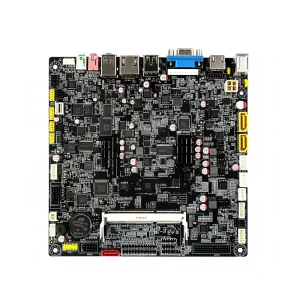
High-Quality Indoor Security Camera PCBA Assembly--STHL Manufacturer, Service
Configure Assembly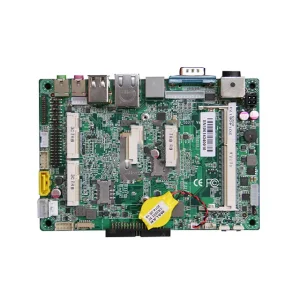
High-Quality Photovoltaic Module Monitor PCB Assembly Manufacturers, Factories
Configure Assembly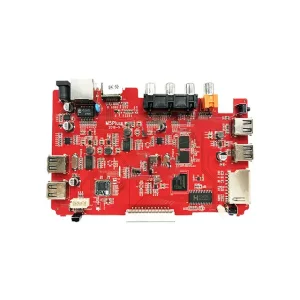
China Wastewater Monitoring Equipment PCB Assembly-1 Manufacturer, Factories
Configure Assembly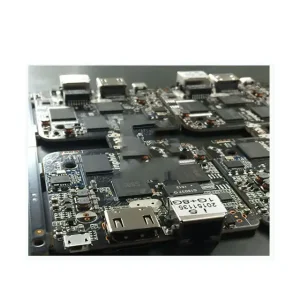
High-Quality Air Data Inertial Reference Unit (ADIRU) PCBA Assembly--STHL Manufacturers, Factories
Configure Assembly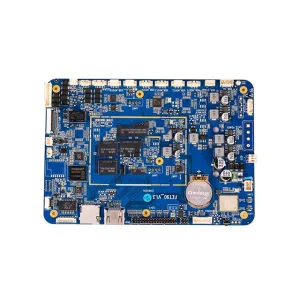
OEM Electronic Parking Brake (EPB) PCB Assembly Service, Factories
Configure Assembly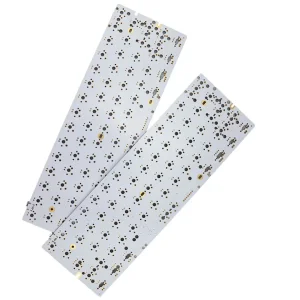
OEM LED PCB Assembly: Revolutionizing Lighting Technology with Precision and Performance Service, Factories
Configure Assembly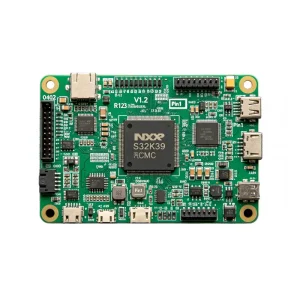
High-Quality Physiological Monitoring Equipment PCB Assembly--STHL Manufacturers, Factory
Configure Assembly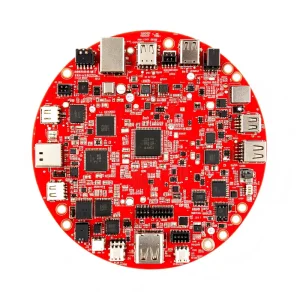
OEM Ethernet Switch PCB Assembly Manufacturer, Factories
Configure AssemblySend your Gerber, ODB++, Bill of Materials (BOM), and flex stackup drawings. Our Shenzhen senior engineering group returns a comprehensive Design for Manufacturability (DFM) and Design for Assembly (DFA) report—including neutral bend axis modeling, panel nesting yield calculations, and component lead-time mitigation—within 24 business hours under a binding Non-Disclosure Agreement (NDA).