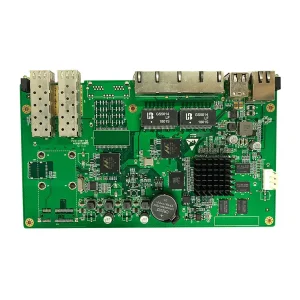
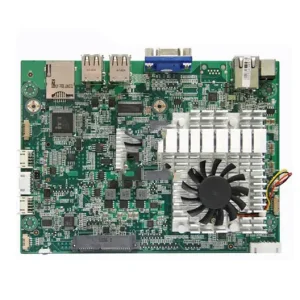
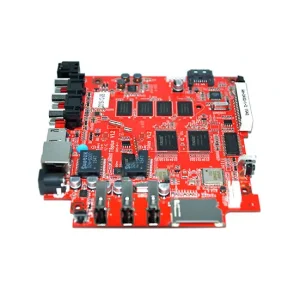
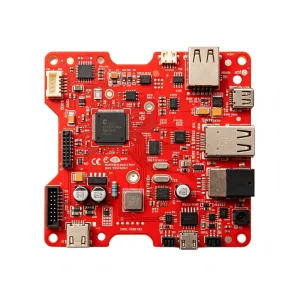
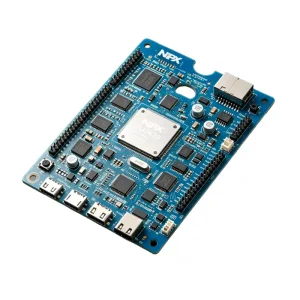
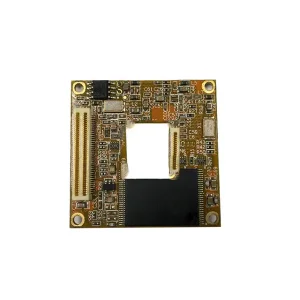
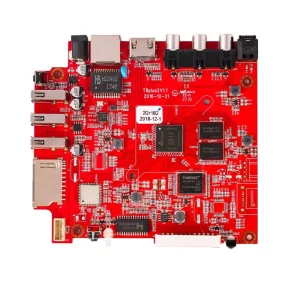
Standard and custom hybrid PCBA configurations fabricated to withstand continuous mechanical deflection, high thermal dissipation, and extreme environment vibration.
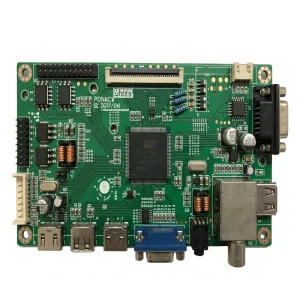
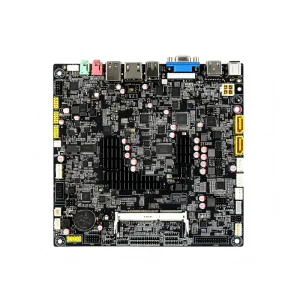
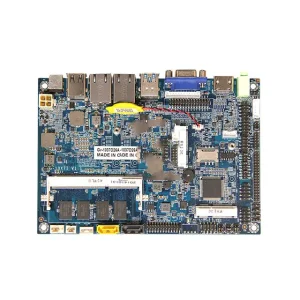
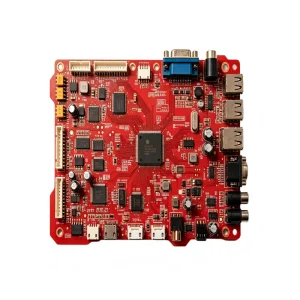
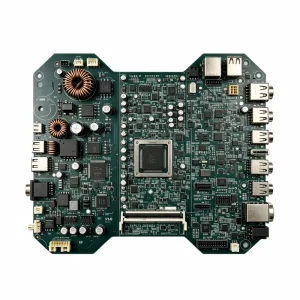
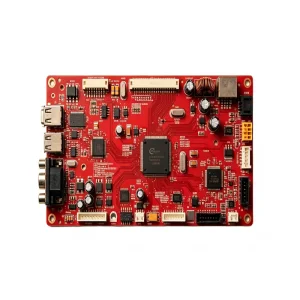
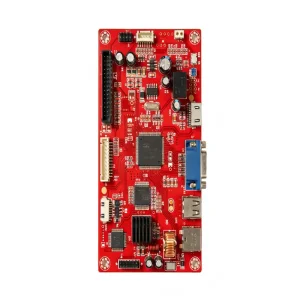
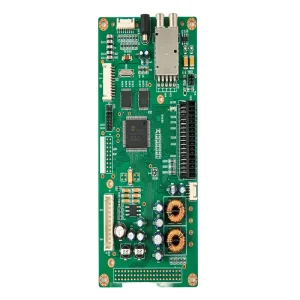
Rigid-flex printed circuit boards represent the physical fusion of flexible polyimide substrates and rigid FR-4 core laminates into a consolidated three-dimensional interconnect structure. By eliminating standard mechanical wiring harnesses, ribbon cables, and fragile board-to-board connectors, rigid-flex circuits deliver unmatched dynamic resistance against structural fatigue, vibration resonances, and thermal degradation.
Micro-engineered prepreg acrylic or epoxy flow control stops excessive squeeze-out at the rigid-to-flex junction. We deploy adhesiveless rolled annealed (RA) copper cores to prevent strain crystallization in dynamic flexure zones, optimizing dimensional stability.
Precision calculation of microstrip and stripline trace geometries through polyimide dielectric layers (Dk 3.2-3.4) guarantees 90Ω/100Ω differential impedance matching required for 5G telecommunication transceivers, low-noise medical telemetry, and camera serial interfaces.
Enables spatial foldability inside unconventional enclosures. By bending the flex tail inside spatial radiuses up to 10× stack-up thickness, hardware designers reduce net chassis payload by up to 65% and total enclosure volume by over 40% compared to wire-loom architectures.
Fabricated for continuous or installation bending cycles. Our symmetrical trace layouts and tear-drop transition fillets ensure bend durability exceeding 100,000 continuous articulation cycles for automotive sensor heads and medical endoscopic articulated actuators.
Based in Shenzhen's prime manufacturing corridor, STHL leverages the world's most concentrated microelectronics industrial cluster. The seamless proximity between raw substrate mills, active silicon fabricators, plating houses, and automated tooling workshops delivers non-linear competitive advantages to global Tier-1 hardware developers.
Our localized 2-hour logistics radius in Bao'an enables instantaneous supply of raw polyimide laminates (Kapton, DuPont Pyralux) and quick-turn laser micro-via drills, cutting rapid NPI engineering build cycles from 4 weeks down to under 5 working days.
Direct interconnect agreements with franchise distributors and domestic silicon foundries secure component availability. We mitigate critical supply chain bottlenecks via active BOM cost-down reviews and second-source qualification for critical microcontrollers and passives.
Eliminate multi-tier contractor overheads. By unifying rigid-flex multi-layer fabrication, 01005 micro-SMT placement, BGA underfill, conformal coating, precision laser scoring, and final system box-build within our 10,000+ m² facility, margins remain preserved and quality uncompromised.
Procuring mission-critical electronics offshore requires stringent institutional protections. STHL deploys an enterprise-grade compliance matrix that aligns overseas supply chain operations with Western legal, regulatory, and technical quality standards.
| Procurement Challenge | Industry Standard Risk | STHL Factory Solution & Safeguards | Traceability & Validation |
|---|---|---|---|
| Intellectual Property Exposure | Schematic leaks, unauthorized sub-contracting | Enforceable NDAs prior to RFQ review; segregated internal engineering servers with military-grade access logs | Biometric facility isolation, zero-external-contracting policy |
| Automotive & Medical Non-Compliance | Field failures, regulatory import rejection | Certified IATF 16949 & ISO 13485 cleanrooms; strict adherence to IPC-A-610 Class 3 / IPC-6013 criteria | Full lot-level ERP & MES component serialization |
| Environmental Directives | Customs seizures, hazardous substances (RoHS/REACH) | 100% lead-free soldering systems, halogen-free polyimide/FR-4 substrates, conflict-free mineral declarations | Third-party SGS test certificates per material run |
| Lead-Time Uncertainty & Tariffs | Unpredictable harbor congestion, fluctuating duty taxes | DDP/FOB multi-modal logistics agreements; bonded inventory warehousing in Shenzhen for scheduled blanket deliveries | 99.5% proven on-time global fulfillment metric |
Calibrated production metrics verified across 7 automated SMT lines, DIP/THT soldering stations, high-resolution 3D SPI, AOI, and continuous inline X-ray inspection cells.
Up to 24 composite layers (2-12 flexible layers dynamically integrated within external rigid sections). Multi-layer flex with staggered inner vias.
Down to 2.5 mil (0.063mm) line/space width on flex substrates. Vacuum etching prevents undercut degradation across tight impedance tracks.
Laser drilled micro-vias down to 0.075mm; mechanical drilling down to 0.15mm. Copper paste and conductive epoxy filled blind and buried vias.
High-accuracy pick-and-place down to 01005 passive chips, 0.35mm pitch CSP and ultra-fine pitch BGA packages with 100% automated optical verification.
The transition toward electrification, artificial intelligence at the edge, and minimally invasive healthcare is accelerating global demand for high-density rigid-flex circuitry across mission-critical vertical industries.
Traditional wire harnesses in automotive battery packs are rapidly giving way to continuous rigid-flex wiring spines. Integrated with localized NTC thermistors and voltage taps, rigid-flex arrays resist high-voltage thermal expansion and reduce battery module assembly labor costs.
From wearable clinical patches to surgical endoscopes and cardiac mapping systems, medical OEMs demand biocompatible, high-density interconnections that bend within miniature body-borne cavities without micro-signal attenuation or interference.
Rigid-flex systems eliminate connection failure points under extreme gravitational shock and thermal atmospheric cycling (-55°C to +125°C). Widely specified for phased-array radar, flight navigation instrumentation, and drone telemetry pods.
Compact camera modules, LiDAR sensors, and robotic manipulators require dynamic high-frequency flexing. Rigid-flex links enable continuous multi-axis articulation while channeling multi-gigabit video and sensor signals directly to onboard compute units.
Flawless rigid-flex execution begins at the layout schematic stage. Our engineering team conducts exhaustive pre-fabrication DFM reviews to identify and rectify mechanical and electrical vulnerabilities before tooling inception.
Maintain the neutral bend axis. For dynamic flex applications, target a minimum bend radius of 10× to 20× the flexible layer thickness. Avoid locating copper vias, component solder pads, or abrupt trace transitions inside the designated mechanical deflection zone.
Prevent trace cracking during bending by deliberately staggering top and bottom copper traces on dual-layer flex segments. Offsetting parallel traces preserves mechanical compliance and inhibits the "I-beam effect" that causes early copper embrittlement.
Incorporate generous teardrop fillets at pad-to-trace and rigid-to-flex transition junctions. Specify anchor tabs or stiffeners (polyimide, FR-4, or stainless steel) beneath connectors and discrete components mounted within flexible zones.
Detailed technical and commercial answers addressing key operational inquiries from global procurement directors and lead hardware systems engineers.
Browse our full range of field-proven assemblies, built to deliver durable electronic performance across automotive, industrial, computing, and security equipment.