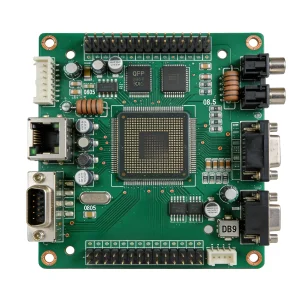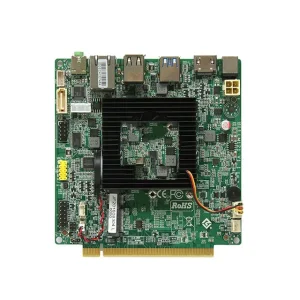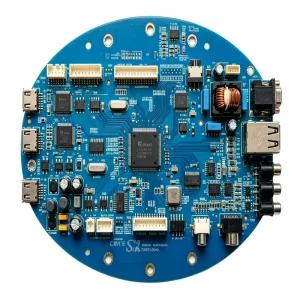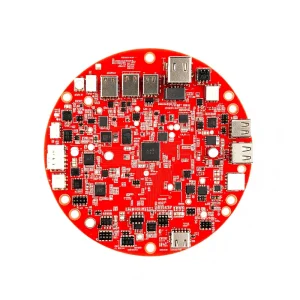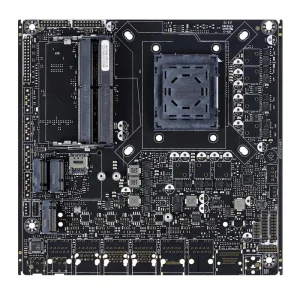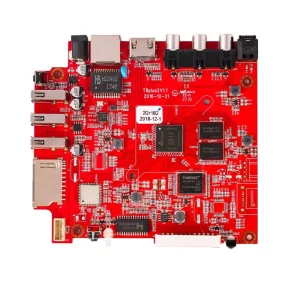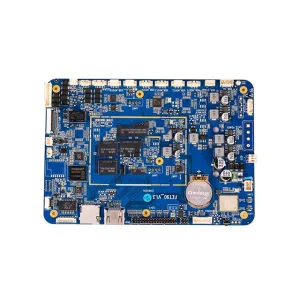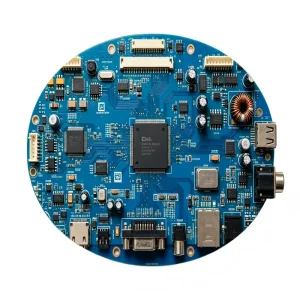
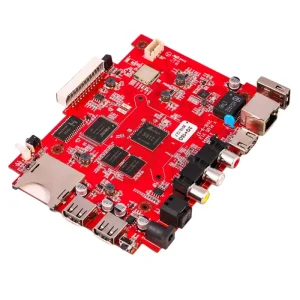
Direct OEM & EMS integration capabilities verified across high-demand mission-critical applications.
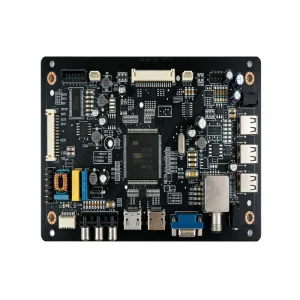
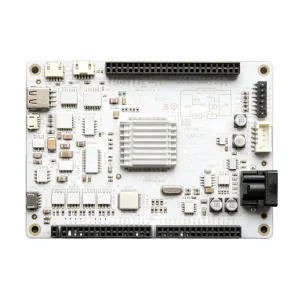
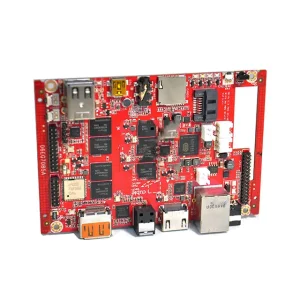
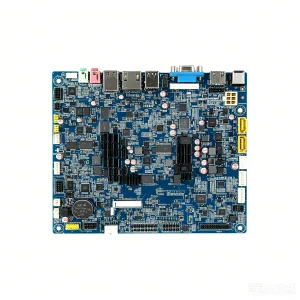
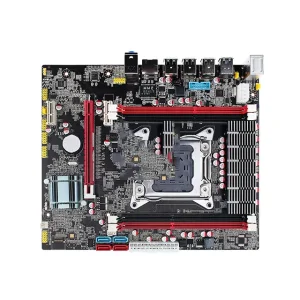
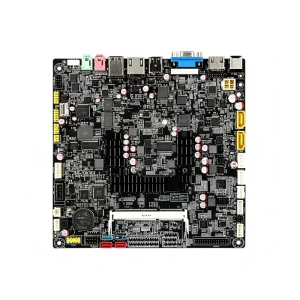
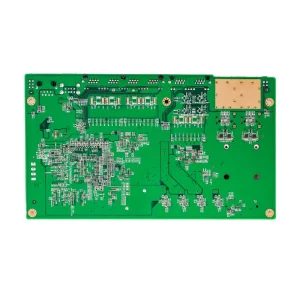
A comparative evaluation of high-speed signal integrity, thermal coefficient of dielectric constant, and RF phase stability across microwave laminates.
Unlike conventional FR-4 where Dk shifts erratically between 4.2 and 4.8 across operating temperatures, ceramic-filled hydrocarbon Rogers laminates (e.g., RO4350B Dk=3.48±0.05, RO4003C Dk=3.38±0.05) deliver deterministic impedance targeting required by millimeter-wave architectures.
With dissipation factors (Df or Tan δ) sinking as low as 0.0009 to 0.0037 at 10 GHz, Rogers laminates eliminate the severe signal attenuation seen in high-speed digital and RF designs. This prevents thermal buildup and maintains eye diagram integrity in 112G PAM4 transceivers.
Standard FR-4 expands along the Z-axis at ~50-70 ppm/°C, inducing micro-cracks inside plated through-holes (PTH) during repeated thermal cycling. Rogers materials match copper's CTE (typically 30–32 ppm/°C), dramatically elevating via barrel longevity under MIL-STD-883 conditions.
Engineering Note on Hybrid Stackup Architecture: To mitigate raw material expenditure while satisfying extreme high-frequency requirements, STHL routinely executes engineered Hybrid Multi-Layer Stackups. By bonding outer Rogers high-speed RF microstrip layers to inner FR-4 power/ground distribution layers using matched Rogers prepreg (such as RO4450F), OEMs achieve peak RF execution with over 42% bill-of-materials cost optimization.
| Substrate Material | Dielectric Constant (Dk @ 10 GHz) | Dissipation Factor (Df @ 10 GHz) | Thermal Cond. (W/m/K) | Z-Axis CTE (ppm/°C) | Ideal Application Sector |
|---|---|---|---|---|---|
| Rogers RO4003C | 3.38 ± 0.05 | 0.0027 | 0.71 | 46 | 5G Antennas, Cellular Base Station Amplifiers |
| Rogers RO4350B | 3.48 ± 0.05 | 0.0037 | 0.69 | 32 Matched Copper | Automotive Radar (24GHz), Wi-Fi 6E/7 Transceivers |
| Rogers RO3003 | 3.00 ± 0.04 | 0.0010 | 0.50 | 25 | 77-79 GHz Millimeter Wave Automotive ADAS Radar |
| Rogers RT/duroid 5880 | 2.20 ± 0.02 | 0.0009 Ultra Low Loss | 0.20 | 31 | Aerospace Phased Array Radar & Satellite Comm (Satcom) |
| Standard FR-4 (Baseline) | 4.40 - 4.60 | 0.0180 - 0.0220 | 0.25 - 0.30 | 65 - 75 | Standard Consumer & Industrial Logic Circuits |
Engineered for extreme operating environments requiring absolute phase stability, thermal dissipation, and ultra-high reliability.
Deployed in beamforming antenna networks and active antenna units (AAU). Tight dielectric tolerances prevent spatial phase errors in high-density telecommunication infrastructure.
Manufactured in full compliance with IATF 16949 for forward collision warning and adaptive cruise radar. RO3003 substrates deliver seamless microwave transmission in damp, shifting temperatures.
PTFE-based RT/duroid laminates built for low outgassing and extreme vacuum conditions. Powers satellite telemetry, phased array transponders, and synthetic aperture radar (SAR).
ISO 13485 audited processes supporting high-output MRI RF receiver arrays and microwave electrosurgical equipment where harmonic distortion must remain completely suppressed.
How our Shenzhen cluster delivers strategic agility, continuous raw material supply, and world-class yield economics for global procurement directors.
Counterfeit substrate avoidance is guaranteed. STHL holds direct factory consignment stock of authentic Rogers RO4000 and RO3000 series with full lot CoCs (Certificate of Conformance), circumventing international supply disruption.
Capitalizing on our 10,000+ m² Shenzhen EMS hub, quick-turn 2-to-6 layer Rogers prototypes can be routed, fabricated, and SMT assembled in as short as 48 to 72 hours, drastically shrinking product development cycles.
PTFE laminates exhibit high chemical inertness. STHL deploys automated in-house CF4/O2 gas plasma treatment chambers ensuring active sodium-naphthalene desmearing and flawless chemical copper adhesion for microvias.
Key market vectors accelerating the adoption of specialized high-frequency printed circuit boards across Tier-1 hardware verticals.
The commercialization of Low Earth Orbit (LEO) satellite communications is creating parabolic demand for Ku/Ka-band Phased Array transponders fabricated exclusively on ultra-low-loss Rogers substrates to prevent orbital thermal runaway.
With autonomy escalating, modern vehicles integrate 4 to 8 imaging radar units. High-resolution synthetic aperture radar demands uninterrupted 76–81 GHz signal transmission, heavily reliant on hybrid RO3003-FR4 architectures.
Modern GPU clusters require PCIe 6.0 and 800Gbps/1.6Tbps optical interconnect transceivers. The loss budget at 28GHz Nyquist frequencies renders standard resins obsolete, shifting switches directly onto Rogers RO4350B layers.
Comprehensive certification architecture safeguarding hardware integrity across every phase of the manufacturing process.
Aerospace and mission-critical grade assembly. Dedicated inspection lines evaluate barrel fill, solder fillets, and zero-voiding BGA joints using 3D X-Ray laminography.
Operated strictly within fully certified frameworks: IATF 16949 (Automotive), ISO 13485 (Medical Systems), ISO 9001, and ISO 14001 for clean room environmental management.
Legally binding mutual NDAs executed prior to RFQ examination. Encrypted internal repositories and restricted file access prevent intellectual property leakage.
Equipped with 67 GHz Keysight and Rohde & Schwarz Vector Network Analyzers (VNA) and TDR for on-coupon insertion loss, return loss, and impedance certification.
Anticipating millimeter-wave and sub-terahertz challenges with proactive engineering capabilities for tomorrow’s hardware.
Transitioning from subtractive chemical etching to modified Semi-Additive Process (mSAP) enables near-vertical copper trace sidewalls, eliminating trapezoidal distortion at 140 GHz frequency spectra.
At frequencies exceeding 40 GHz, the skin effect confines RF current to the outer 0.5 µm of copper foil. We employ VLP (Very Low Profile) and HVLP foils with surface roughness (Rq) < 0.4 µm to abolish conductor losses.
Developing Substrate Integrated Waveguide (SIW) cavity fabrication directly within multi-layer Rogers laminates, replacing bulky metallic waveguides for ultra-compact 6G satellite transceiver modules.
Direct insights into high-frequency Rogers manufacturing, DFM requirements, surface plating, and lead times.
Comprehensive turnkey engineering from ruggedized industrial electronics to ultra-reliable aerospace and telecommunication modules.