Explore our active turnkey electronic manufacturing projects ranging from industrial power units and safety systems to mission-critical automotive EPS modules.
A rigorous examination of miniaturization vectors, packaging trends, and the strategic decoupling of modern electronics contract manufacturing.
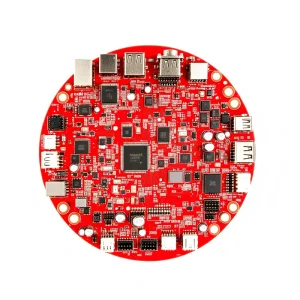
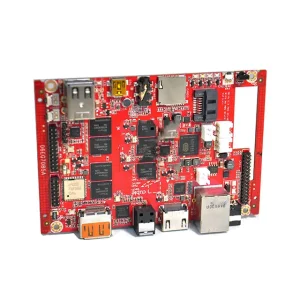
Surface Mount Technology (SMT) refers to the overarching production methodology wherein electronic components are mounted directly onto the surface of printed circuit boards (PCBs). In contrast, Surface Mount Devices (SMD) denote the discrete active, passive, and electromechanical components specifically package-engineered for automated pick-and-place placement.
The industrial transition from legacy Pin-Through-Hole (PTH) to high-speed SMT assembly has achieved over 70% reduction in board surface consumption, near elimination of parasitic inductance, and profound electromagnetic compatibility (EMC) improvements essential for 5G, automotive, and edge AI workloads.
The contemporary electronics manufacturing ecosystem operates at the atomic limits of physical manufacturing tolerances. Standard passive discrete passives have evolved rapidly through 0402, 0201, to 01005 metric packages, with advanced medical telemetry adopting sub-miniature 008004 formats.
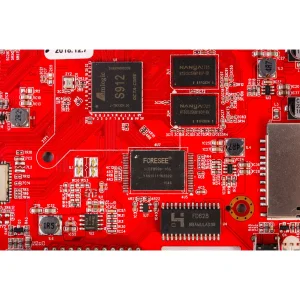
Concurrently, integrated active devices feature ultra-fine pitch Ball Grid Arrays (BGA) and Quad Flat No-Lead (QFN) packages down to 0.3mm ball pitch. Accommodating these tight geometries requires factory investment in high-precision laser-cut electropolished stencils, nano-coating technologies, and Closed-Loop 3D Solder Paste Inspection (SPI) systems.
Global original equipment manufacturers face complex headwinds: rising raw material costs, supply chain vulnerabilities, and the demand for zero-lead-time production agility. Procurement leaders are migrating away from fragmented multi-vendor contracts toward unified, turnkey Electronic Manufacturing Services (EMS).
By collapsing PCB fabrication, component procurement, SMT assembly, automated optical inspection, and final enclosure integration (Box Build) into a single accountable tier-1 manufacturer, organizations safeguard against yield leakage and cross-vendor finger-pointing.
How Shenzhen STHL Electronics leverages the unmatched logistics density and rapid iteration ecosystem of the Pearl River Delta to deliver extreme time-to-market advantages.
STHL is located in Bao'an District, Shenzhen—the epicenter of the world's dense hardware supply chain. Within a 30-kilometer radius, our dedicated procurement engineers access over 500,000 active component part numbers through 100+ vetted tier-1 franchised distributors, original component makers, and specialized raw material fabricators.
Manufacturing velocity does not mean cutting engineering corners. Our 50+ veteran R&D and hardware process engineers perform rigorous Design for Manufacturability (DFM) and Design for Assembly (DFA) audits long before solder touches copper. We identify tombstoning risks, thermal relief issues, footprint mismatches, and component shadow risks upfront.
STHL operates an ISO-certified, dust-free electrostatic discharge (ESD) protected facility covering 10,000+ square meters. Our adherence to stringent global quality management systems gives international enterprises absolute assurance of structural reliability and process consistency.
Detailed engineering parameters, tolerances, and inspection technologies deployed across STHL's 7 automated SMT lines and 2 DIP/THT lines.
| Manufacturing Parameter | STHL Factory Capability | Inspection / Verification Protocol | Compliance / Standard |
|---|---|---|---|
| SMD Component Capability | 01005 (0402 metric), 0201, QFP, BGA, $\mu\text{BGA}$, CSP, POP, WLCSP | Dual-lane high-speed placement optical alignment | IPC-A-610 Class 2 & 3 |
| BGA Ball Pitch & Joint Verification | Pitch down to 0.3mm; Ball diameter down to 0.15mm | High-resolution 3D Automated X-ray Inspection (AXI) | BGA Void Ratio < 10% (Exceeds IPC standard) |
| Placement Accuracy & Repeatability | $\pm 0.025\text{ mm}$ ($\pm 25\mu\text{m}$) at $3\sigma$; $C_{pk} \ge 1.67$ | Laser positioning & fiducial automated calibration | JIS / ISO Systematic Process Control |
| PCB Layer Count & Substrate Types | 1 to 48 Layers: FR-4, High-Tg, Rogers, Ceramic, Aluminum, Polyimide Flex | Cross-section microsectioning & TDR impedance test | UL 94V-0 Certified Flammability |
| Solder Paste Application | Fully automatic stencil printing with dynamic squeegee pressure control | In-line 3D SPI (Height, Area, Volume, Offset verification) | Zero solder-bridge / insufficient volume gate |
| Reflow Soldering Environment | 10-Zone & 12-Zone forced convection with Nitrogen ($\text{N}_2$) atmosphere option | Real-time KIC thermal profiler tracking ($T_{peak}$, TAL) | RoHS 3 (EU 2015/863) / REACH Compliant |
| Through-Hole (THT / DIP) Soldering | Selective wave soldering & lead-free dual-wave nitrogen soldering | Bottom-side 3D AOI & visual fillet meniscus review | 100% Barrel Fill Assurance |
| Functional & Reliability Testing | ICT (In-Circuit Test), FCT (Custom Test Jigs), Boundary Scan, Burn-in Aging | Automated electrical data logging linked to ERP/MES barcode | End-to-End Serial Number Traceability |
Our surface mount capabilities deliver certified reliability across demanding operational environments, from life-saving medical systems to high-vibration aerospace hardware.
Automotive electronics require zero-ppm defect rates under wide temperature swings ($-40^\circ\text{C}$ to $+125^\circ\text{C}$) and constant harmonic vibration. STHL produces high-density power and control boards for Electric Power Steering (EPS), Advanced Driver Assistance Systems (ADAS), and EV Battery Management Systems (BMS).
Our production floor strictly enforces IATF 16949 workflows, including Automated Optical Inspection (AOI) for every solder joint, selective conformal coating to guard against engine compartment moisture, and complete 2D DataMatrix code serialization for 10-year component-level trace recall.
Medical imaging systems require ultra-low signal-to-noise ratios, multi-channel high-voltage safety margins, and absolute operational uptime. We assemble multi-layer digital X-ray detection boards, CT scanner data acquisition arrays, and precision patient telemetry equipment.
Operating under ISO 13485 protocols, we implement controlled-impedance fabrication, vacuum-assisted reflow soldering to minimize BGA and QFN voiding, and automated in-circuit functional testing with high-potential (Hi-Pot) insulation checks to ensure patient safety.
Utility-scale Energy Storage Systems (ESS), wind turbine pitch controllers, and high-efficiency switching power supplies demand thermal endurance and high-current power handling. STHL processes thick-copper PCBs (up to 6 oz), ceramic substrates, and heavy-duty busbars alongside delicate micro-controllers.
Our process combines precision SMT placement of high-density microcontrollers with automated selective wave soldering for high-current terminal lugs. Automated thermal imaging and 100% burn-in stress screening prevent field failures in remote solar and wind installations.
Aerospace fly-by-wire (FBW) and airborne radio systems operate in harsh environments with extreme atmospheric pressures, thermal cycling, and continuous mechanical shock. STHL manufactures mission-critical avionic boards to IPC-A-610 Class 3 specifications.
To ensure mechanical and electrical integrity, we apply multi-axis X-ray tomography, precision underfill under heavy BGAs, and automated robotic application of MIL-I-46058C-qualified polyurethane or silicone conformal coatings.
A strategic guide for enterprise procurement officers, supply chain architects, and hardware founders navigating modern electronics outsourcing.
The foremost concern for international hardware innovators outsourcing to Asia is the security of proprietary source code, schematics, and mechanical assets. STHL implements air-gapped engineering networks, role-based data encryption, and standard bilateral Non-Disclosure Agreements (NDAs) prior to receiving preliminary CAD/Gerber packages.
Our IC programming stations operate within isolated subnets, preventing firmware extraction, unauthorized overproduction, or third-party digital infiltration.
The global gray market carries risks of repackaged, sanded, or re-balled semiconductors. STHL's incoming quality assurance (IQA) laboratory deploys rigorous anti-counterfeit protocols for every inbound reel and tray.
Component obsolescence can halt an OEM's revenue pipeline without warning. STHL's component engineering team conducts continuous BOM scrubbing, benchmarking component lifecycles against global supply databases.
When parts enter End-of-Life (EOL) or show surging factory lead times exceeding 26 weeks, our team presents pre-qualified, pin-to-pin compatible second sources from qualified European, American, or domestic Chinese semiconductor manufacturers, protecting long-term production runs.
How cutting-edge intelligent automation is transforming surface mount manufacturing yields from parts-per-thousand to single-digit parts-per-billion.
Legacy AOI relies on rule-based algorithmic pixel thresholds, often causing high false-alarm rates or operator fatigue. STHL is integrating deep-learning convolutional neural networks (CNNs) into its automated inspection stages.
Trained on millions of verified solder joints, our AI inspection automatically classifies nuanced solder anomalies—such as micro-voids, wetting margins, solder bridging, and component bill-boarding—with >99.98% accuracy, reducing manual intervention and human error.
In our advanced lines, the 3D SPI system directly communicates with the upstream automated stencil printer via standard machine-to-machine (M2M) protocols. When solder paste volume or alignment exhibits a drift trending toward tolerance limits, the SPI system instructs the printer to adjust squeegee pressure, clean stencils automatically, or compensate X/Y/theta offsets in real time—preventing defective boards before they reach placement.
As IoT edge devices compress processing, Bluetooth/Wi-Fi radios, power management, and passive components into singular ultra-compact footprints, standard PCB boundaries blur into heterogeneous packaging. STHL supports hybrid SMT lines capable of placing bare die, flip chips, and micro-passives under nitrogen blankets, providing high structural density for wearable and implantable applications.
Direct, transparent insights addressing the practical, technical, and commercial questions international engineering teams ask when qualifying STHL.
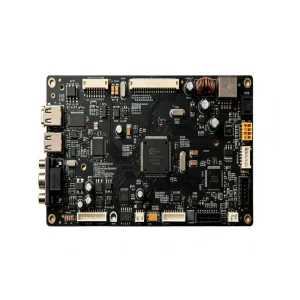
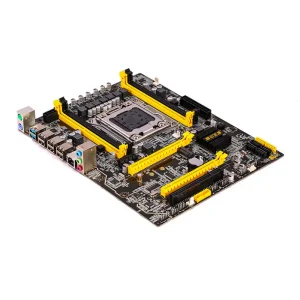
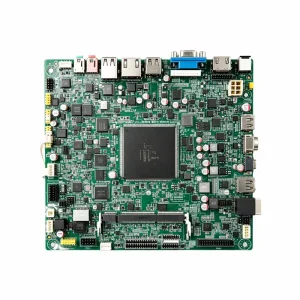
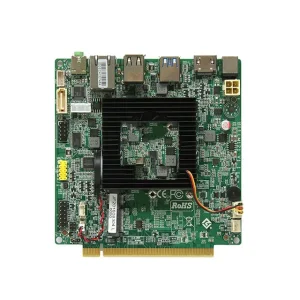
Explore our advanced OEM/ODM production assemblies covering diagnostic imaging, industrial wind power logic, telecommunications, and high-wattage power converters.
Send your Gerber RS-274X files and Bill of Materials today. Our engineering department returns comprehensive DFM feedback, component lifecycle reports, and an itemized turnkey quotation within 24 hours.
Request Turnkey SMT Quotation