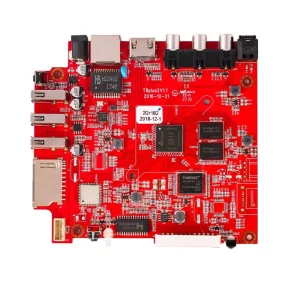
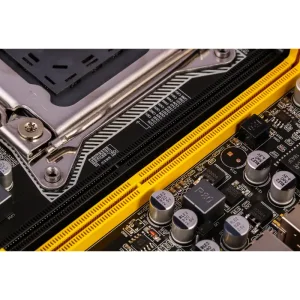
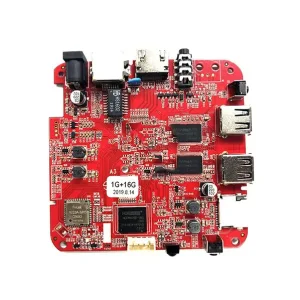
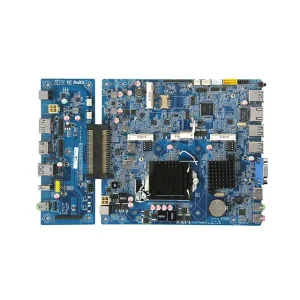
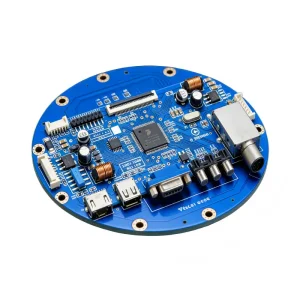
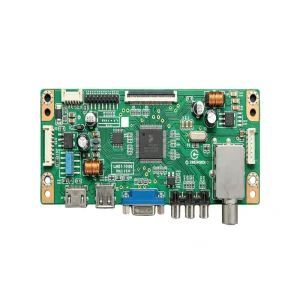
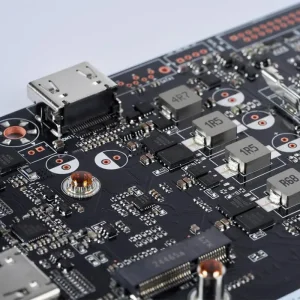
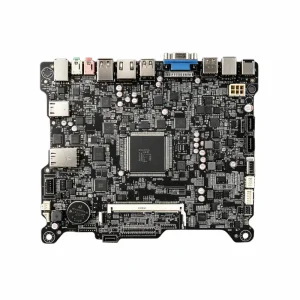
Engineered to withstand rigorous operational environments: browse our mission-critical PCBA modules deployed across marine navigation, industrial telemetry, smart mobility, and medical ventilation.
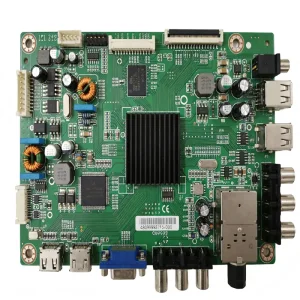
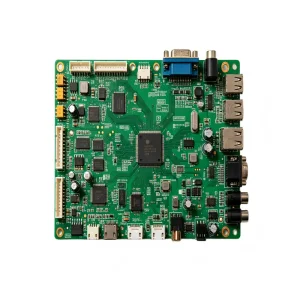
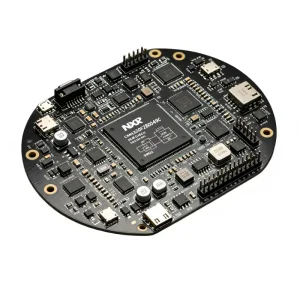
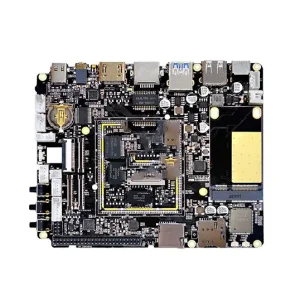
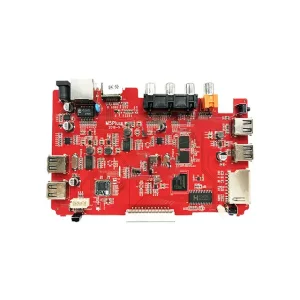
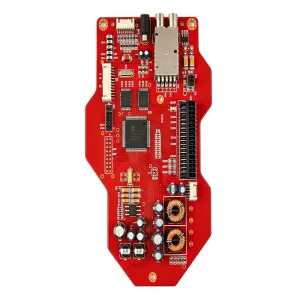
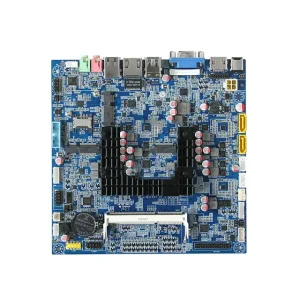
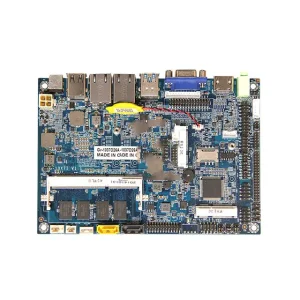
The global electronics landscape has evolved far beyond basic cost-arbitrage assembly. In today’s high-velocity tech ecosystem, an OEM Electronics SMT Factory functions as an indispensable extension of an enterprise’s R&D wing. Operating within Shenzhen's Greater Bay Area industrial nexus, our facilities integrate bare-die packaging, high-speed SMT placement, Automated Optical Inspection (AOI), and systemic traceability into an agile, highly unified workflow.
By leveraging dense industrial clustering, China-based SMT factories deliver unparalleled velocity. Proximity to tier-1 component silicon fabricators, passive component manufacturers, and high-frequency substrate providers eliminates up to 70% of raw transit latency compared to fragmented global alternatives.
Access to Huaqiangbei and regional direct-factory distribution brings direct real-time access to over 500,000 active and passive component lines. This shields tier-1 Original Equipment Manufacturers from critical line downtime during sudden component obsolescence cycles or unpredictable lead-time surges.
From algorithmic optical inspection to AI-driven reflow thermal management, the contemporary SMT landscape is defined by digital convergence and precision automation.
Over 70% of PCBA soldering anomalies originate during solder paste printing. Modern OEM electronics facilities deploy automated closed-loop 3D SPI systems that instantly adjust stencil pressure, squeegee speed, and separation angles in real time to prevent solder bridging and insufficient wetting.
As IoT wearable processors and edge computing chips miniaturize, SMT factories must support Package-on-Package (PoP) assemblies and High-Density Interconnects (HDI). Precision vacuum nozzles and multi-camera optical alignment allow accurate positioning of 0.3mm pitch BGAs down to ±15μm tolerance.
Traceability down to the individual component reel level is mandatory for medical and automotive industries. Intelligent Manufacturing Execution Systems (MES) generate laser-etched 2D DataMatrix board identifiers that map every solder pad back to reflow temperature curves and incoming lot inspect reports.
Global sourcing teams from North America, Europe, and Asia-Pacific mandate rigorous protocols when selecting an electronics SMT assembly partner.
Strict institutional adherence to IATF 16949 (Automotive), ISO 13485 (Medical Devices), and ISO 9001. Quality is fortified via Inline 3D AXI (Automated X-Ray Inspection) for voiding analysis beneath BGA thermal pads.
Multi-layered Non-Disclosure Agreements (NDAs), segmented internal networks for CAD/firmware repositories, and physical cleanroom access controls safeguard valuable intellectual property against exfiltration.
Value engineering through Design for Manufacturability (DFM) audits. Factory engineers proactively flag end-of-life (EOL) passives, propose footprint standardizations, and minimize costly secondary wave operations.
Eliminating multi-vendor friction through comprehensive mechanical integration, custom wire harness routing, conformal coating, functional testing (FCT), and direct door-to-door global logistics.
Our OEM SMT production lines are calibrated to meet the diverse operational demands of today's dominant industrial ecosystems.
Automotive electronics require uncompromising resilience against thermal cycling, mechanical vibration, and corrosive engine-compartment atmospheres. Our assembly lines incorporate automated conformal coating lines and multi-stage nitrogen reflow to guarantee solder joint longevity according to AEC-Q100 standards.
Factory automation systems require decades of continuous operation without failure. SMT lines handling industrial Programmable Logic Controllers (PLCs) employ advanced electrostatic discharge (ESD) safeguards, flying probe testing, and high-temp burn-in screening to capture infant mortality failures prior to field deployment.
A look at the automated testing gates implemented within a world-class electronics contract manufacturing line.
Precise thermal zoning prevents cold solders, tombstoning, and component desoldering. Nitrogen atmosphere injection keeps oxygen levels below 500 PPM, preventing solder paste oxidation on complex multi-layer boards.
Equipped with multi-frequency moiré fringe projection to inspect solder filleting heights, component polarity, missing parts, and coplanarity across microscopic 01005 passives at full production speed.
Comprehensive electrical continuity and vectorless component testing eliminate unpowered functional issues. Bed-of-nails fixtures verify resistance, capacitance, diode drop, and integrated circuit continuity.
Clear, direct answers regarding production capabilities, quality certifications, BOM audits, and international shipping.
Explore precision assemblies designed for critical industrial monitoring, high-speed networking, telecom backbones, and uninterruptible power systems.