
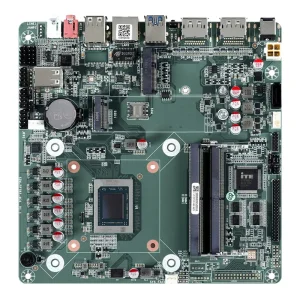
Korea Medical PCBA Application: Precision & Reliability for Healthcare Devices
Ultra-dense multi-layer HDI layout with microvia technology, low-leakage ground planes, and rigorous IPC Class 3 surface mount assembly.
Engineered to exceed strict signal-to-noise ratio (SNR) thresholds and biocompatibility standards, powering cutting-edge diagnostic and therapeutic platforms in Korea's clinical institutions.
Ultra-dense multi-layer HDI layout with microvia technology, low-leakage ground planes, and rigorous IPC Class 3 surface mount assembly.
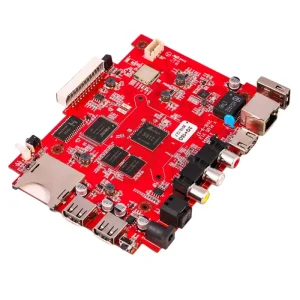
Integrated oscillometric signal processing, micro-pump motor driving controllers, and Bluetooth BLE 5.3 connectivity for digital telehealth.
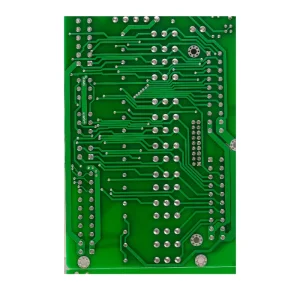
Multi-channel differential analog front-end (AFE), 5kV defibrillation transient protection, and low-noise bio-potential amplifiers.
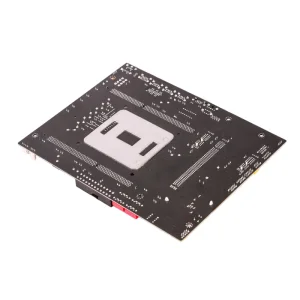
High-speed beamforming FPGA carrier, high-voltage transmit switching circuits, and fine-pitch BGA mounting with zero-void voiding control.
South Korea has positioned itself as an elite epicenter for medical device innovation, spanning high-frequency diagnostic imaging systems, surgical robotics, aesthetic laser platforms, and point-of-care diagnostics (IVD).
Gangwon Wonju's Medical Valley and the Osong Biohealth Technopolis drive rapid commercialization of clinical electronics. Manufacturers in these clusters require agile EMS partners capable of executing NPI (New Product Introduction) cycles within 72 hours, maintaining tight IPC-A-610 Class 3 tolerances for therapeutic lasers and electromedical workstations.
The Ministry of Food and Drug Safety (MFDS) enforces comprehensive Good Manufacturing Practice (GMP) standards aligned with ISO 13485:2016 and IEC 60601-1-2. Sourcing PCBA for the Korean market mandates complete lot-level component traceability, automated optical inspection (AOI), 3D X-ray inspection (AXI) of BGA solder joints, and complete Device Master Records (DMR).
South Korea leads the globe in aesthetic medical devices (HIFU, radiofrequency microneedling, fractional picosecond lasers) and connected IoT care platforms. These applications require multi-layer rigid-flex boards capable of sustained thermal stress dissipation, high-voltage switching reliability, and zero-loss wireless communication across dense hospital topologies.
Bridging Shenzhen's unmatched electronic manufacturing ecosystem with South Korea's high-precision medical technology creates an indispensable competitive edge across cost, velocity, and design scaling.
For Korean medical hardware OEMs situated in Pangyo Techno Valley or Gasan Digital Complex, time-to-market is existential. STHL's integrated facility in Bao'an, Shenzhen bridges bare board fabrication, turnkey procurement across 100+ authorized electronic distributors (Mouser, Digi-Key, Arrow, Avnet), high-speed SMT surface mounting, and functional programming under one roof. We compress complex 16-layer HDI prototype production cycles from 6 weeks down to 7 business days, providing full Design for Manufacturability (DFM) and Design for Testing (DFT) reports before solder paste touches copper.
Medical hardware lifecycles span 7 to 15 years, exposing OEM devices to severe microchip obsolescence, EOL notifications, and unexpected allocation crunches. Our dedicated medical BOM engineering division maintains direct API integration with Tier-1 component channels and global inventory databases, monitoring part lifecycles and delivering verified form-fit-function (FFF) alternative proposals to safeguard production continuity against geopolitical or trade shifts.
| Evaluation Parameter | Domestic Korean Assembly Only | Generic Offshore EMS Brokering | STHL Integrated China-to-Korea Turnkey |
|---|---|---|---|
| NPI Prototyping Lead Time | 14 - 21 Days | 25 - 35 Days | 5 - 7 Days (Expedited) |
| BOM Procurement Savings | Baseline Domestic Pricing | -8% to -12% (Inconsistent Sources) | -22% to -35% (Direct Factory/Authorized) |
| Traceability System | Varies by Job Shop | Manual Paper Records | MES / ERP Lot-Level Barcode Tracking |
| IPC Compliance Level | IPC-A-610 Class 2 / Class 3 | IPC-A-610 Class 2 | Dedicated IPC Class 3 Medical Workcells |
| Quality Certifications | Local ISO 9001 / Local GMP | ISO 9001 Only | ISO 13485:2016, IATF 16949, ISO 14001 |
Every board assembled for therapeutic or diagnostic deployment passes through a rigorous sequence of automated, mechanical, and electro-chemical inspection protocols.
Over 70% of SMT soldering defects stem from paste deposition irregularities. We deploy inline Koh Young 3D Solder Paste Inspection (SPI) to measure solder height, volume, area, and offset in real time, guaranteeing exact paste volumes for 01005 passives and 0.35mm pitch ultra-fine micro-BGAs.
For critical leadless packages including QFNs, LGAs, and package-on-package (PoP) assemblies found in medical imaging and processor boards, our high-resolution automated X-ray inspection systems (AXI) measure solder voiding percentages, maintaining strict sub-15% void standards (surpassing IPC-7095 Class 3 requirements).
Medical electronics frequently encounter physiological fluids, high humidity, chemical disinfectants, and harsh autoclave or washdown cycles. We deploy robotic selective coating systems using silicone, polyurethane, or parylene chemistries, accompanied by automated UV black-light inspection to guarantee complete, bubble-free edge coverage.
From bedside pulse monitoring to hospital-grade CT gantries and MRI magnet consoles, examine our production capabilities supporting Korean medtech OEMs.
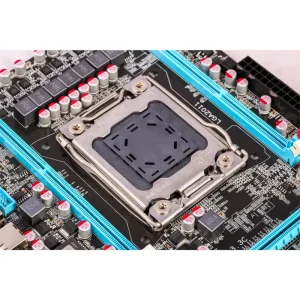
Compact rigid-flex layout, photoplethysmography (PPG) analog front-ends, and low-power battery management systems.
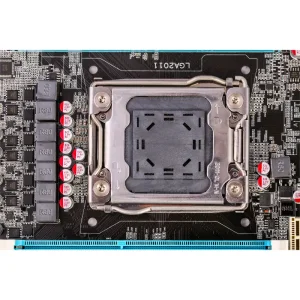
High-bandwidth slip-ring optical data channels, heavy-copper power distribution units, and slip-ring telemetry boards.
Flat-panel detector (FPD) readout arrays, high-voltage trigger synchronizers, and radiation-tolerant signal paths.
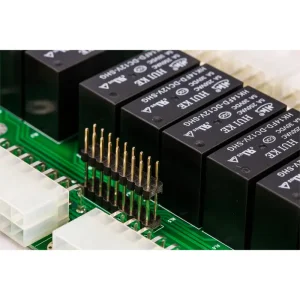
Precision multi-axis stepper driver boards, micro-spectrophotometer sensors, and closed-loop thermostatic control loops.
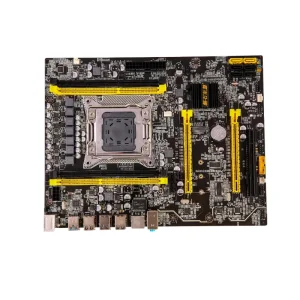
Non-magnetic substrate construction, RF receiver pre-amplifiers, and gradient coil controller assemblies with zero magnetic interference.
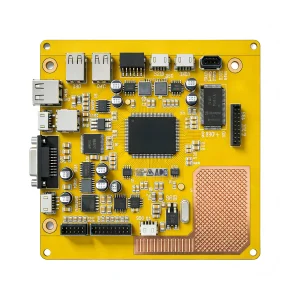
Redundant dual-MCU fail-safe architecture, ultrasonic bubble detection interfaces, and precision peristaltic motor drivers.
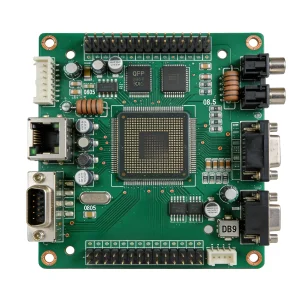
Liquid-handling robotics motion boards, optical liquid-level sensing circuitry, and industrial CAN-bus bus-line controllers.
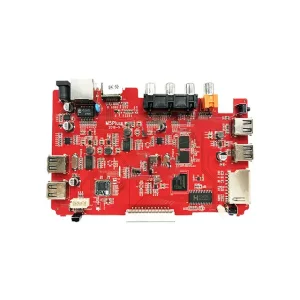
Medical-grade infrared thermopile sensor conditioning, micro-volt calibration circuitry, and sub-second thermal response processing.
Addressing essential technical compliance, export logistics, and quality assurance topics for medical device sourcing directors and chief technology officers.
Partner with an ISO 13485 certified EMS leader equipped to bring your complex bio-medical devices from Gerber design files to clinically ready, fully tested assemblies with maximum speed and complete regulatory confidence.